
Gianni Infantino's Failed Plan to Part-Privatise FIFA
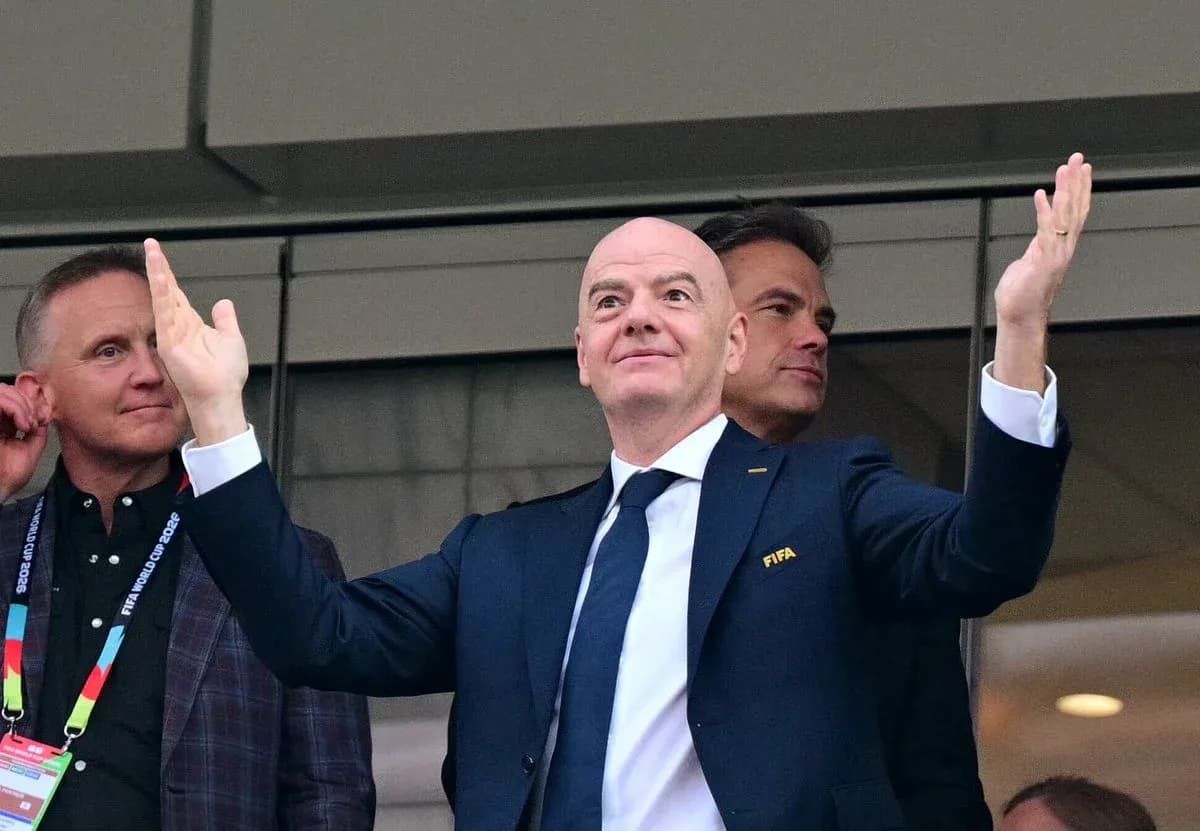
Gianni Infantino’s grand plan to part-privatise FIFA’s commercial power base is dead — killed not by quiet committee work, but by a full-scale revolt that left the president exposed, isolated and forced into a late-night climbdown.
On Friday evening, after a week of escalating fury from across the football map, Infantino abandoned his push to sell a minority stake in a new commercial vehicle, FIFA Forward Enterprises (FFE), to outside investors.
“Having listened carefully to all the views, it has become clear that the project has created divisions… that are no longer in the interest of the objective set out in the first place,” he said in a statement. “As a result, this proposal will not proceed.”
The pressure finally told.
From defiance to retreat
Only hours earlier, FIFA had sounded defiant. In a statement released on Friday morning in Europe, the organisation insisted “nobody is selling football” and stressed it would press ahead with the FFE proposal, while nodding to public “feedback and concern” and promising an “open and democratic consultation”.
That line did not survive the day.
UEFA had already drawn its red line, warning that all 55 of its member associations would boycott FIFA competitions — including the World Cup — if the plan went through. Concacaf stood beside them. Then the Asian Football Confederation (AFC) stepped forward with its own message of solidarity. Three confederations. One hundred and thirty-seven of FIFA’s 211 members represented. The numbers were turning against Infantino.
Inside FIFA, the walls began to move as well.
First came the resignation of Carlos Cordeiro, one of Infantino’s advisers, who torched the plan in a departing statement, calling it “a bad deal for FIFA’s Member Associations, a bad deal for football, and a bad deal for the long-term future of the game.”
Then Kevin Lamour, FIFA’s chief operating officer, spoke out to The Associated Press. He said staff had been “deceived” by Infantino and admitted he would sleep better having gone public, even if it cost him his job.
“It is the project of one person,” Lamour said. “Not only must this project not go ahead… but the time has now come for football political leaders to ask themselves the right questions and make the right decisions.”
At that point, the battle was no longer just about a commercial vehicle. It was about the president’s authority.
The deal that detonated
On paper, the numbers looked irresistible.
FIFA announced on Tuesday that it wanted to create FIFA Forward Enterprises, a private entity that would control its main events — including the World Cup and Club World Cup. A 21 per cent minority stake in FFE would be sold to external investors, led by Joshua Kushner’s venture capital firm Thrive, in a deal designed to raise $4.2 billion (£3.2bn).
That money, FIFA said, would flow straight back to its 211 member associations via a new stream: the FIFA Fast-Forward Programme (FFFP). Over the next four years, total development funding would top $10 billion.
The sales pitch was clear. More money, faster, for everyone.
Even as criticism mounted, FIFA tried to sweeten the offer. It confirmed that if the FFE proposal passed, every member association would receive substantial funding regardless of their vote. Those opposed to the plan would still receive $20 million (£14.9m) each in the 2027-30 cycle, rising to $22 million in 2031-34 and $24 million in 2035-38 — even if no stake in FFE was ultimately sold.
Those who backed the proposal would be rewarded with $40 million in 2027-30, with the same increases in the following cycles.
The message: you can vote against us and still get paid. Vote with us and you get double.
Yet the backlash only hardened. For many federations, the issue ran deeper than the cheques being waved in front of them. It was about control of the game’s core assets and the precedent of bringing private capital into the heart of FIFA’s event and commercial machine.
UEFA, Concacaf and the AFC moved into alignment. CONMEBOL, South America’s confederation, stopped short of outright rejection but underlined that financial and commercial decisions “must always serve the interests of football and never take precedence over its essence.”
FIFA needed a majority of its 211 members and the backing of its 37-strong Council, which includes Infantino and eight vice presidents, for the plan to advance. The arithmetic — and the politics — began to look brutal.
By late Friday, Thrive had not formally withdrawn. It no longer mattered. FIFA’s statement scrapped the project entirely.
A president weakened
For Infantino, this episode cuts far deeper than a failed business plan.
He entered the week as the president who had presided over $15 billion in revenue from the most recent men’s World Cup. Inside football politics, many had already resigned themselves to him strolling unopposed into another term in March 2027. Some federations had even filed their letters of support.
By the end of the week, his authority had been openly challenged by three confederations, his own senior staff had turned on him in public, and the project he had driven was dead on arrival.
The Athletic reported that his leadership came under direct scrutiny at UEFA and Concacaf meetings on Thursday. The mood shifted from resistance to the project to questions about the man pushing it.
Lise Klaveness, president of the Norwegian Football Federation, captured the sentiment when speaking to VG.
“My clear impression at the moment is that he has lost a great deal of trust,” she said. “We didn’t vote for him last time, and we’ve been sceptical about this. There are many good things about FIFA, but if you take a lax approach to governance principles and rules, you quickly lose trust.”
Trust is the currency of football politics. Once it drains away, it rarely rushes back.
Infantino has now chosen to save his position rather than his project. The U-turn was a recognition that pushing ahead risked open war with Europe, North and Central America and Asia — and the real possibility of being outvoted inside his own organisation.
But the retreat does not reset the board. It simply starts a new game.
Nominations for the 2027 FIFA presidential election must be lodged by November. For the first time in years, the assumption that Infantino will stand alone no longer feels safe. The vultures, as one insider put it, are circling.
The money may have been taken off the table. The question of who controls FIFA’s future has not.
Related News
Carlos Alcaraz Calls for Change After Laver Cup Court Conditions
Alexander Zverev Secures Laver Cup Victory for Team Europe with Straight-Set Win Over Learner Tien
Novak Djokovic Shares Fitness Update Before China Open Return After US Open Upset
Shubman Gill's Captaincy Record Across All Formats: Tests, ODIs, T20Is, and IPL
Kuldeep Yadav Named Player of the Match Over Virat Kohli Despite Century in IND vs WI 1st ODI
India Advances to Asian Games 2026 Cricket Semi-Finals After Rain Washout Against Afghanistan