
Gianni Infantino's World Cup Investment Plan Faces Backlash
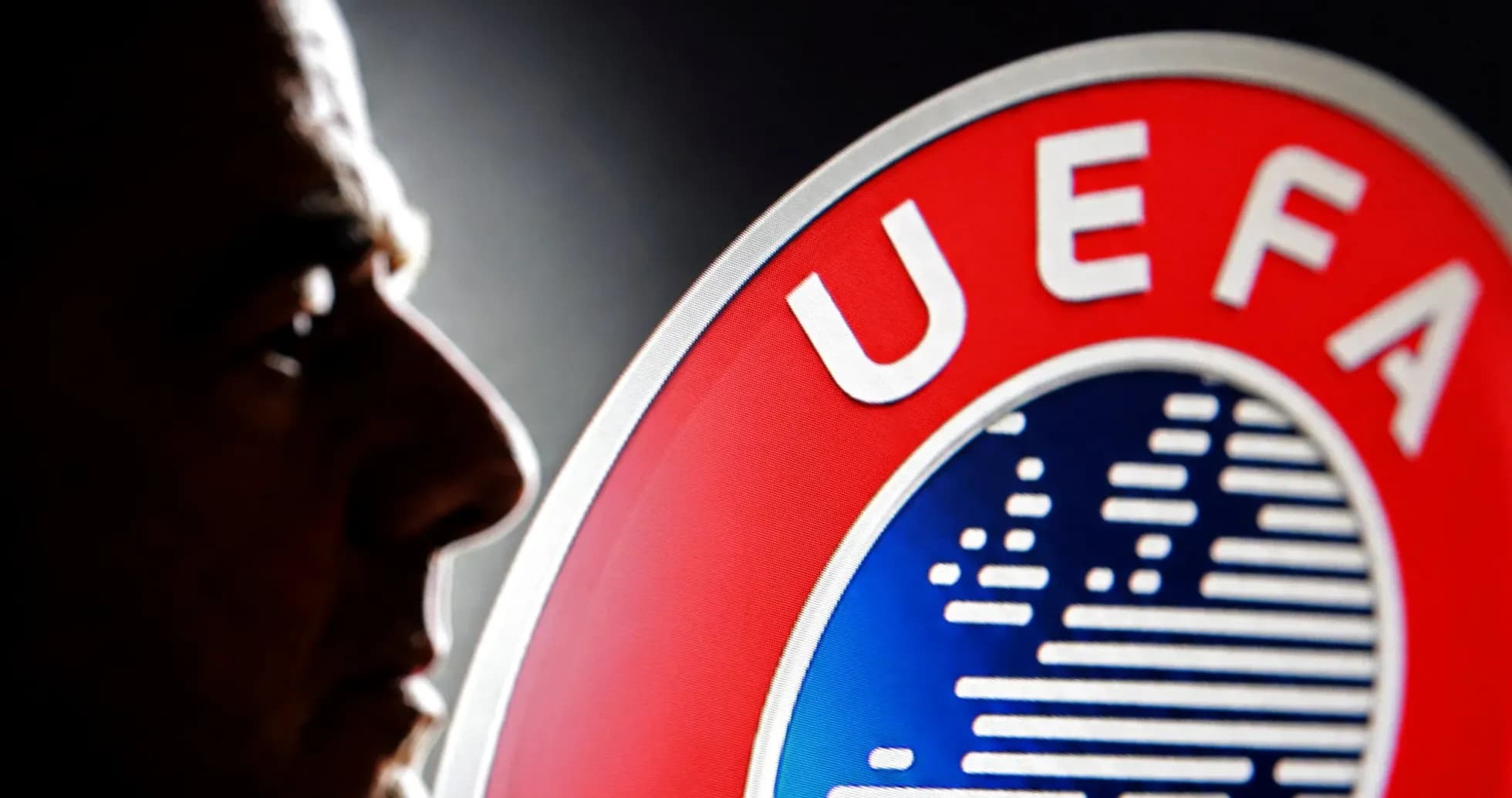
Gianni Infantino’s coronation was supposed to be a formality.
Less than a fortnight ago, he sat alongside Donald Trump in a luxury suite at MetLife Stadium, basking in the glow of a World Cup final that ticked every box: record crowds, record revenues, a spectacle that FIFA could sell as proof that its president had delivered on his promises. There were boos when he walked onto the pitch to hand over medals to Spain and Argentina, but they sounded like background noise to a man already looking toward another unopposed re-election next March.
That night feels like a different era now.
In the space of a few days, Infantino has gone from “King of Football” in Trump’s words to a president fighting for his political life, his grand investment scheme for the World Cup torched by a revolt that cut across continents, confederations and even his own inner circle.
The plan that blew up
Infantino’s gamble was audacious and simple in concept: carve out FIFA’s commercial engine into a new subsidiary, FIFA Forward Enterprise (FFE), and sell roughly 20 percent of it to private investors. World Cups, global tournaments, broadcasting rights, sponsorship, ticketing, hospitality – the money-making core of a not-for-profit body would sit inside a semi-privatised vehicle.
The numbers were staggering. FIFA pitched an equity valuation of $20bn and targeted $4.2bn from investors. The anchor investor was to be Thrive Eternal, a vehicle launched by Joshua Kushner, brother of Jared Kushner, who is married to Trump’s daughter Ivanka.
In return, FIFA’s 211 member federations were offered a windfall. Each association – from giants like England, Spain and France to micro-federations in Andorra, Montserrat and Papua New Guinea – was promised $20m if they signed up by a September 19 deadline. That sat on top of the $10m already due to each federation over the next four years, funded by FIFA’s record $15bn in revenue from the 2023-26 cycle, driven largely by the World Cup that has just finished.
FIFA’s projections suggested the payouts would keep climbing: $20m per federation now, rising to $22m through 2034 and $24m to 2038. For smaller nations, that is transformational money. For richer federations, it is a nice bonus but not a necessity.
Private equity and sovereign wealth funds have become normal in European club football, buying into everything from mid-table sides to Champions League contenders. The World Cup is different. It carries a mythology, a sense that it belongs to the game and its supporters rather than a balance sheet. That emotional fault line is exactly where Infantino chose to dig.
A global backlash
The reaction was ferocious.
By Friday, Infantino stood almost alone. Some FIFA vice presidents, senior executives, the entire bloc of European football federations, the confederations of Asia and North America, Britain’s prime minister, the global body representing domestic leagues, and a huge swathe of fans had lined up against the plan.
Essentially, the football world told him no.
The turning point came from Europe. UEFA, whose clubs and national teams dominate FIFA’s flagship competitions and drive its revenues, pledged on Thursday to boycott all FIFA competitions if the scheme went ahead. That threat cut straight to FIFA’s financial heart: European teams win the men’s World Cup and the Club World Cup more often than not, and broadcasters and sponsors pay premiums because of them.
Their fear was clear. Once private investors bought into FFE, they would demand growth: more games, bigger tournaments, expanded calendars. That would strain an already saturated schedule, drain attention and money from domestic leagues and the UEFA Champions League, and push elite players beyond their physical limits.
The opposition was not just external. Inside FIFA, the mood turned toxic. Carlos Cordeiro, Infantino’s senior adviser and a former Goldman Sachs banker, resigned, publicly branding the proposal a bad deal. Kevin Lamour, FIFA’s chief operating officer, issued a blistering statement to the Associated Press defending staff and implicitly challenging his president’s judgment, a move that in most organisations would be career-ending – for one of them.
All the while, critics seethed over Infantino’s approach. They accused him of building the project in near secrecy over the past year, consulting almost no one, while spending conspicuous time in Trump’s orbit. Even Trump, who had happily dubbed him “King of Football”, said on Friday he had not discussed the sale of World Cup stakes with the FIFA chief.
The pressure finally told.
On Friday, Infantino announced that he was abandoning the FFE plan. In a statement, he said: “Having listened carefully to all the views, it has become clear that the project has created divisions of a nature that, regardless of the level of support, are no longer in the interest of the objective set out in the first place.”
The climbdown was swift. The damage, less so.
From 200 pledges to open doubt
Infantino left New York last week carrying letters of support from around 200 of FIFA’s 211 member associations, a near-blank cheque for re-election next March when delegates gather in Rabat, Morocco. Those same federations are the effective owners of FIFA under Swiss law, and they vote every four years on who leads them.
Now, even with the investment plan scrapped, that support looks fragile.
Africa, traditionally Infantino’s power base with 54 votes, had stayed publicly neutral while it weighed the lure of unprecedented funding. South America’s CONMEBOL, the 10-member confederation led by FIFA vice president Alejandro Dominguez, said on Friday it had received the proposal and would examine it “with the rigour it demands”. Many of its leaders have their own stakes in FIFA’s future, not least around the 2030 World Cup.
Dominguez is counting on Infantino to expand that tournament to 64 teams, which would mean more matches in Argentina, Paraguay and Uruguay. At present, the centenary hosts in South America are scheduled to stage only one game each of the 104, with the bulk of the tournament in Spain, Portugal and Morocco. That is the kind of political trade-off that has underpinned Infantino’s reign.
But numbers now look less certain. To secure a majority in a contested election, Infantino would need 106 votes. Europe’s 55 associations, CONCACAF’s 35 in North and Central America and the Caribbean, and Asia’s 46 do not always vote as blocs, yet if large chunks of those regions move against him, his once-comfortable path to another term narrows sharply.
The question has shifted. It is no longer whether he can push through FFE. It is whether he still has the credibility to lead FIFA at all.
The throne wobbles
The timing is brutal. November 18 is the deadline for candidates to enter the presidential race, four months before the March 19 vote in Rabat, where FIFA has its African headquarters. Until this week, talk of a serious challenger to Infantino felt like background noise – the grumbling of those unhappy with his style or his previous attempts to force through unpopular reforms, but without a realistic plan to unseat him.
Now, names are circulating with a different tone.
Nasser Al-Khelaifi, the Qatari president of Paris Saint-Germain and a powerful figure in European football and media, is frequently mentioned as a possible rival. So is Victor Montagliani, the Canadian FIFA vice president and influential head of CONCACAF. Sheikh Salman bin Ebrahim Al Khalifa, the long-serving president of the Asian Football Confederation from Bahrain, came close to beating Infantino in the 2016 election and could be tempted to try again.
There is another layer to the drama. The FFE structure, critics believe, was not just about raising capital for the game. It also looked like a vehicle to create a commissioner-style role for Infantino beyond 2031, when his final term as FIFA president would end under current statutes. That job would likely come with more power and more money than his present package of more than $6m per year in salary and bonuses.
In that light, the World Cup investment plan was not just a financial play. It was a legacy project. Perhaps even an escape hatch.
Instead, it has become a test of survival.
The UEFA-led rebellion has killed off the sell-off, at least for now. The federations that once queued up to sign letters of support are watching closely, weighing the benefits of Infantino’s past largesse against the risks of staying tied to a president who has just been publicly rebuked by his own lieutenants and his richest stakeholders.
FIFA has been here before: presidents who seemed immovable, only to discover that football’s politics can turn with ruthless speed. The difference this time is that the World Cup itself, the crown jewel of the sport, briefly stood on the auction block.
Infantino has stepped back from that edge. The question now is whether the people who put him on the throne will let him stay there.
Related News
Carlos Alcaraz Calls for Change After Laver Cup Court Conditions
Alexander Zverev Secures Laver Cup Victory for Team Europe with Straight-Set Win Over Learner Tien
Novak Djokovic Shares Fitness Update Before China Open Return After US Open Upset
Shubman Gill's Captaincy Record Across All Formats: Tests, ODIs, T20Is, and IPL
Kuldeep Yadav Named Player of the Match Over Virat Kohli Despite Century in IND vs WI 1st ODI
India Advances to Asian Games 2026 Cricket Semi-Finals After Rain Washout Against Afghanistan