
Group J: Argentina, Algeria, Austria, and Jordan's World Cup Ambitions
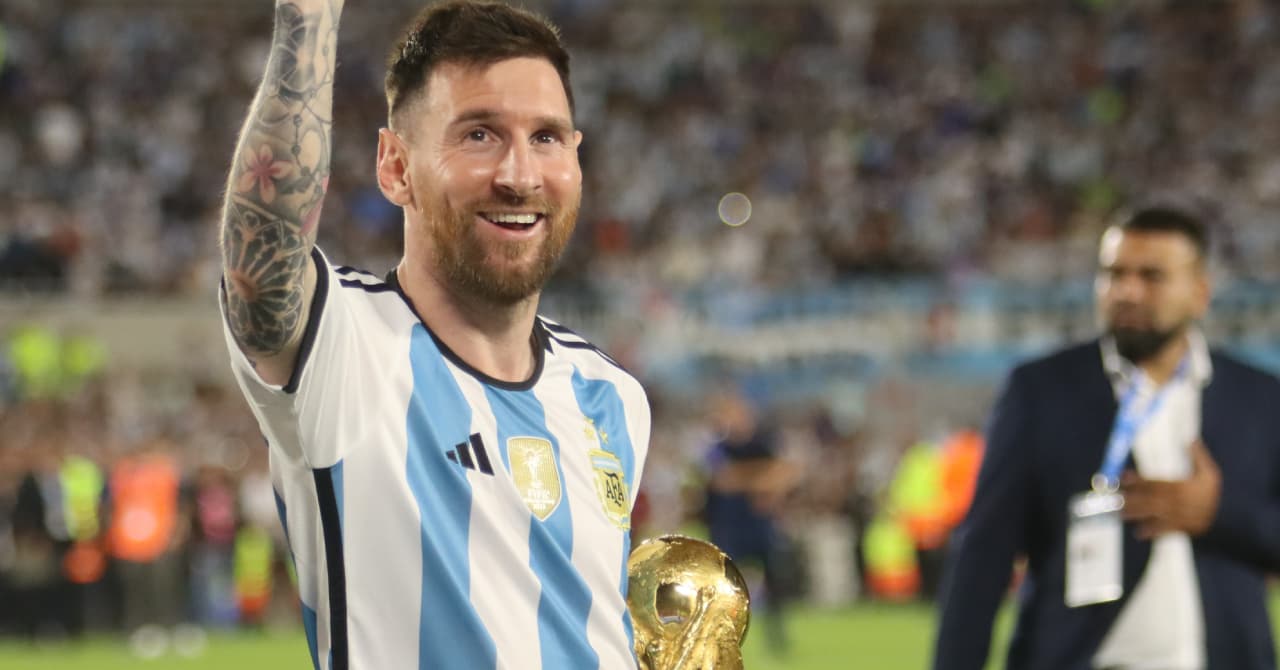
Anyone pencilling Argentina in for a gentle stroll through Group J would do well to rewind to Lusail, 2022. Saudi Arabia, 1-2. A half-time lead, a global shock, and a reminder that even the greatest can be rattled on the biggest stage. Argentina recovered then, but they did not score before the break in any of their group wins over Mexico or Poland. Processions are a myth at World Cups.
Now they arrive in North America as holders, hunted by a trio with very different stories: Algeria, back after a painful exile; Austria, reborn under Ralf Rangnick; and Jordan, walking into the tournament for the first time in their history.
At the centre of it all, of course, stands Lionel Messi. One last World Cup, one last attempt to bend the competition to his will.
Algeria: Petkovic’s Return to the Big Stage
Algeria have been away for two straight editions, which feels strange for a country that pushed Germany to extra time in the last 16 in 2014 and left a deep impression on that tournament. Twelve years on, they are back, again with Riyad Mahrez as the face of the project, but this time under the quietly formidable guidance of Vladimir Petkovic.
Petkovic is not a headline-chaser, but his record with Switzerland speaks loudly enough. He took them to the 2018/19 Nations League finals, then navigated a brutal Euro 2020 path, knocking out Turkiye and France before losing on penalties to eventual champions Spain. Algeria have turned to a coach who knows how to build tournament teams and how to live deep into knockout stages.
They topped CAF Group G in qualifying, driven by a striker who has suddenly found his range at international level. Mohamed Amoura scored 10 times in that campaign, seven more than anyone else in Algeria’s group, including a hat-trick at home to Mozambique. The Wolfsburg forward began his Bundesliga season with eight goals in 19 league games, then went cold for the final 11. The question now: which Amoura shows up in North America?
He is one of four Bundesliga-based players in a squad with a distinctly European spine. Houssem Aouar, once capped by France and formerly of Roma and Lyon, brings guile and control in midfield. Up front, Amine Gouiri, back from injury, reminded everyone of his quality with two goals in a 7-0 friendly demolition of Guatemala in Genoa in March. Nabil Bentaleb, now at Lille after his Tottenham days, adds experience and edge in the centre of the pitch.
There is intrigue in goal, too. Luca Zidane, son of Zinedine, arrives at his first World Cup after recovering from a broken jaw and chin suffered with Granada in April. Out wide, Anis Hadj Moussa comes off a sparkling season at Feyenoord, where he delivered 14 goals and seven assists, the kind of end product that can tilt tight group games.
Rayan Ait-Nouri’s year has been more complicated. He was on the pitch when Manchester City lifted both the FA Cup and EFL Cup but did not feature in either final. He started City’s first three matches of the season, then drifted to the fringes between an ankle injury and AFCON duty. Pep Guardiola did, however, hand him a run of seven consecutive starts across February and March, a reminder of the talent that made him such a coveted prospect.
Mahrez, Still the Beacon
At 35, captaining his country and now playing for Al-Ahli in the Saudi Pro League, Riyad Mahrez remains the reference point. He sits eight goals shy of becoming Algeria’s all-time leading scorer, already on 38 goals and 43 assists from 113 caps. His CV is a catalogue of defining moments: the 2019 AFCON triumph, Leicester City’s impossible Premier League title in 2016, African Footballer of the Year the same year, and the treble with Manchester City in 2023.
He scored three goals in two games as Algeria cruised through the 2025 AFCON group stage with a perfect record. Even if he no longer sprints past defenders at will, his left foot still dictates games and his presence still lifts those around him.
Algeria’s Path
The fixture list offers a clear hinge point: the final group game against Austria. With both sides expected to beat Jordan and both eyeing Argentina rather than fearing them, that match could well decide who qualifies automatically. Given that eight third-placed teams will also advance, Algeria have a strong platform to reach the knockout phase for only the second time in their history, in what will be their fifth World Cup appearance.
Argentina: Holders with a Target on Their Backs
No team has retained the World Cup since Brazil in 1962. That is the scale of Argentina’s ambition.
Lionel Scaloni arrives in North America as the architect of the most successful era in modern Argentine football. Copa America 2021. World Cup 2022. Copa America 2024. He is the only coach in the nation’s history to win both the World Cup and Copa America, and the man who finally ended a 36-year wait for that third star.
He has done it with continuity and clarity. The core of the Qatar 2022 squad remains intact. Emiliano Martinez, the penalty-box showman and shot-stopper who turned the last World Cup into his personal stage, keeps the gloves. Cristian Romero and Lisandro Martinez provide the steel and bite at the heart of the defence.
In midfield, the blend is outstanding. Rodrigo De Paul’s relentless work, Alexis Mac Allister’s intelligence, and Enzo Fernandez’s range of passing and drive form one of the most balanced trios in the tournament. They can suffocate opponents, they can play through pressure, and they can shift the tempo almost at will.
Up front, the options are enviable. Julian Alvarez, capable of operating wide, centrally or off a main striker, gives Scaloni tactical flexibility. Lautaro Martinez leads the line, a pure No 9 with the movement and finishing to punish the smallest lapse.
There are absences, of course. Angel Di Maria, one of the defining figures of the 2022 triumph, has retired from international football, taking with him a decade of big-game moments. The biggest surprise in selection came with Franco Mastantuono, the teenage Real Madrid midfielder and one of the most closely watched youngsters during qualification, missing out on a place.
The one major concern has hovered around Messi’s fitness. A hamstring issue with Inter Miami in May sent a ripple of anxiety through Argentina’s fanbase and coaching staff. Scaloni moved quickly to calm the noise, describing the early reports as “not that bad”, and Messi is expected to be available for the opener against Algeria in Kansas City.
Messi’s Last World Cup
Messi’s sixth World Cup is not just a footballing event; it is a cultural moment. At 38, nobody seriously expects a seventh appearance. He topped CONMEBOL qualifying with eight goals and remains, even now, the central pillar of this team. The structure is built to maximise him, the rhythm tuned to his pace.
Every touch, every free-kick, every pause on the ball will carry the weight of finality. The group stage feels like a runway. The real questions about Argentina’s campaign will only be answered in the knockout rounds, but Group J is where the tone is set.
This is a section they should control. Anything less than top spot would send shockwaves well beyond Buenos Aires.
Austria: Rangnick’s Relentless Machine
Austria’s last World Cup appearance came in 1998. They return 28 years later not as makeweights, but as one of the tournament’s most awkward opponents.
The catalyst is Ralf Rangnick. Since taking charge, he has imposed a clear, aggressive identity built on pressing and vertical play. Austrian football, long in search of a modern blueprint, suddenly has one, and the national team is the sharpest expression of it.
Euro 2024 was the warning shot. Austria reached the round of 16, finishing ahead of France and the Netherlands in their group. That run, followed by a composed World Cup qualifying campaign, has produced a squad that many consider their strongest since the side that finished third in 1954.
The backbone runs through the Bundesliga. Fourteen of the 26 players are based in Germany, many of them products of or influenced by the Red Bull network Rangnick himself helped shape. At RB Leipzig, Christoph Baumgartner, Xaver Schlager and Nicolas Seiwald form a midfield unit that embodies his principles: intensity, pressing, quick transitions.
Marcel Sabitzer brings 95 caps and the experience of big nights with Borussia Dortmund. Konrad Laimer, now at Bayern Munich, supplies the engine on the flanks, covering ground and snapping into duels.
David Alaba captains the side at 33, the calm at the back and the leader in the dressing room. Around him, a new generation is emerging. Carney Chukwuemeka has committed his international future to Austria over England, while Paul Wanner of PSV Eindhoven, also 20, arrives as another potential breakout name.
At the other end of the spectrum, Marko Arnautovic, 36, travels as vice-captain and record scorer with 47 goals in 132 caps. This feels like his final dance on the biggest stage, one last chance to leave a mark in red and white.
Baumgartner, the Driving Force
If Austria are to trouble Argentina and fight off Algeria, Christoph Baumgartner will be central to it. The Leipzig midfielder has just delivered the best season of his career: 13 goals and 10 assists in the Bundesliga, numbers that place him among the most productive central midfielders in Germany.
His timing between the lines, his late runs into the box, his composure in tight spaces – these are the qualities that break rigid defensive shapes. In a group where margins will be thin behind Argentina, Baumgartner’s output could be decisive.
Austria’s Ambition
The opener against Jordan in Santa Clara offers Rangnick’s side a launchpad. Win that, and the pressure swings onto Algeria before their meeting. Austria have the organisation, depth and intensity to target a top-two finish. Anything less would feel like a missed opportunity for a team built to disrupt.
Jordan: A Debut Written in Belief
For Jordan, every step in Group J is history. This is their first World Cup, earned the hard way in AFC qualifying, where they finished second in their third-round group behind South Korea and ahead of Iraq, Oman, Palestine and Kuwait.
Jamal Sellami, a Moroccan with a strong coaching pedigree at home and success with Morocco’s local-national side at the 2018 African Nations Championship, leads them with a clear reference point. He has spoken openly about wanting to mirror Morocco’s extraordinary run to the semi-finals in Qatar, when they became the first African and Arab nation to reach that stage. It is an ambitious target, but it sets a tone.
Thirteen of the 26 players are based in Jordan. That domestic core gives the squad a familiarity and cohesion that many bigger nations envy. These players know each other’s movements, habits, and weaknesses. In a short tournament, that can be worth as much as a superstar.
The major blow came in December. Striker Yazan Al-Naimat suffered an ACL injury and misses out, stripping Jordan of one of their key attacking options.
Captain Ehsan Haddad, of Al-Hussein, marshals the defence, while Yazan Al-Arab, one of the few players operating outside the Middle East, brings experience from FC Seoul.
Al-Tamari, the Hope
If there is to be a Jordanian shock in Group J, it will almost certainly run through Mousa Al-Tamari. The Rennes forward is widely regarded as the best player Jordan has ever produced and became the first from his country to play in Ligue 1. At home, the nickname says it all: the “Jordanian Messi”.
He carries the creative burden and the expectation. Against Austria and Algeria, his ability to exploit space on the break will be crucial. Against Argentina, his performance will be watched across the Arab world.
Jordan’s Window
The schedule offers Jordan a clear shot at making noise. The opener against Austria in Santa Clara is their most realistic chance of a result. A point there would reverberate far beyond Group J. Anything taken from Algeria would be historic.
Then comes the night they have dreamed of. Facing Argentina at AT&T Stadium in Dallas, under the lights, with Messi on the pitch, will be the biggest occasion Jordanian football has ever known, regardless of what the table says by then.
Group J belongs, on paper, to Argentina. But World Cups rarely read the script. Algeria arrive with pedigree and purpose, Austria with structure and momentum, Jordan with the fearlessness of a first-time guest.
Messi’s last dance, Mahrez’s final push, Rangnick’s machine, Al-Tamari’s stage – this is not a procession. It is a collision of eras and ambitions. Who blinks first?
Related News
UFC 332 Preview: Natalia Silva vs. Wang Cong Fight Card, Odds, Start Time, and Details
Andy Roddick Responds to Andre Agassi’s Comments on Alexander Zverev at the Laver Cup

Knicks Prepare for Flexible Roles in Title Defense

Rui Hachimura Swaps Lakers Fans to Clippers in Surprising Jersey Exchange

Who Will Be the NBA's Next First-Time All-Stars? Top Picks and Long Shots for 2027

How Strong Is Your Team at Home? Check Out the 2026 Brasileirão Home Standings