
Harry Kane's World Cup Journey: A Missed Opportunity Against Argentina
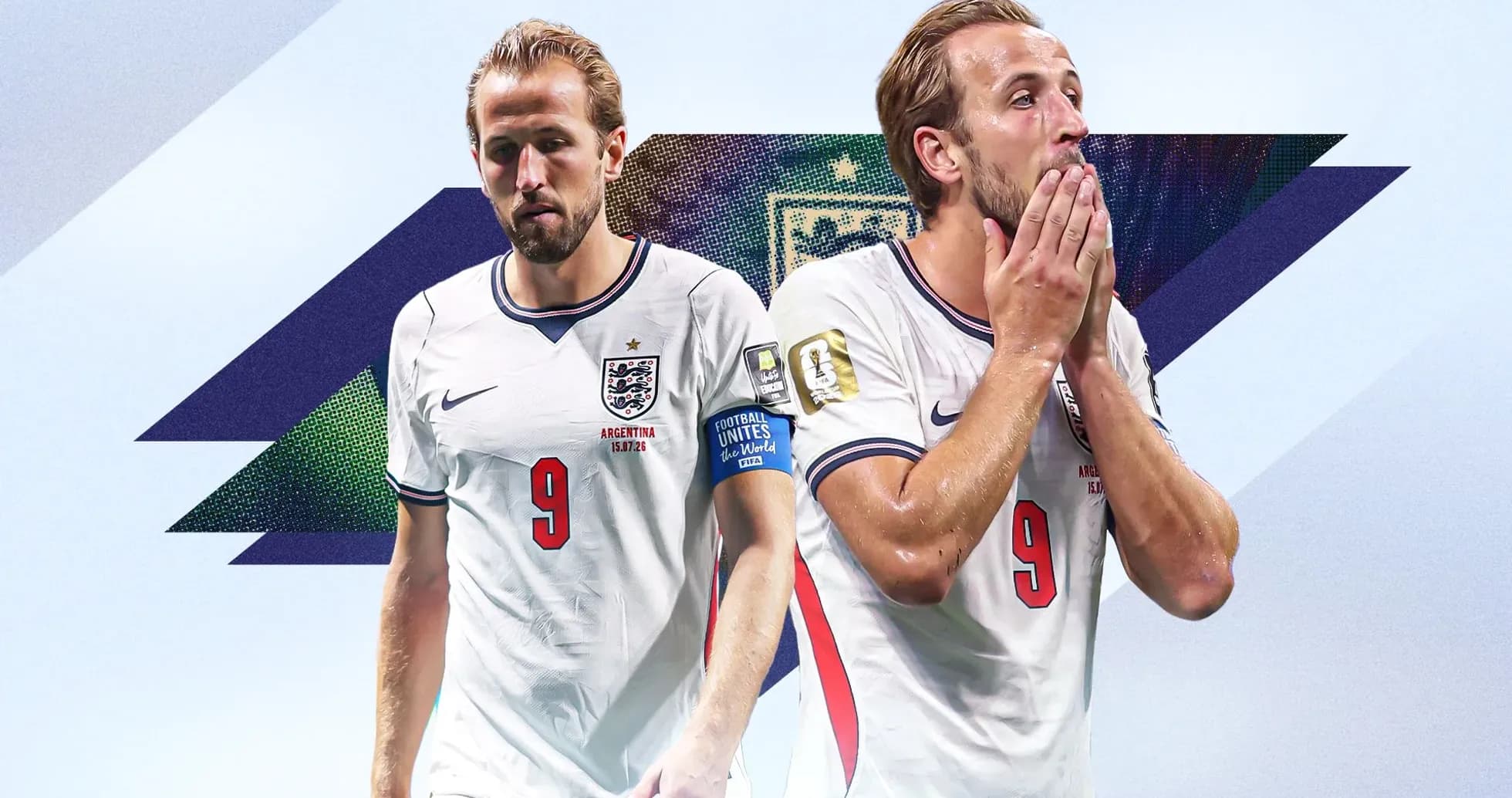
For an hour in New Jersey, England went toe-to-toe with the world champions and did not blink. Thomas Tuchel’s side did not dominate Argentina, but they matched them, stride for stride, tackle for tackle. When Anthony Gordon slid in the opener on 55 minutes, it felt like the first clean punch in a heavyweight bout, not a smash-and-grab. Argentina would hit back. England, you thought, were built to trade.
They weren’t.
Once in front, England shrank. Argentina surged. Lionel Scaloni spoke afterwards about his team “smelling blood in the water”. Tuchel’s England, pinned deeper and deeper, might as well have been tossing bait into the tide.
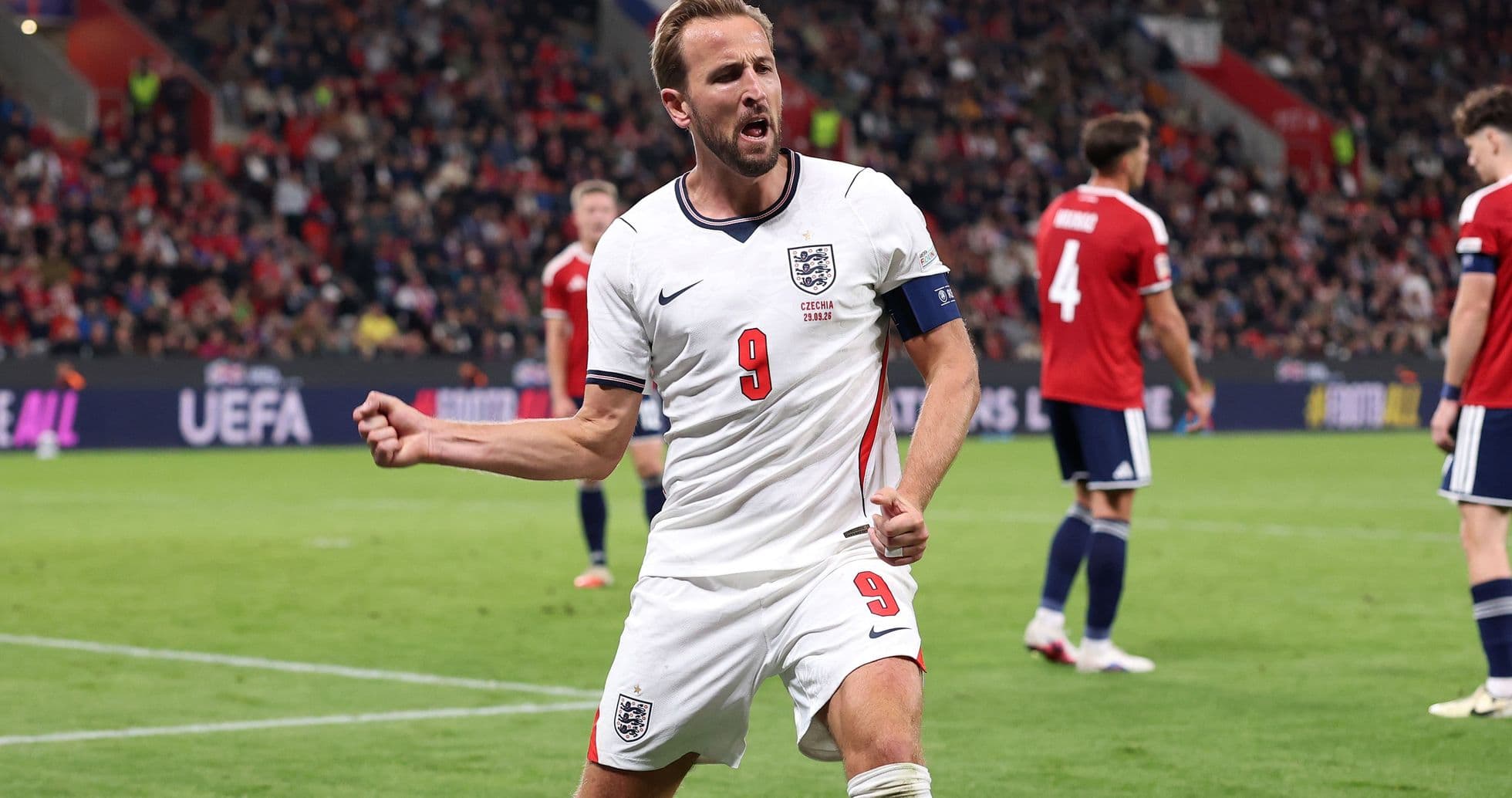
And in the middle of it all, Harry Kane became a strange kind of spectator.
His numbers are brutal: 26 touches, nine completed passes, a single blocked shot, not one touch in Argentina’s box. On paper, it reads like a ghosting. It wasn’t quite that simple.
This was a fractured, frantic semi-final, and Kane embraced the chaos early on. He fought. He fouled. He flung himself into duels with a kind of desperate relish. He contested more challenges than Lisandro Martínez and Alexis Mac Allister. At times he hurled his body into 50-50s with a recklessness that would have had Bayern Munich’s medical staff wincing.
In that first-half slog, when football was secondary to survival, it mattered. England needed someone to absorb hits and dish out a few. Kane did it willingly.
Then the game changed. England scored. Argentina opened up. Space appeared, and with it a tactical problem Tuchel never really solved.
The context was punishing. England had just emptied themselves at the Azteca, producing a backs-to-the-wall masterpiece to edge Mexico. Kane had gone 89 minutes there, scrapping, pressing, clearing his own box. Four days later, he was asked to do it again.
He tried. He also knew it wasn’t enough.
“For one reason or another, we struggled to be on the ball, we struggle to put pressure on the ball and it allowed them to create more momentum and created more attacks for them in our final third,” Kane said afterwards.
The sting in that admission is obvious: Kane was part of the problem.
What England needed was an out ball. A striker to pin one of Argentina’s centre-backs, hold the line, make them think twice before flooding forward. Kane is almost the complete No 9. Almost. He has touch, finishing, vision, timing. What he doesn’t have is pace. So he did what he always does when his team are drowning: he dropped deeper, trying to stem the flow at source.
The waves just kept coming. He couldn’t get out, couldn’t spin in behind, couldn’t turn Argentina’s aggression against them. This had stopped being a game for Kane. Tuchel should have seen it and hooked him.
Instead, he stayed on and watched the collapse from too close to the storm and too far from the penalty area.
Set against his club season, the ending feels harsh, almost cruel. Kane has just delivered one of the great individual campaigns in Bayern Munich’s history. Fifty-eight goals in all competitions. Thirty-six in the league, more than anyone in Europe’s top five divisions. The fastest Bayern player ever to reach 100 goal contributions. A title won by 16 points, even with the champions easing off in the final weeks.
These are not normal numbers. Robert Lewandowski never got there. Statistically, Kane wandered into Messi-Ronaldo territory. Strip away the names, look only at the output, and the Ballon d’Or case was obvious. The first Englishman since Michael Owen? It was on the table.
But Bayern’s season frayed when it mattered most. They went blow-for-blow with eventual Champions League winners PSG, then failed to overturn a deficit in the second leg and slid out 6-5 on aggregate in the semi-finals. The platform for a coronation never quite appeared.
The World Cup, then, felt like a reset. Kane knew it.
“I’d be one of the favorites, definitely,” he said before the tournament. “Given the trophies I’ve won this season and the number of goals I’ve scored, I’d be in the running. Especially as, should England win the World Cup, one could imagine the trophy going to an English player.”
For five games, he played like a man chasing history. Two goals against Croatia. One against Panama. Two more against Congo. An assist at the Azteca. He and Jude Bellingham dragged England forward while everyone else did their allotted jobs around them.
A Golden Boot never hurts in these debates. Going into the semi-final, Kane was two behind Lionel Messi and Kylian Mbappé. England would need him. He was perfectly placed to strike.
He didn’t. And with that, the Golden Boot almost certainly vanished. Even if he were to score a hat-trick against France in a third-place game he really has no business starting, it would take a brave soul to bet on Messi failing to score against Spain in a World Cup final.
Kane will fly back to Germany without the Golden Boot, without a final, and without the Ballon d’Or momentum he craved. The window has closed, for now.
The bleak thought? This might have been his last real shot at international immortality.
His move to Bayern felt like a rebirth. In hindsight, he lingered at Tottenham a year or two too long. He was magnificent there, one of the Premier League’s finest players season after season, but always trapped in a club that never spent quite enough, never fixed quite enough, and only started throwing money around once he’d gone.
What he has done in Munich across two seasons is more than just score goals. It has validated him. It proved he could dominate at a superclub, carry the weight of expectation, live in the sharpest end of the Champions League. He has spoken about studying other sports, other athletes, learning how they extend their primes. He wants to push back Father Time. At club level, it looks like he might.
International football is a different sport in all but name. No rhythm, no long arcs, no time to tweak and refine. No winter lull to manage minutes. You arrive off the back of a long season, cram into a camp that barely stretches to two months, and sprint. If your body or mind flickers at the wrong moment, there is no second leg, no next week.
When it mattered most here, Kane’s sprint faltered.
His England legacy, if this is the beginning of the end, will be one of the strangest in the nation’s history. On talent and output, he is surely England’s greatest ever striker. If he keeps going, 100 international goals feels more likely than fanciful. Peter Shilton’s 125-cap record is within touching distance; Kane already stands at 121. He has scored more penalties at World Cups than anyone else. He owns a World Cup Golden Boot from 2018.
But the empty space on the honours board will glare back at him. Major tournament failures cling to his story. He laboured through Euro 2024. He missed that penalty in Qatar in 2022. In 2018 and at the delayed Euro 2021, he could argue the squads around him were lighter, less complete. Even so, he never quite seized a tournament by the throat in the way his numbers suggest he should. The great scorers of his statistical neighbourhood – Messi, Ronaldo, Pelé, Maradona, Henry – all have a major trophy to hold up. Kane doesn’t.
And England have a problem of their own. Look past him and the striker depth chart is threadbare. Tuchel brought a 30-year-old Ollie Watkins and a 30-year-old Ivan Toney to this World Cup. There is no obvious heir, no 21-year-old phenom waiting to take the shirt. For all the talk of evolution, Kane will be brutally difficult to dislodge.
So the most likely scenario is the most awkward one. England roll on to Euro 2028 with Kane still leading the line. They will probably be strong again. They will probably go deep again. But by then he will be 34, nudging 35, and the physical edge will be that little bit duller. Who replaces him? No one has answered that yet.
Kane, for his part, has no intention of walking away.
“The national team is my pride and joy,” he said. “It’s what I love to do most more than anything. Obviously four years is a long way away, I’m 33 this summer but it never ended with Leo [Messi] there, he’s still performing at the highest level. I never want to put a limit on these things.”
He shouldn’t. But the game does it for you. Opportunities shrink. Margins tighten. Tournaments come and go, each framed as the moment he can finally settle the argument, and then slip through his fingers.
This one, lost in a second-half retreat against Argentina with the world watching and history within reach, feels like the biggest miss of all.
Related News

India's Record Chase of 406 Against West Indies Highlighted by Gill's 223 and Rohit's Century
Alex Pereira Hints at Major UFC Bout: 'Big Challenge' Ahead
Three Hall of Famers, Ten Fights, 109 Rounds: The Forgotten Rivalry That Shaped Lightweight Boxing's Golden Era
Khamzat Chimaev and Colby Covington Set for RAF Abu Dhabi Title Clash in November
Thomas Tuchel Confident Harry Kane Will Join 100-Goal Club for England Soon
Cristiano Ronaldo Vows to Reveal Truth After Leaving Portugal Squad Amid Conflict