
Inquest into Maddy Cusack's Death Delayed Again
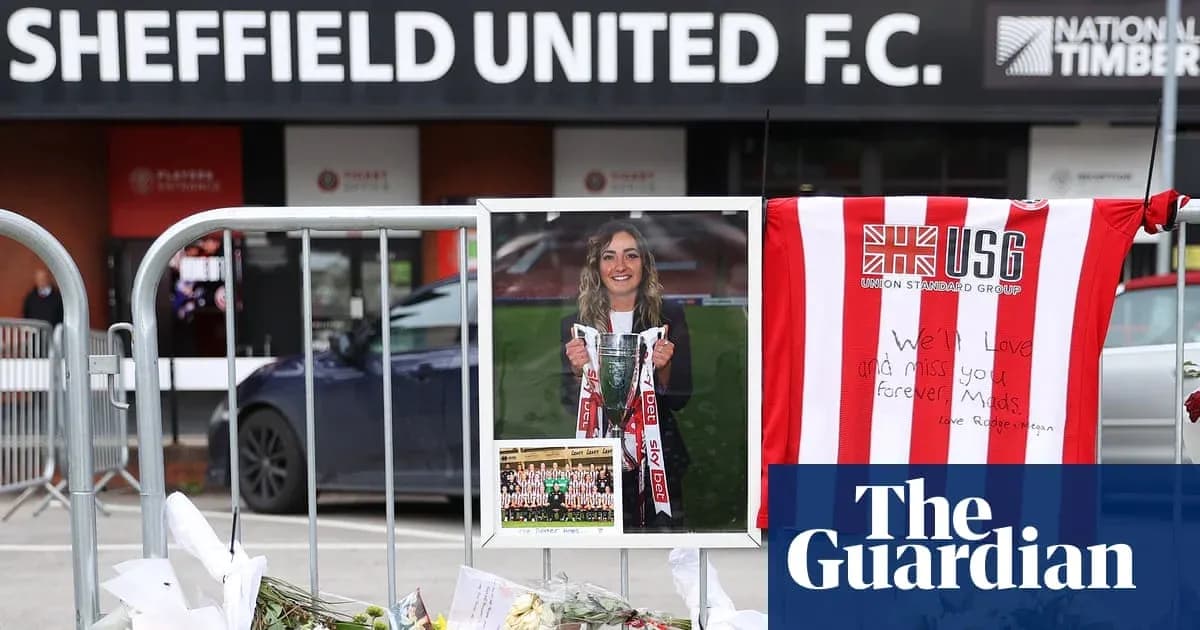
The inquest into the death of Sheffield United midfielder Maddy Cusack has been adjourned again, almost three years after her death, extending a process that has already tested the patience and resilience of her family.
Cusack died on 20 September 2023, aged 27. Since then, her case has moved slowly through the coronial system, repeatedly stalled by new evidence, legal argument and now fresh disclosure.
Another delay in a long wait for answers
At Chesterfield coroner’s court, the coroner told those present that the inquest would not resume until at least 7 December, apologising directly to Cusack’s family for the latest delay. The hearing, which opened on 29 June and has already sat for eight full days, had been expected to finish hearing evidence on Friday, with conclusions due on 27 July.
That timetable has now been torn up.
The adjournment is understood to relate to additional documents that have recently been lodged with the court, material deemed significant enough that key witnesses must be recalled.
The coroner said there was a need to bring back Dr Basu, Sheffield United’s former club doctor, and former club physio Francesca Carr to give further evidence in light of the new disclosure. Basu’s lawyer was also asked if they could provide contact details for the club’s former assistant physio, Sean Bowskill, because the court may wish to hear from him as well.
What was meant to be the closing stretch of the inquest has instead opened up new lines of questioning.
A case repeatedly pushed back
This is the second time in 2026 alone that the inquest has been adjourned. It was originally due to start on 5 January, only for that date to collapse when Cusack’s family received 699 pages of new evidence from Sheffield United just 10 days before Christmas.
At the time, the family’s lawyers called that late disclosure “totally unacceptable”.
United’s legal team responded in January, saying the club “rejects wholeheartedly any suggestion of non-compliance”. The coroner backed the club on the narrow point of process, agreeing that it had complied chronologically with disclosure requirements.
The broader picture, though, has been one of drift. Across 2025 the case was delayed multiple times, partly while lawyers argued over the scope of the inquest and what it should properly examine.
Each postponement has pushed the search for clarity further away from the day Cusack died.
Portrait of a club figurehead
Since the hearing finally began on 29 June, the court has heard a detailed and, at times, deeply personal portrait of Cusack’s life at Sheffield United.
Witnesses described her as “Miss Sheffield United”, the “poster girl” of the women’s team, a player whose image and personality fronted the club’s women’s project. She was repeatedly characterised as a “bubbly, lovely person”, a presence who lit up dressing rooms and club events alike.
Evidence has been taken from her parents, four former teammates, her GP and the club’s doctor, along with several other members of Sheffield United staff. Their testimonies have sketched the pressures, expectations and relationships around a player who had become central to the club’s identity.
The latest adjournment means that picture remains incomplete.
Key witnesses left waiting
Thursday’s hearing had been due to feature two significant figures: Sheffield United’s head of HR, Vicki Anderson, and the Football Association’s head of integrity, David Matthews.
Both were scheduled to give evidence, but their appearances have now been pushed back with the rest of the remaining witnesses.
The FA launched its own investigation after Cusack’s death. Its findings have never been made public, but they have been provided to the coroner. How those conclusions intersect with the fresh disclosure that has now emerged remains to be tested under oath.
For Cusack’s family, the latest delay means more months without final answers, more time before any official conclusions are read into the record.
The inquest will not restart before December. When it does, the court will return to a case that has already stretched across years, carrying the weight of a family’s grief and a club’s responsibility, still searching for a definitive account of what happened to one of Sheffield United’s most recognisable players.
Related News

Anthony Joshua Names Murat Gassiev as Next Opponent if He Defeats Tyson Fury

UFC 332: Start Time and Fight Highlights for Natalia Silva vs. Wang Cong
Court McGee Opens Up About Choosing UFC 332 as His Final MMA Fight
WBC Orders Lightweight Title Unification: William Zepeda vs Jadier Herrera

BCCI Pension List: Monthly Payments to Retired Indian Cricketers in 2025

Why Fury vs Joshua Is Set for Cardiff, and Dua Lipa’s Unexpected Role