
Inter vs Hellas Verona: Serie A 2025 Tactical Insights
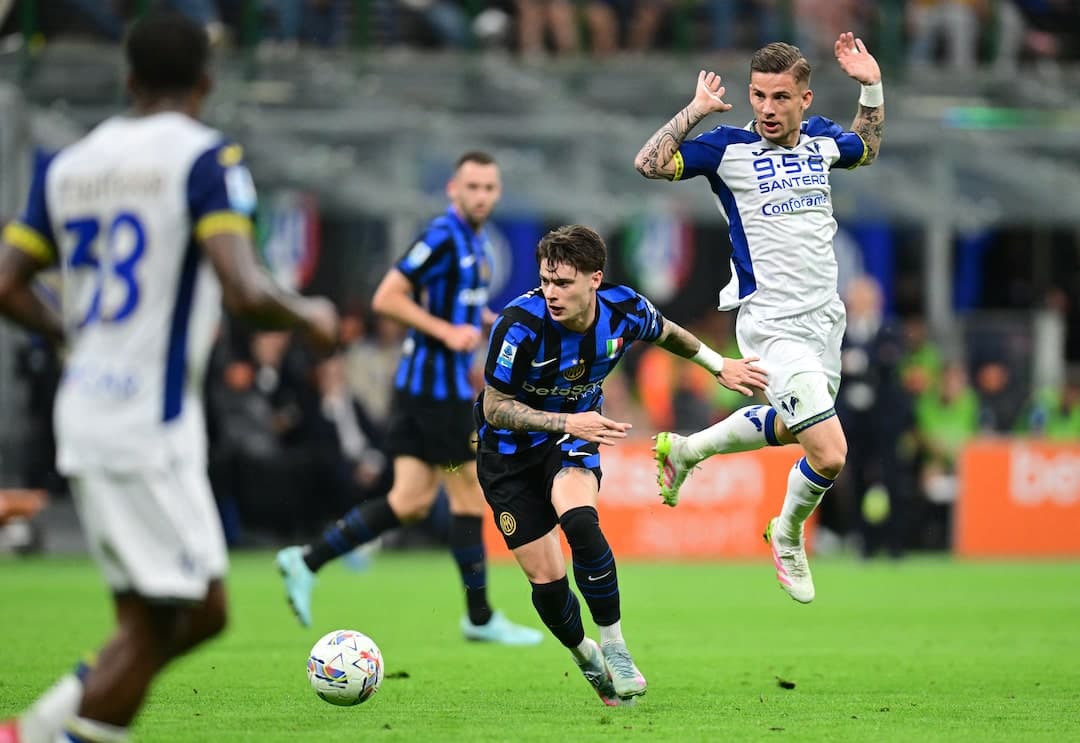
Under a pale May sun at Stadio Giuseppe Meazza, Inter and Hellas Verona closed out their penultimate chapter of the Serie A 2025 season with a 1–1 draw that said as much about their identities as any scoreline could. Following this result, the table still tells a story of extremes: Inter perched in 1st on 86 points with a towering goal difference of 54 (86 goals for, 32 against), Verona marooned in 19th on 21 points with a goal difference of -34 (25 for, 59 against).
Inter’s seasonal DNA is unmistakable. Over 37 matches they have won 27, drawing 5 and losing only 5, powered by a ruthless attack that averages 2.6 goals at home and 2.0 on their travels, and a defence conceding just 0.8 at home and 0.9 away. Cristian Chivu has leaned almost monastically on a 3-5-2—used in all 37 league games—seeking control through numbers in midfield and fluidity between the lines.
Verona’s season has been the mirror image. Just 3 wins in 37, with 12 draws and 22 defeats, scoring 0.7 goals both at home and away while shipping 1.4 at home and 1.7 on their travels. Their tactical story has been one of searching rather than certainty: 3-5-2 most often, but also 3-5-1-1, 3-4-2-1, 3-1-4-2 and, here in Milan, a 5-3-2 that spoke clearly of survival instincts.
Tactical Voids and the Shape of the Battle
Chivu’s Inter lined up in their familiar 3-5-2: Yann Sommer behind a back three of Matteo Darmian, Stefan de Vrij and Francesco Acerbi; a broad, aggressive midfield line with Luis Henrique and Carlos Augusto as the width, A. Diouf and P. Sucic as the interior engines, Henrikh Mkhitaryan as the cerebral link, and a front pair of A. Bonny and Lautaro Martínez. On paper it was continuity, but also rotation: key creative figures like Hakan Çalhanoğlu, Nicolò Barella and Federico Dimarco began among the substitutes, a nod to squad management late in the campaign.
Paolo Sammarco’s Verona arrived in Milan with absences that shaped everything. D. Mosquera, G. Orban, D. Oyegoke and S. Serdar were all listed as missing, stripping Verona of a scorer, a physical full-back option and midfield depth. In response, Sammarco dropped into a deep 5-3-2: Lorenzo Montipò in goal, a back five of M. Frese, N. Valentini, A. Edmundsson, V. Nelsson and R. Belghali, with a compact midfield trio of S. Lovrić, Roberto Gagliardini and A. Bernede behind the forward line of T. Suslov and K. Bowie.
Disciplinary profiles framed the risk on both sides. Inter, across the season, have taken most of their yellow cards late: 30.65% between 76–90 minutes and 20.97% between 61–75, a clear late-game surge in aggression as they protect leads or chase winners. Verona, by contrast, scatter their cautions more evenly but show spikes between 46–60 (23.26%) and 31–45 (20.93%), with a worrying 16.28% in the final quarter-hour. Red cards have been a Verona problem: dismissals registered early (0–15), just after the break (46–60) and again late (76–90), underlining how fragile their game-state management can be when pressure rises.
Key Matchups
At the heart of this fixture lay the collision between Inter’s elite firepower and Verona’s brittle back line. Overall this campaign, Inter have scored 86 goals at an average of 2.3 per match; Verona have conceded 59, an average of 1.6. Lautaro Martínez, with 17 league goals and 6 assists, is the division’s leading scorer in this dataset, a forward who marries relentless movement with efficient finishing—69 shots, 39 on target. His partnership with M. Thuram (13 goals, 6 assists) has been the league’s most devastating double act, even if Thuram started here on the bench.
Verona’s shield was always going to be more about structure than star power. Gagliardini, however, has been their most combative presence: 73 tackles, 13 successful blocks and 54 interceptions, plus 10 yellow cards that reveal how often he operates on the disciplinary edge. In front of a defence that concedes 1.7 goals on their travels, his role as screen and spoiler was non-negotiable.
Engine Room
Inter’s midfield dominance this season has been built on volume and precision. Çalhanoğlu, though a substitute here, embodies their control: 1,393 passes with 41 key passes at 90% accuracy, plus 34 tackles and 6 blocked shots. Barella adds verticality and bite—1,725 passes, 72 key passes, 52 tackles—and Dimarco, from wide, has produced a remarkable 16 assists and 94 key passes. Even when rotated out of the starting XI, their presence on the bench cast a long tactical shadow: the threat of injecting elite distribution and tempo control if the game drifted.
Verona’s answer lay in a more utilitarian engine. Gagliardini’s 1,166 passes at 81% accuracy and 16 key passes are less about invention and more about survival—winning duels (169 won from 285) and clearing danger. J. Akpa Akpro, from the bench, offers similar intensity: 39 tackles, 7 blocks, 20 interceptions and 9 yellow cards, the profile of a player tasked with disrupting rhythm rather than dictating it.
Statistical Prognosis and Tactical Verdict
Following this 1–1 draw, the numbers still tilt overwhelmingly toward Inter as the superior side in any neutral projection. Their 18 clean sheets overall, just 2 matches in which they have failed to score, and a perfect 100.00% record from 5 penalties (no misses) point to a team whose underlying processes are as strong as their headline results. Verona, by contrast, have failed to score in 19 league games, with only 6 clean sheets and a porous away record of 33 goals conceded in 19 outings.
From an Expected Goals perspective—though raw xG values are not provided—the profile is clear. A team averaging 2.3 goals per game with such defensive parsimony would typically post a dominant positive xG differential. Verona’s 0.7 goals for and 1.6 against per match suggest a persistent negative xG balance, reflecting limited chance creation and frequent concession of high-quality opportunities.
Tactically, Inter’s 3-5-2 against Verona’s 5-3-2 produced exactly the narrative one might anticipate: Inter monopolising territory and possession, Verona retreating into a low block and looking for transitional moments through Suslov and Bowie. The late-card tendencies of both sides hinted at a closing phase thick with fouls and stoppages, as Inter pushed for a winner and Verona clung to a precious point.
The draw may feel like a stumble for a champion-elect and a lifeline for a relegation-threatened side, but in structural terms it confirms what the season has already written: Inter as a finely tuned, chance-generating machine, Verona as a side whose best tactical hope is containment, courage, and the odd counterpunch against the odds.
Related News

David Alaba Poised for Surprising Move to Udinese in Serie A
Milan Dominates Lecce: Tactical Analysis of a 3-0 Victory

Juventus Defeats Atalanta 2-0: Tactical Insights and Key Matchups
Frosinone's Tactical Mastery Shines in 2–0 Victory Over Como

Fiorentina and Napoli Share Points in Serie A Clash
AS Roma vs Inter: Tactical Insights from Serie A Clash