
Iraq's Journey to the World Cup: A Tale of Resilience and Hope
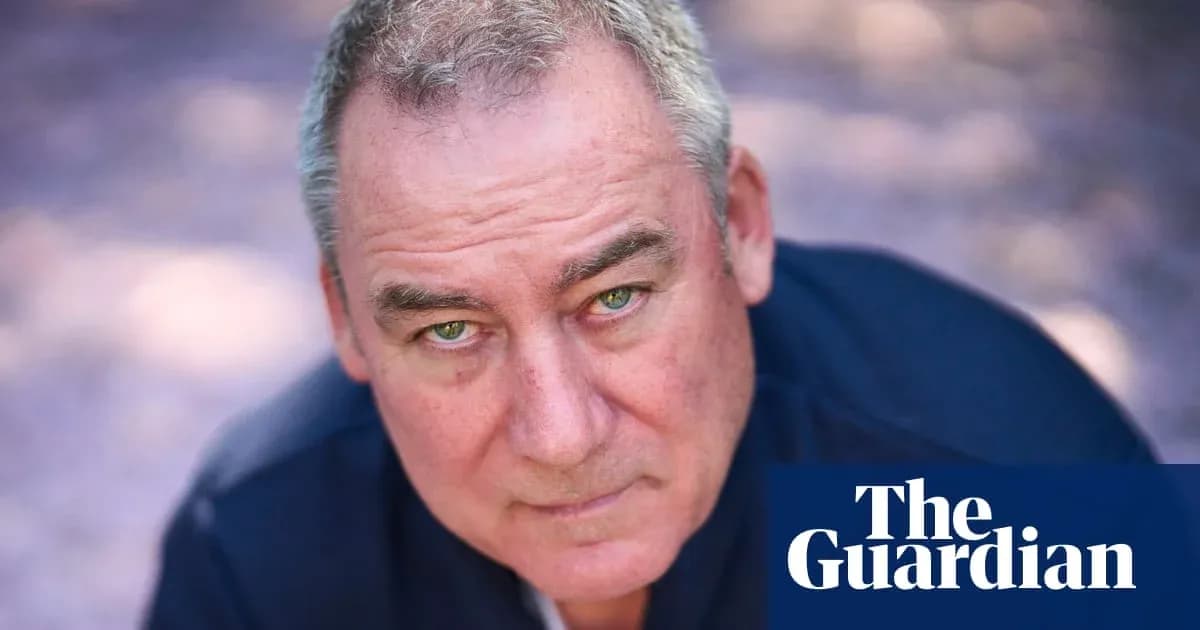
The journey to Mexico began on roads that barely deserved the name.
Before Iraq could dream of a first World Cup in 40 years, its players had to escape a country at war. Airspace closed, flights grounded, routes severed. The squad and staff stitched together their own path to history by car, bus and sheer will.
“They had to travel from different cities to Baghdad by car or bus,” recalls René Meulensteen, assistant to head coach Graham Arnold. “Some of those journeys took up to eight hours.” And that was only the prologue.
From Baghdad, the team endured roughly 15 hours on rough, punishing roads to Amman in Jordan, one of the few gateways still open. Asian-based players converged there as well, funnelling into a single point so they could finally travel together. Fifa had arranged a private charter. Even that came with a nine-hour delay.
Then came an eight-hour flight to Lisbon. A two-hour stopover. Another 12 hours to Mexico.
By the time they reached Monterrey for the decisive playoff, Iraq had already lived through a campaign unlike any other. Twenty qualifiers behind them, one match ahead. A lifetime on the road in between.
Meulensteen, the former Manchester United coach under Sir Alex Ferguson, knew what it meant. This was “the most important game in their lives”, he told them. The preparation had been brutal, but at least they had a sliver of time to recover. It was enough.
They beat Bolivia 2-1 to claim the final ticket to the World Cup.
The stands in Monterrey told their own story. Fifa’s allocation policy meant “all the remaining tickets were given to local Mexicans,” Meulensteen says. They turned up in force, joined by a large Iraqi diaspora from the United States. Mexico, of all places, had become a borrowed home.
The symbolism was impossible to ignore. Iraq’s only previous World Cup appearance, in 1986, had also been in Mexico. The staff leaned into it.
“We told the players: ‘Let’s realise what kind of journey we’ve had to get here and perhaps the match is meant to be here, as Iraq’s previous World Cup participation was staged in Mexico.’”
Back in Baghdad, it was chaos of a different kind. Fireworks, car horns, streets overflowing. “It was absolute madness in Baghdad, where it was early in the morning,” Meulensteen says. Videos flooded his phone: flags, flares, people dancing on cars. A country that has lived with conflict for decades suddenly had something else to talk about.
“The whole nation has been craving something to celebrate and this gives people a huge boost of energy and hope. You can really feel the sense of pride; there’s a genuine feelgood factor.”
This is not the first time Iraqi football has cut through the darkness. Fourth place at the 2004 Olympics, where they beat Cristiano Ronaldo’s Portugal. Asian Cup champions in 2007, a triumph that briefly united a country ripped apart by civil war. The 1986 World Cup, the Athens Olympics, the Asian Cup win – all framed by conflict, all stubborn acts of defiance.
“Iraq is still a country that is really feeling the aftereffects of the second Gulf war,” Meulensteen says. “You can see that in the cities. They are recovering, but logistically and organisationally you can’t compare it to Dubai or places in Saudi Arabia.”
Yet inside the squad, life feels different. Lighter. “You should hear them on the bus to training and matches, singing and listening to music. It’s absolutely brilliant.” The dressing room is a blend of players born in Iraq and others with Iraqi heritage. Not all of them speak Arabic. Meulensteen, now 62, does – at an intermediate level he picked up during his early coaching years in Qatar.
That move to the Gulf in 1993 came with its own twist: he had to marry his girlfriend to comply with local laws. Living together out of wedlock was not allowed. It was a small personal upheaval that would set him on a path that eventually ran through Old Trafford, World Cups and now this improbable Iraqi adventure.
He arrived at Manchester United eight years later, via academy director Lee Kershaw and a recommendation from Dave Mackay, who had met him while managing Qatar’s under-17s. Meulensteen started in the academy, then moved into individual work with first-team players. The role expanded in 2007 after a short spell as Brøndby head coach. One player, in particular, became his obsession: Cristiano Ronaldo.
“I had several sessions with him on and off the pitch, using videos to show certain things,” Meulensteen says. They broke down the penalty area into zones, studied crossing patterns, rehearsed finishing options. Every movement, every run, every decision had a purpose.
He urged Ronaldo to strip away needless flourishes and lean into pure efficiency. “I told him it’s all about being as unpredictable as possible, varying your game … Over the years, he mastered that perfectly.”
What struck Meulensteen most was Ronaldo’s relentless drive. At Carrington, United’s training ground, there was a fenced cage with rebound boards. After the main session, Ronaldo would often slip in there alone for another 10 or 15 minutes. Meulensteen added more drills, more ways to manipulate the ball off the boards, more ways to sharpen his reactions. Ronaldo devoured it.
“All the work we did that season – on the pitch and everything we discussed – I eventually compiled into a DVD for him,” Meulensteen says. A PowerPoint presentation, video clips, and a message: set clear goals. People with defined targets, he told Ronaldo, succeed more often than those who drift.
At the start of the 2007-08 season, with Ronaldo coming off a 23-goal campaign, Meulensteen asked for his new target. “Thirty,” Ronaldo replied. “What about 40?” Meulensteen countered. Ronaldo agreed. He finished with 42 as United won both the Premier League and the Champions League.
By the summer of 2008, Meulensteen had been promoted to first-team coach and handed the keys to training. Ferguson outlined his philosophy on three sheets of flipchart paper. That became the blueprint.
“It covered principles both defensively and in possession,” Meulensteen recalls. The final sheet, Ferguson said, mattered most. It defined Manchester United.
“When we attack, I want to do so with pace, power, penetration and unpredictability. And I want you to apply those four things in every training session in some way.”
Look back at United at their peak and those four words are everywhere. Breaks at speed. Relentless runners. Angles, overloads, late arrivals. Chaos with a plan.
After leaving United in 2013, Meulensteen’s career took him to Fulham, the United States, Israel, India and, eventually, to the Australia national team. Each stop added another layer: different cultures, different pressures, different ways players process fear and expectation.
“If they experience fear, I ask them to give it a shape,” he says. Name it. Is it the fear of not winning? Of letting people down? Of the noise that follows defeat? “You don’t always have control over everything that comes into your head, like what you see and what you hear. But I encourage them to focus on what they want, their desires – like playing well, scoring a goal or reaching the World Cup.”
He rarely talks about “changing” a player. He talks about adding. One more weapon. One more idea. One more habit. Ferguson, he says, understood the power of language better than anyone. “He always said the two most important coaching words are: well done.” Near the end of training, the manager would often wander past, tap Meulensteen on the shoulder, and say exactly that.
The bond between them ran beyond tactics. Ferguson is, in Meulensteen’s eyes, a storyteller with a vast curiosity. Politics, history, film – particularly the American civil war, which fascinates him. On buses and trains to away games, they would play Who Wants to Be a Millionaire? on Meulensteen’s iPad. “The number of times we made it to the end is unbelievable. He knew things I would have never known.”
They still meet for tea from time to time. Ninety minutes, two hours, gone in a flash. “It’s fantastic,” Meulensteen says. United was a “beautiful period” of his life. Now he is trying to craft another one in Iraqi colours.
The task could hardly be tougher. Iraq have landed in what many will call the group of death: France, Senegal and Norway. Meulensteen doesn’t flinch. “It’s like Manchester United against Grimsby,” he says, referencing last August’s cup upset, when the minnows stunned the giants. The point is obvious: football does not always obey logic.
He has lived this before. With Australia at the last World Cup, he and Arnold were given little chance in a group with France, Denmark and Tunisia. Australia beat Denmark and Tunisia and pushed Argentina hard in the last 16.
“That’s where our biggest strength lies: the element of surprise,” Meulensteen says.
Now he must bottle that same spirit with Iraq. A squad forged on night buses and desert roads, stitched together from different continents and languages, is heading back to the World Cup for the first time since 1986. The odds are long. The group is brutal.
But after everything they went through just to reach Monterrey, who is going to tell them they don’t belong?
Related News
UFC 332 Preview: Natalia Silva vs. Wang Cong Fight Card, Odds, Start Time, and Details
Andy Roddick Responds to Andre Agassi’s Comments on Alexander Zverev at the Laver Cup

Knicks Prepare for Flexible Roles in Title Defense

Rui Hachimura Swaps Lakers Fans to Clippers in Surprising Jersey Exchange

Who Will Be the NBA's Next First-Time All-Stars? Top Picks and Long Shots for 2027

How Strong Is Your Team at Home? Check Out the 2026 Brasileirão Home Standings