
Japan vs Sweden: Elanga's Impact in Dramatic Knockout Clash
For 45 minutes, this was a game stuck in neutral. Passes went sideways, attacks fizzled, and both teams looked more concerned with avoiding disaster than chasing glory.
Then the second half ripped the handbrake off.
Japan struck first on 56 minutes, slicing through Sweden with the kind of crisp, one-touch move that had been missing all evening. A slick exchange opened up the box and Daizen Maeda arrived to finish, sweeping his side into the lead and briefly silencing the Swedish support.
The response was instant. And emphatic.
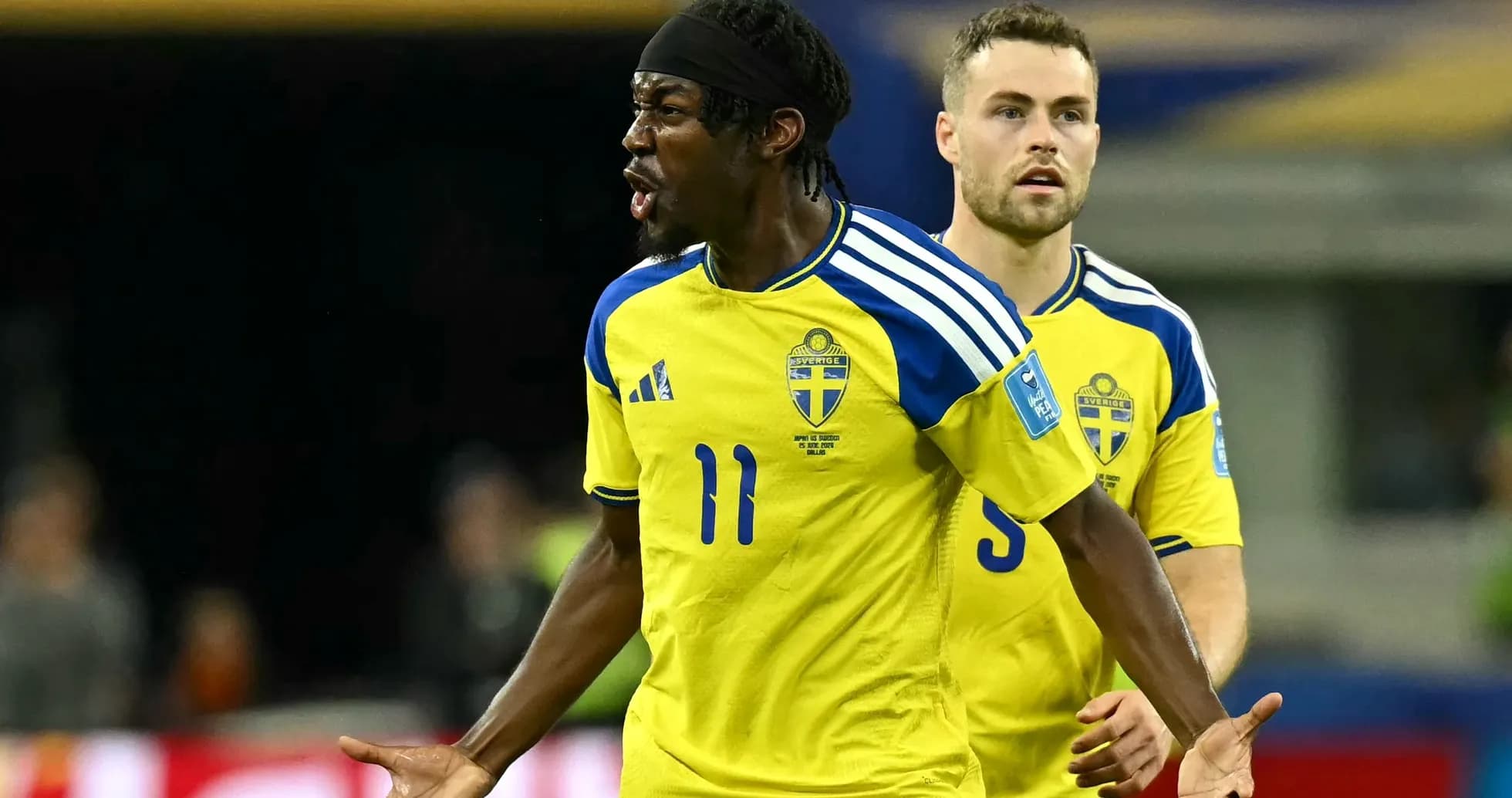
Anthony Elanga, restored to the starting XI for this decisive Group F clash, picked up the ball on the right, drove infield and decided he’d had enough of caution. On his weaker left foot, from distance, he whipped a stunning strike beyond the keeper to drag Sweden level. One touch, one swing, one tournament turned on its axis.
It was his second goal of the competition and, as it turned out, the one that carried Sweden over the line as one of the best third-placed teams. The goal settled the score. It did nothing to settle the nerves.
From there, the match descended into a frantic, open contest, both sides suddenly aware that one moment of brilliance or panic could reshape their summer. Japan probed, Sweden punched back on the counter, and every clearance felt like it came with a calculation attached.
On the Swedish bench, those calculations were literal. Staff members, phones in hand, were frantically tracking permutations and live tables. A draw, as it stood, would be enough. The message from the touchline was clear: manage the game, see it out.
On the pitch, Elanga had other ideas.
"I was just screaming: 'Come on, we can go for more'. I’m glad we’re through, I didn’t know that at the end," he admitted afterwards. While Larsson and the rest of the backroom staff tried to relay the group situation, their winger simply kept running, chasing every lost cause, determined to find a winner he didn’t actually need.
"I think they were trying to scream to me," Elanga said. "I obviously wanted to keep running. I got cramp at the end but didn't want to stop running. I'm happy and the whole team is too."
His captain was less amused in the moment. Alexander Isak later revealed he had given his teammate "a bit of a telling-off" once he realised Elanga had been oblivious to the stakes. "He was a little frustrated towards the end of the match, and you can understand why now," the Liverpool forward sighed, still half in disbelief.
The chaos almost produced a Swedish winner. Deep into the closing stages, Isak rose to meet a cross and his header crashed against the crossbar, inches from turning a fraught night into a famous comeback. The woodwork shook; so did Japanese hearts. The scoreline did not.
On the touchline, Graham Potter could only smile at the post-match revelations about Elanga’s tunnel vision. "That explains a few things. We couldn't have been clearer... Bless him! But I love him," the Sweden manager joked, the tension finally washed away.
Victor Lindelof joined in, poking fun at his teammate’s apparent absence from the pre-match briefing on scenarios and tiebreakers. "He can't have been awake enough," the captain quipped, the dressing room mood lightened by survival.
Potter had rolled the dice before kick-off. He made significant changes after the heavy defeat to the Netherlands, bringing Elanga into the starting lineup and handing Jacob Widell Zetterstrom the gloves. It was a bold show of faith in the squad’s depth, and it paid off.
"We analysed the game against the Netherlands. We had to defend the box and wide areas better [today]," Potter explained. "We decided to use Jacob's attributes because I think he's a fantastic goalkeeper. His distribution was very impressive. Anthony comes in and offers a counter-attack threat and his pace is destabilising for the opponent."
Sweden looked far more secure in their shape, more aggressive in transition, and crucially, more resilient when the game tilted against them after Maeda’s opener. Where the Netherlands defeat had exposed frailties, this performance hinted at a team starting to understand its limits and strengths.
Finishing third in Group F brings its own twist of fortune. Sweden avoid a direct collision course with Brazil, who will now face Japan. Instead, Potter’s side are likely to meet the winner of Group I on June 30, with the outcome of France vs Norway still to decide the final bracket. Germany, winners of Group E, also lurk as a potential opponent.
No one in yellow and blue is under any illusion about what comes next. The margins shrink, the opposition hardens, and the room for error disappears. Elanga, though, shows no sign of shrinking from the challenge.
"Both are good teams. It will be a challenge. All teams are good, but we are ready for what comes," he insisted.
Three games. Four points. A level goal difference. It is not a statement of dominance, but it is a foothold. After the battering by the Netherlands, Sweden have steadied themselves, rediscovered some belief, and found a match-winner who runs until he cramps and ignores the maths.
The knockouts will reveal whether that is naïve or exactly what this team needs.
Related News
Anthony Joshua Names Murat Gassiev as Next Opponent if He Defeats Tyson Fury
UFC 332: Start Time and Fight Highlights for Natalia Silva vs. Wang Cong
Court McGee Opens Up About Choosing UFC 332 as His Final MMA Fight
WBC Orders Lightweight Title Unification: William Zepeda vs Jadier Herrera
BCCI Pension List: Monthly Payments to Retired Indian Cricketers in 2025
Why Fury vs Joshua Is Set for Cardiff, and Dua Lipa’s Unexpected Role