
Jude Bellingham vs Morgan Rogers: The England No.10 Battle
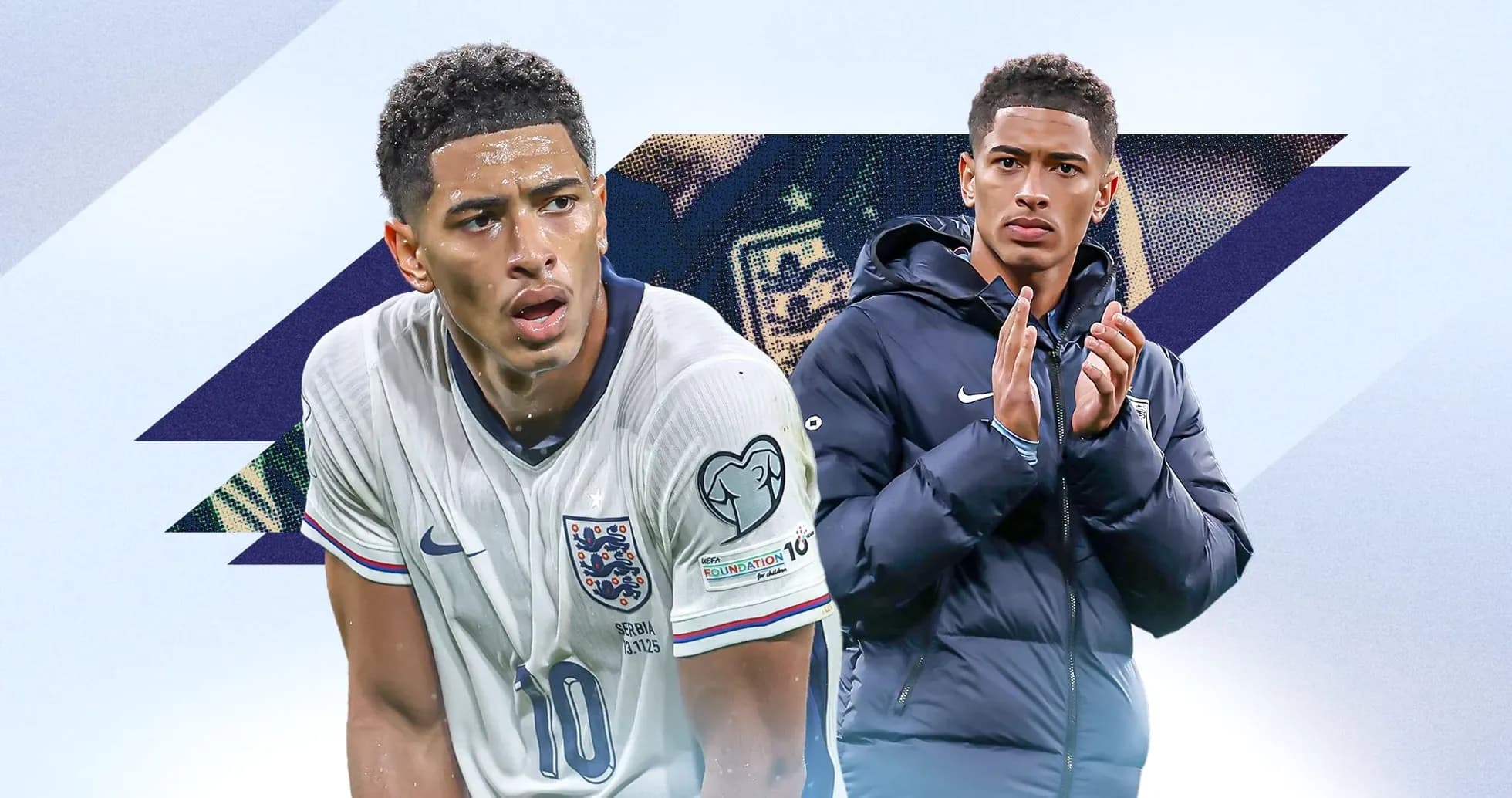
Thomas Tuchel has not tiptoed into the England job. He has kicked the door open and told everyone inside the same thing: no one is safe, no place is guaranteed, and reputations count for less than form.
That message has landed loudest in one area of the pitch – the space behind Harry Kane – where Jude Bellingham, the poster boy of a generation, suddenly finds himself in a straight fight with Morgan Rogers.
Rogers the climber, Bellingham the hunted
While Bellingham has slipped in and out of camps, nursing injuries or just emerging from them, Rogers has treated every call-up like an audition he refuses to fail.
The Aston Villa attacking midfielder has dragged his club form straight into the international set-up. He has not flooded the scoresheet, but he has flooded the game: receiving between the lines, slipping passes through gaps that barely exist, offering the kind of pure No.10 profile that Bellingham, for all his brilliance, does not naturally provide.
Tuchel has leaned into that distinction. During qualifying, as he shuffled shapes and roles, Rogers became a constant creative hum in England’s experiments. The goals did not arrive in waves, yet the structure looked cleaner with a specialist at No.10 rather than a star being wedged into the role.
“Rather than finding the best players a position to just have them on the field, it's maybe better to put everyone in their best position and have a competition. At the moment, the competition is between the two of them,” Tuchel said in November, framing the battle with a clarity that left no room for doubt.
On merit, on the last 12 months alone, Rogers has a strong claim. His work in claret and blue, and then in white, has built a compelling case file. If Bellingham wants that shirt, he now has to rip it away from someone who has earned it, not simply walk back into it.
The edge, the rage, and the manager’s misstep
Bellingham’s problem is not talent. It is everything that swirls around it.
His game has always carried a certain swagger, a visible belief that he belongs on the biggest stages. That edge is part of what makes him so dangerous. It is also what occasionally drags him into trouble.
The flashpoint came in the 3-1 defeat to Senegal last June, when a VAR decision went against England and Bellingham’s fury boiled over. His reaction – raw, public, unfiltered – stuck in the memory long after the final whistle.
Tuchel was pressed on that moment in an interview with TalkSport after the friendly at the City Ground. He did not flinch from the complexity.
“I think he brings an edge, which we welcome and which is needed if we want to achieve big things,” he said. “It needs to be channelled. The edge needs to be channelled toward the opponent, towards our goal and not to intimidate team-mates, or to be over aggressive to team-mates or referees.”
So far, so measured. Then came the line that has followed Tuchel ever since, the one that turned a tactical conversation into a cultural flashpoint.
“I see that it can create mixed emotions. I see this with my parents, with my mum that she sometimes cannot see the nice and well-educated and well-behaved guy that I see… If he smiles, he wins everyone, but sometimes you see the rage, the hunger and the fire, and it comes out in a way that can be a bit repulsive. For example, for my mother, when she sits in front of the TV, I see that, but in general we are very happy to have him, he's a special boy."
In a few sentences, England’s main man had been framed as both essential and “a bit repulsive” – not by a pundit, but by his own manager quoting his mother. The intention might have been to humanise him, to acknowledge the polarising energy that comes with such a forceful personality. The effect was to put Bellingham’s attitude on trial.
A return under the microscope
When Bellingham finally rejoined the squad in November after surgery, every glance, every gesture, every substitution became a story.
Tuchel left him on the bench for the first game of that international break against Serbia. A message, perhaps. Or simply a medical decision. Either way, it was noticed.
Three days later, Bellingham returned to the XI against Albania. He played, he probed, and then, with six minutes left of England’s final qualifier, his number went up. As he walked off, cameras caught what looked like an angry gesture, frustration spilling out again.
Tuchel did not indulge it.
“That's the decision, and he has to accept the decision,” he said. “His friend is waiting on the sideline, so you need to accept it, respect it, and keep on going."
The dynamic was clear: the coach demanding deference to the collective, the star being reminded that he is not above the team. The relationship, already coloured by those earlier comments, slipped deeper into the spotlight.
The wider storm around Jude
Into that space stepped Ian Wright, who did not bother with euphemisms when he addressed the tone of some of the criticism around Bellingham.
“I don't think they're ready for a black superstar who can move like Jude is moving. They can't touch him," Wright said of sections of the English media and fanbase. "He goes out there, he performs, he does what he does. It's too uppity for these people.
“They all love N'Golo Kante. He's a humble Black man, gets on with what he's doing. Someone like Jude frightens these people because of his capability and the inspiration he can give. Because if you are outspoken, Black, and playing to that level and not caring, that frightens certain people. It's a tiring exercise to speak about.”
Wright’s words cut to a deeper fault line. Bellingham’s confidence, his refusal to shrink, his insistence on playing the game on his terms – all of it, Wright argued, unsettles those who prefer their Black stars quiet, deferential, endlessly grateful.
The debate around Bellingham stopped being just about pressing triggers and final-third runs. It became a conversation about who gets to be adored, who gets to be questioned, and why.
Tuchel’s Dallas dilemma
Strip away the noise, though, and one fact remains: when Jude Bellingham plays at his peak, England rise with him. The pitch tilts. The team gains a player who can break lines, score, assist, drag games out of their pattern and into his own.
The issue is that those peak performances have thinned out. The bursts of dominance have become more sporadic. Tuchel, never one to be swayed purely by reputation, now stands on the brink of a World Cup opener in Dallas with a choice that cuts to the core of his philosophy.
Does he back one of the most gifted midfielders on the planet, knowing that the same fire that fuels him can occasionally burn the wrong way? Or does he reward the form and clarity of Rogers, a player with far less tournament experience but a cleaner recent body of work in the role?
Tuchel has tried to jolt Bellingham, to challenge him publicly and privately, to turn that inner blaze into something more controlled, more consistently productive. Instead, his own clumsy phrasing and the noise around it have often drowned out the actual footballing question: is Bellingham, right now, playing well enough to keep a surging rival out of the team?
He will wear the No.10 shirt this summer. That much is settled. What is not settled is whether he starts as the No.10 against Croatia, or watches the opening exchanges from the bench while Rogers steps into the light he once assumed was his by right.
Either way, Bellingham will not drift quietly through this World Cup. He will shape it – with match-winning brilliance, or with flashes of petulance that spark another storm.
Which version turns up may not just define his tournament. It may decide how far England go.
Related News

Wilfred Ndidi’s Marriage Reportedly Ends as He Enters New Relationship

Cristiano Ronaldo's Top 5 Most Valuable Cars in His Extraordinary Collection
Ben Whittaker’s Challenge to Prove Eddie Hearn’s Bold British Boxing Bet
Peter Handscomb on the Challenge of Facing Indian Bowlers
How to Watch UFC 332: Silva vs. Wang Live on CBS and Paramount+ This Saturday
Raul Rosas Jr. Shares His Thoughts on the Shocking UFC Vegas 121 Finish Against Raoni Barcelos