
Juventus and AC Milan Share Points in Tactical Stalemate
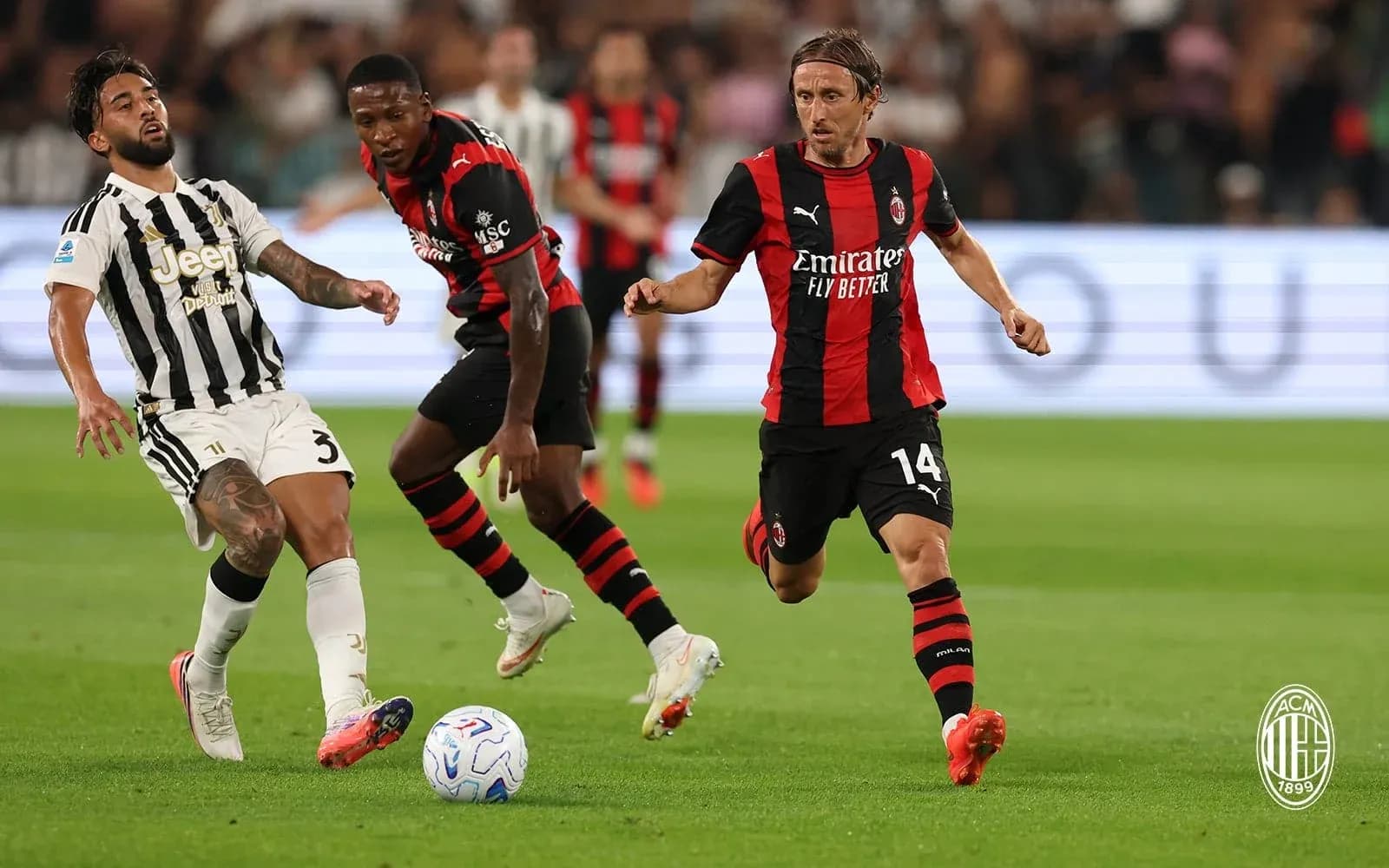
Under the Turin lights at Allianz Stadium, Juventus and AC Milan closed out a cagey 1–1 draw that said as much about their evolving identities as it did about the scoreline. Following this result, both sides sit on 7 points from 3 matches in Serie A, each with a goal difference of 3, and each carrying the same early-season form line of two wins and a draw. It felt like a meeting of equals, and the football largely reflected that.
Juventus arrived as a team quietly rebuilt under Luciano Spalletti. Heading into this game they had been efficient rather than explosive: 4 goals in total across 3 league outings, with an overall average of 1.3 goals scored and just 1 conceded in total at an average of 0.3 per match. At home they had been solid, scoring 3 and conceding 1 in 2 matches, with averages of 1.5 goals for and 0.5 against. Milan, under Ruben Amorim, brought a slightly sharper attacking edge: 5 goals in total from their opening 3 fixtures, averaging 1.7 goals scored and 0.7 conceded overall, with their away attack particularly lively at 1.5 goals per game on their travels.
This clash, then, was always going to be framed by the tension between Juventus’ growing defensive control and Milan’s willingness to stretch the pitch in a 3-4-2-1. The lineups underlined that contrast. Juventus’ 4-2-3-1 was classic Spalletti: structure first, then freedom in the final third. Guglielmo Vicario anchored a back four of Zeki Celik, Jhon Lucumi, Bremer and Pierre Kalulu, with Manuel Locatelli and Douglas Luiz forming a double pivot designed to both shield and dictate. Ahead of them, K. Alajbegovic, N. Gonzalez and F. Conceicao supported lone forward Randal Kolo Muani.
Milan’s shape was more fluid but equally deliberate. Mike Maignan stood behind a back three of Strahinja Pavlovic, Koni De Winter and Mario Gila. The wing lanes were entrusted to Pervis Estupinan and D. Moreira, with a central midfield pairing of Luka Modric and Yunus Musah tasked with threading the ball through Juventus’ press. High up, Alexis Saelemaekers and Adrien Rabiot floated behind Gonçalo Ramos, a front triangle built to interchange and drag Juventus’ centre-backs into uncomfortable zones.
Both squads were shaped by absences. Juventus were hit hardest: J. Cabal (thigh), A. Cambiaso (ankle), J. Ekhator and W. McKennie (both muscle injuries), P. M. Sarr (muscle), K. Thuram (knee), K. Yildiz (foot) and A. Milik (inactive) all missed the fixture. That cluster of injuries thinned Spalletti’s options, particularly in wide and box-to-box roles, and perhaps explained why he leaned into a disciplined 4-2-3-1 with clear defensive responsibilities for his full-backs and pivots.
Milan’s list was lighter but not insignificant: M. Gabbia’s ankle injury reduced their depth in central defence, subtly raising the stakes for De Winter and Gila to stay error-free. With Ruben Loftus-Cheek and Alphadjo Cissé both already on the disciplinary radar in the league – each carrying a yellow card so far – Amorim also had to balance aggression with caution in his rotation, even if neither started here.
In terms of disciplinary trends, Juventus came in with a curious yellow-card profile: 20.00% of their cautions arriving in the opening 15 minutes, another 40.00% between 46–60 minutes, and a further 20.00% in each of the 76–90 and 91–105 windows. That pattern suggests a side that tackles the game aggressively from the start, then spikes again just after half-time and in the late phases as intensity rises. Milan’s yellows, by contrast, were heavily back-loaded: 20.00% in each of the 46–60, 61–75 and 76–90 intervals, then a striking 40.00% between 91–105 minutes, a late-game surge that speaks to how Amorim’s side often defends deeper and fouls more as matches stretch.
That timing matters when you map it onto tactical matchups. Juventus’ early-game bite from the double pivot of Locatelli and Douglas Luiz was always likely to collide with Milan’s attempt to build through Modric and Musah. The “engine room” battle was clear: Locatelli’s tempo control and Douglas Luiz’s ball-winning against Modric’s passing angles and Musah’s carrying power. Whenever Juventus stepped up to press Milan’s first phase, those duels decided whether the home side could sustain pressure or be sliced open by vertical passes into Ramos and the half-spaces occupied by Rabiot and Saelemaekers.
Higher up, the “Hunter vs Shield” storyline centred on how Kolo Muani would fare against Milan’s back three. De Winter, the central pillar, had to marshal depth while Gila and Pavlovic dealt with the channels. Juventus’ season profile – 2 clean sheets in total and no matches without scoring – hinted at a side comfortable in tight, controlled games, and the 1–1 scoreline here fit that pattern. Milan, with just 1 clean sheet overall and 2 goals conceded on their travels, again showed that while they can hurt opponents, they also leave moments to be exploited, particularly when wing-backs are caught high.
From Milan’s perspective, the attacking threat was not confined to the starting XI. Alphadjo Cissé, with 2 goals in total this campaign from limited minutes, and Samuel Chukwueze, already on 2 assists overall, lurked on the bench as game-changers. Their presence framed the second-half narrative: if Juventus’ yellow-card spike after the break forced Spalletti to dial down the press, Amorim could unleash pace and directness against a tiring back line.
On Juventus’ side, Teun Koopmeiners was the key weapon in reserve. With 1 goal and 1 assist in total from just 46 minutes this Serie A season, he has been ruthlessly efficient. His ability to arrive late in the box and thread passes from the left half-space made him an ideal candidate to tilt the balance if the initial 4-2-3-1 lacked penetration.
Statistically, both teams came in with clean penalty records: no spot-kicks taken, scored or missed in total so far. That removed one layer of volatility and placed the emphasis on open-play structure. Juventus’ overall defensive record – just 1 goal conceded in 3 matches – suggested they would keep Milan’s 1.7-goals-per-game attack from running riot, while Milan’s own blend of pressing and back-three stability made it unlikely they would collapse despite Juventus’ 1.5 goals per game at home.
The result, and the way the match unfolded, reinforced the pre-game numbers. Juventus remain a side built on control, compactness and incremental risk, their 4-2-3-1 giving them a reliable platform even with a long injury list. Milan, with their 3-4-2-1 and a bench stacked with creative and direct threats, continue to look like a team whose ceiling is defined by how well they can manage late-game chaos.
On balance, the statistical prognosis still leans towards both staying firmly in the European race. Juventus’ defensive solidity and Milan’s slightly superior attacking averages should keep them in the upper reaches of the table. In a league where margins are thin and xG will often be shaped by these fine structural battles, this 1–1 felt less like a stalemate and more like an opening chapter in a season-long duel between two sides recalibrating at the top end of Serie A.
Related News
Napoli vs Bologna Stats: Head-to-Head Record and Recent Meetings
Como vs Parma Stats: Head-to-head Record Before Match
Torino vs AS Roma Stats: Head-to-Head Overview Before Match

AS Roma vs Atalanta: A Tactical Analysis of Serie A Clash
Atalanta vs Cagliari Stats: Head-to-head Record and Recent Form
Sassuolo vs Juventus Stats: Head-to-head Overview Before Match