
Kylian Mbappé Responds to Racism Amid World Cup Success
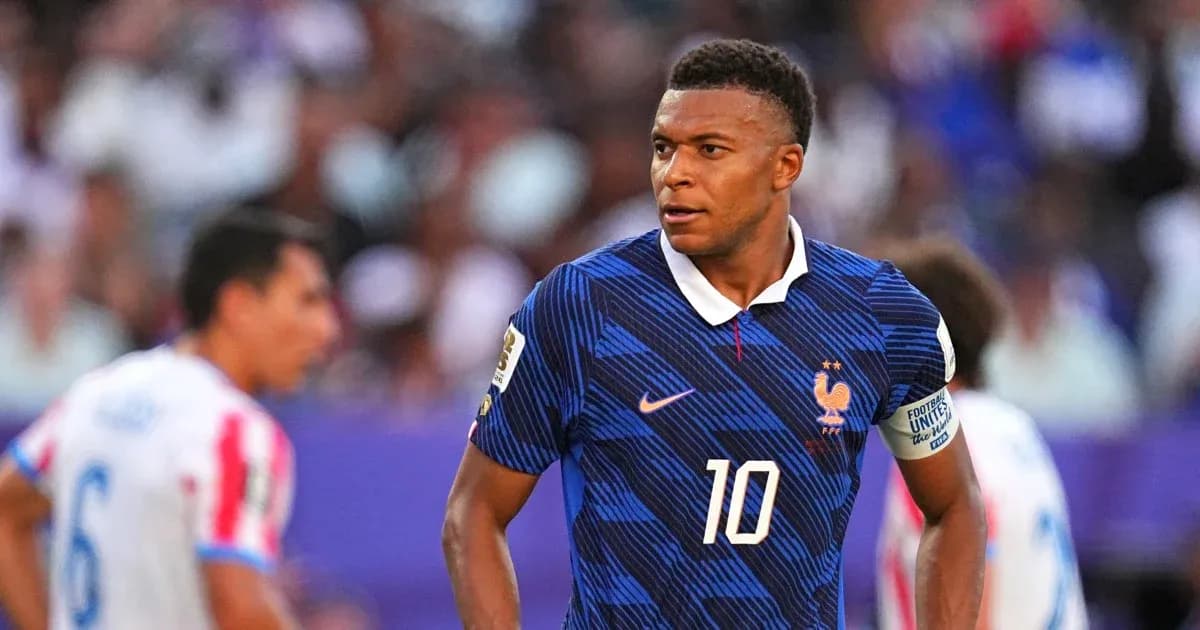
Kylian Mbappé has never been shy of a big stage. On Saturday in Philadelphia, it was his right boot from the penalty spot that sent France into the World Cup quarter-finals with a 1-0 win over Paraguay. Two days later, it was his pen that did the damage.
The France captain launched a ferocious response on Monday to a racist tirade from Paraguayan senator Celeste Amarilla, branding her “a despicable woman and unworthy of your position” after she attacked his origins, his identity and even his literacy in a post on X.
This was not a routine social-media spat. It was a World Cup knockout match spilling over into politics, race and national image.
A World Cup win, followed by a racist storm
The football itself had been bruising. France edged a bad-tempered last‑16 tie thanks to Mbappé’s cool penalty, surviving Paraguay’s physical approach and flashes of ill discipline to move on in the tournament.
The aftermath turned uglier.
Amarilla published a long, racist screed online, describing Mbappé as a “colonized Cameroonian, desperately trying to pass himself off as French,” calling him a “brute” and claiming he had not learned to write. She went even further, saying Paraguay’s players should have slapped him after the match.
The attack was personal, racial and incendiary. It did not go unanswered.
Mbappé hits back – and defends Paraguay’s players
Mbappé, now the face of this France side and one of the most prominent figures in world sport, chose not to let the comments slide. His statement, posted on Monday, did more than defend his own name.
“Madame Celeste Amarilla, you are a despicable woman and unworthy of your position. You do not represent Paraguay, that country which has sweated passion and honor throughout the competition,” he wrote, drawing a clear line between the senator and the team that had pushed France to the limit.
He accused her of staining what had been a historic campaign for Paraguay.
“Through your recklessness and your brazen racism, the entire world has already forgotten the journey and the historic effort that your players accomplished during this World Cup, making way for an incompetent woman who gives the worst possible image of her country.
“I will never allow people like her the freedom to spread their hatred and racism across the world.”
In a few paragraphs, Mbappé turned the spotlight back on the Paraguayan squad, praising their “passion and honor” and suggesting that Amarilla, not he, had disrespected the shirt.
FFF moves to press charges
France’s response did not stop with its captain.
The French Football Federation stepped in, describing Amarilla’s remarks as “utterly abhorrent and unacceptable” and announcing it would file a criminal complaint.
“These remarks are criminal and reprehensible. They must be prosecuted here as elsewhere. The FFF is reporting the matter to the public prosecutor’s office with a view to legal proceedings,” the federation said.
For the FFF, this was not just about one player. It was about the badge.
“These remarks bring shame upon those who make them and those who disseminate them. The players of the French national team represent France; it is our country that is being insulted.”
When a federation talks in those terms, it signals a line has been crossed that football authorities are no longer willing to treat as background noise.
Paraguay distances itself
In Asunción, the political fallout began quickly. The Paraguayan government moved to separate the state and its people from Amarilla’s words.
It issued a statement saying it “deplores and rejects the statements” made by the senator, calling them “contrary to the values and principles that inspire peaceful coexistence and respect for human dignity that our country promotes.”
The government stressed that her comments were her own.
“The statements of the aforementioned legislator correspond exclusively to the exercise of her individual responsibility as a member of the Legislative Branch and in no way represent the position of the Government of the Republic of Paraguay or the Paraguayan people.”
Inside the country’s legislature, there was more condemnation. Basilio Nunez, president of the National Congress, said Amarilla’s words did not reflect the “genuine values” of Paraguayans.
“As President of the National Congress, I strongly reject racist, xenophobic messages and those that incite violence against any person,” he said, before turning back to the football.
“The Paraguayan national team gave their all with honor and grit at the World Cup. Politics and sports should be kept separate.”
The message was clear: the players had earned respect on the pitch; a politician had squandered it off it.
Macron weighs in, France closes ranks
From Paris, the affair climbed to the very top of the state. French President Emmanuel Macron’s office revealed that the Paraguayan president had written to him, expressing support and condemning the senator’s remarks.
Macron himself then publicly backed his captain.
“Another goal for Kylian Mbappé. Against racism this time. All my support. When words smear, our values respond: dignity, respect, fraternity,” he posted on X.
The symbolism was stark: the head of state aligning with his national team’s leader, framing the incident as a wider fight over France’s values.
Inside the France camp, the reaction was one of disgust. Assistant coach Guy Stephan did not mince his words.
“We haven’t spoken with Kylian yet, haven’t had the opportunity,” he said. “But in three words: it’s disgraceful, vile, outrageous.”
A captain beyond the pitch
For Mbappé, this episode underlines a role that now stretches far beyond goals and trophies. At 25, he is not just France’s match-winner; he is its standard-bearer, expected to answer when racism strikes at the heart of the national team.
He converted the decisive penalty in Philadelphia. Two days later, he took another, from distance, aimed squarely at a senator thousands of miles away.
The World Cup will move on to quarter-finals, tactics, selection debates and all the usual noise. But one question lingers in the wake of this clash: in an era when footballers command global platforms, how often will they be asked to step out from the touchline and lead the fight off the pitch as well?
Related News
Anthony Joshua Names Murat Gassiev as Next Opponent if He Defeats Tyson Fury
UFC 332: Start Time and Fight Highlights for Natalia Silva vs. Wang Cong
Court McGee Opens Up About Choosing UFC 332 as His Final MMA Fight
WBC Orders Lightweight Title Unification: William Zepeda vs Jadier Herrera
BCCI Pension List: Monthly Payments to Retired Indian Cricketers in 2025
Why Fury vs Joshua Is Set for Cardiff, and Dua Lipa’s Unexpected Role