
Lazio and AC Milan Draw 2–2: A Statement Match in Serie A
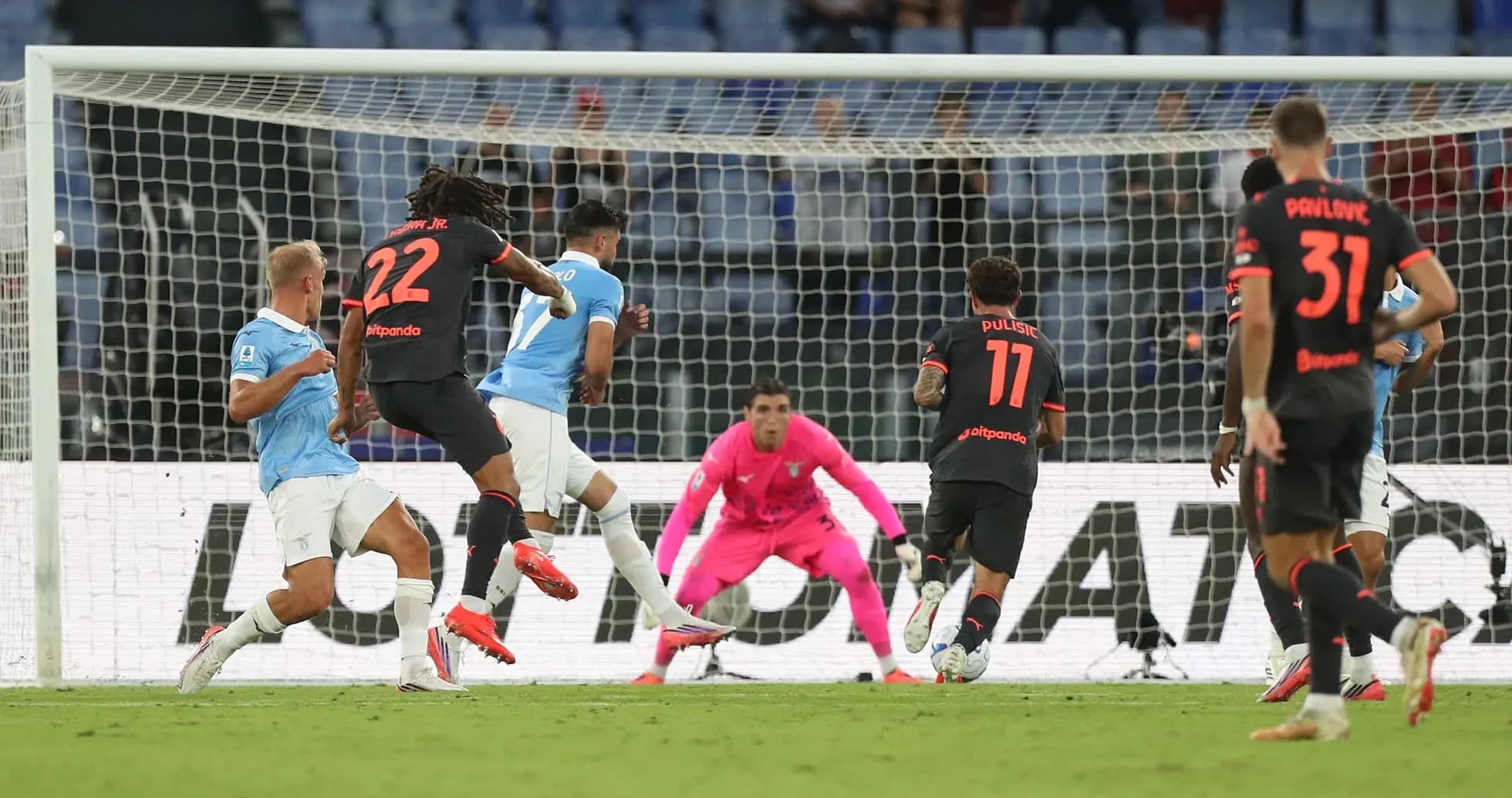
Under the fading light of a Roman evening, Lazio and AC Milan walked off the Stadio Olimpico pitch locked at 2–2, a scoreline that felt less like closure and more like a manifesto for what these two sides intend to be in this Serie A season.
I. The Big Picture – Two Contenders, One Statement Game
This was Round 4 of the Serie A regular season, and the table already framed the stakes. Heading into this game, Lazio sat 4th with 10 points from 4 matches, unbeaten with 3 wins and 1 draw. Their overall goal difference was +3, built from 6 goals scored and 3 conceded. AC Milan arrived in Rome ranked 6th, also unbeaten, on 8 points from 4 games, with their own overall goal difference at +3 (7 scored, 4 conceded).
The match itself split cleanly in two: Lazio’s first‑half dominance and Milan’s second‑half response. The home side led 2–0 at the break, only for Milan to claw back to 2–2 by full time. It was a tactical arm-wrestle between Gennaro Gattuso’s aggressive 4‑3‑3 and Ruben Amorim’s structured 3‑4‑2‑1, played at a tempo that matched the expectations of a Champions League-chasing clash.
Lazio’s season profile underlined what we saw early: in total this campaign they had scored 6 goals in 4 games, with an overall average of 1.5 goals per match, split evenly between home and away (1.5 at home, 1.5 on their travels). Defensively they had conceded 3 in total, at 1.0 per home game and 0.5 away, a solid platform that allowed the front three to be bold. Milan, meanwhile, came in with 7 goals in total, averaging 1.8 per game overall – 2.0 at home and 1.7 away – and conceding 4 (1.0 overall, 1.3 away). On paper, it was an attacking contest waiting to ignite; on the grass, it did exactly that.
II. Tactical Voids – Lazio’s Missing Spine and the Cost of Depth
Lazio’s squad sheet told its own story of absences. A cluster of defenders and midfielders were ruled out: F. Dele-Bashiru (muscle injury), D. Doekhi (hand injury), A. Furlanetto (knee injury), A. Marusic (muscle injury), Patric (ankle injury), L. Pellegrini and N. Rovella (both listed with injuries). For a side that has leaned on defensive stability – 2 clean sheets in total this season, one at home and one away – this stripped Gattuso of rotation options and forced a certain rigidity.
The back four of R. Floriani, J. Sutalo, O. Provstgaard and N. Tavares in front of C. Mandas had to go the distance, with no like-for-like senior alternatives in the starting XI. The midfield trio of D. Frattesi, R. Belahyane and K. Taylor carried extra load without Rovella’s metronomic presence. Yet for 45 minutes, they looked anything but stretched.
Disciplinary trends added another subtle layer. Lazio’s yellow cards this season had been spread, but with a notable 25.00% of their cautions coming between 16–30 minutes and another 25.00% between 31–45. They also showed a late spike with 25.00% between 91–105 minutes. Milan, conversely, concentrated their yellows almost entirely after the break: 25.00% each in the 46–60, 61–75, 76–90 and 91–105 minute windows. That pattern of Milan growing more combative – or desperate – as games wore on foreshadowed the narrative here: Lazio’s early control, Milan’s increasingly physical comeback.
III. Key Matchups – Hunter vs Shield, and the Engine Room Duel
The headline hunter was D. Frattesi. Heading into this game, he was one of Serie A’s early standout scorers: 3 goals in 4 appearances, with a strong rating of 7.55, 5 shots in total (3 on target), and a willingness to work both ways – 6 tackles, 3 successful blocks, 4 interceptions. From the right interior of Lazio’s 4‑3‑3, he crashed into the box and broke lines, turning midfield runs into goal threats.
He was testing a Milan defence that, in total this season, had conceded 4 goals in 4 matches, but more vulnerably 4 on their travels at an average of 1.3 away goals against per game. The “hunter vs shield” battle was particularly embodied by S. Pavlovic. The Serbian centre-back had been immense so far: 12 tackles, 1 blocked shot, 1 interception and 40 duels contested with 29 won, plus 268 completed passes at 92% accuracy. Yet he also walked a disciplinary tightrope with 2 yellow cards already. Frattesi’s late runs into Pavlovic’s zone were the flashpoint where Lazio’s verticality met Milan’s last line.
On the flanks, another duel defined the evening: M. Zaccagni against Milan’s right side. Zaccagni came into the match as one of the league’s most productive creators: 2 assists, 8 key passes and 10 shots (6 on target), with 10 dribble attempts and 4 successful. He also carried an edge – 2 yellow cards, 7 fouls drawn, 3 committed – a winger who turns every duel into a contest of nerve. Against a Milan shape that relied on S. Chukwueze and P. Estupinan to patrol the flanks in a four-man midfield, Zaccagni’s capacity to isolate and drive at defenders was central to Lazio’s early success.
For Milan, the engine room ran through A. Rabiot and L. Modric. Rabiot had quietly become one of the league’s most efficient all‑rounders: 1 goal, 2 assists, 133 passes at 84% accuracy, 3 key passes and 2 tackles with 1 block. He was the link between Milan’s back three and the advanced line of R. Loftus-Cheek and A. Cisse. Modric, stationed deeper, orchestrated the rhythm. Together, they squared up against Belahyane and Taylor in a battle for second balls and transitions.
Out wide, Chukwueze arrived as one of Serie A’s form creators: 2 assists, 10 key passes, 9 dribble attempts with 6 successful, plus 4 tackles and 1 block. His ability to beat his man and cut inside from the right stretched N. Tavares and forced Lazio’s midfield to tilt. When Milan mounted their second-half surge, it was often Chukwueze’s carries that bent the game’s geometry.
Up front, A. Cisse – 2 goals in 4 games, 6 shots and 8 fouls drawn – gave Milan a vertical outlet between the lines, while G. Ramos led the line as the reference point. Their interplay against Sutalo and Provstgaard became more threatening as Lazio’s legs and concentration waned.
IV. Statistical Prognosis – A Draw That Fits the Numbers
Following this result, the underlying patterns of both sides feel reinforced rather than contradicted. Lazio’s overall scoring rate of 1.5 goals per game and Milan’s 1.8 suggested a multi-goal contest; a 2–2 draw sits squarely within that expectation. Lazio’s defensive record – 3 goals conceded in total before this match – hinted that sustaining a low‑concession rate against a high‑volume Milan attack was always going to be difficult over 90 minutes.
Without explicit xG figures, the proxy indicators point to balance: Lazio’s clean-sheet capacity (2 in 4) colliding with Milan’s habit of always finding a way to score (failed to score 0 times this season) made a shared outcome plausible. Milan’s away profile – unbeaten on their travels with 1 win and 2 draws, scoring 5 and conceding 4 – reads like the script we just watched: they give you chances, but they always come back.
Tactically, the draw feels like a fair equilibrium between Lazio’s structured 4‑3‑3, powered by Frattesi’s box arrivals and Zaccagni’s creativity, and Milan’s 3‑4‑2‑1, where Rabiot and Chukwueze knit together Amorim’s vertical transitions. In narrative terms, this 2–2 is less about two points dropped and more about two contenders revealing their true selves: Lazio, brave but stretched by absences; Milan, imperfect but relentless.
If this match had an invisible xG ledger, it would likely show what the scoreboard already told us: neither side did quite enough to dominate, but both did more than enough to convince that they will remain near the top of Serie A as the season unfolds.
Related News
AC Milan vs Lecce: Head-to-Head Record and Stats
Juventus vs Atalanta Stats: Head-to-head Record Before September Match

Napoli Secures Narrow 1-0 Victory Over Bologna in Serie A
Frosinone vs Como Stats: Head-to-Head Record and Recent Form
Como Edges Parma 2–1: A Statement of Intent in Serie A

Torino vs AS Roma: Clash of Contrasting Trajectories