
Lionel Messi Makes History Again with Stunning Goal in Miami
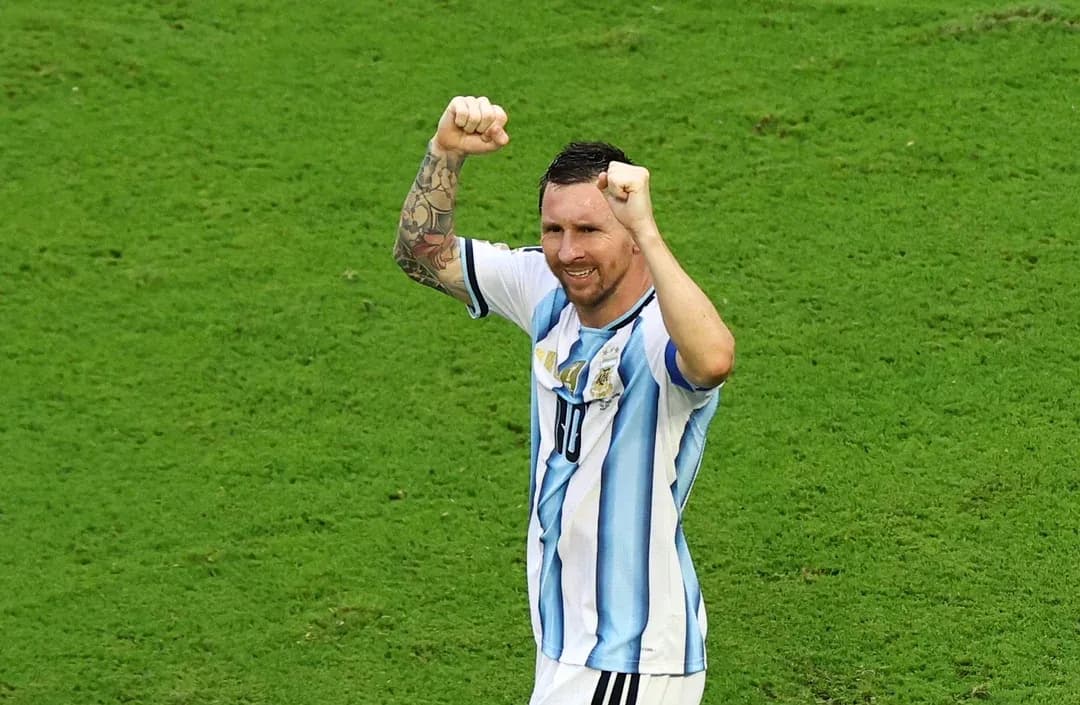
Lionel Messi, again. Of course.
On a humid Miami night, in a World Cup knockout tie that threatened to drift, the 39-year-old took a familiar script and wrote another new line of history across it. Cape Verde had held firm, their charismatic goalkeeper Vozinha relishing the spotlight, the crowd torn between the tournament darlings and the enduring king.
Then, in the 29th minute at Miami Stadium, the game bent to Messi’s will.
Lisandro Martínez started it with a raking switch of play, a pass that sliced open Cape Verde’s defensive shape and invited trouble. Messi, now the Inter Miami talisman playing in his adopted home city, drifted in from the right, ghosting into the box with that deceptive, unhurried glide that defenders have been misreading for nearly two decades.
One touch to set, another to open the angle. Left foot, always the left. He shaped, paused for the briefest heartbeat, then lashed a shot with that same trusted boot, ripping it into the top corner at the near post on the left side. Vozinha — “El Abuelo,” the grandfather of this World Cup and one of its most popular figures — sprang, but the ball was already past him, screaming into the roof of the net.
It was ruthless. It was beautiful. It was unmistakably Messi.
The goal did more than break Cape Verde’s resistance. It rewrote the record book again. This was Messi’s seventh goal of the 2026 FIFA World Cup, making him the first player ever to score seven or more goals at two different editions of the tournament, after reaching the same mark in Qatar 2022. The numbers, once a backdrop to his artistry, now feel like a second career running alongside the first.
The layers of his World Cup legacy keep stacking. Cristiano Ronaldo has finally ended his long, much-discussed drought in World Cup knockout matches, but Messi still stands alone in one key regard: he remains the only player to score in five different knockout stages, all in consecutive tournaments. From one World Cup to the next, from one generation of teammates to another, he has kept finding a way to leave his mark when the margins are thinnest.
This strike against Cape Verde carried another small milestone. With the 2026 format introducing a Round of 32 for the first time, this was Messi’s first goal at that stage. The rest of his knockout catalogue is already etched into recent memory: Australia in the Round of 16, the Netherlands in the quarterfinals, Croatia in the semifinals, and France in that epic final in Qatar 2022.
Now, in a new World Cup, in a new city that already feels like his stage, he has simply added another chapter. The opponents change, the stadium names change, even the tournament format changes.
The outcome, when the ball drops to that left foot in a game that matters, rarely does.
Related News

Anthony Joshua Names Murat Gassiev as Next Opponent if He Defeats Tyson Fury

UFC 332: Start Time and Fight Highlights for Natalia Silva vs. Wang Cong
Court McGee Opens Up About Choosing UFC 332 as His Final MMA Fight
WBC Orders Lightweight Title Unification: William Zepeda vs Jadier Herrera
BCCI Pension List: Monthly Payments to Retired Indian Cricketers in 2025
Why Fury vs Joshua Is Set for Cardiff, and Dua Lipa’s Unexpected Role