
Marotta's Vision for Inter Amid Premier League Wealth
Beppe Marotta has never been one for illusions. Standing in front of Globo TV cameras on Inter’s pre-season tour of Australia, the club president stripped away any lingering fantasy that the Nerazzurri can simply spend their way into the same financial orbit as the Premier League.
The gap is real. And he’s not pretending otherwise.
Inter have already felt it this summer. Marco Palestra slipped through their fingers and landed at Chelsea. A move for Anan Khalaili from Union Saint-Gilloise disintegrated at the medical stage. Two pursuits, no signings. The frustration is tangible, not theoretical.
Marotta didn’t dress it up. He spoke about limits – what Inter can and cannot do in a market increasingly bent around English money. The message was as much for supporters as it was for rivals: this club will not chase the Premier League’s chequebook war.
“Spending Crazy Money” Is Not the Plan
Serie A once ruled the transfer world. In the 1980s and 90s, Italy set the standard, dictating the tempo of global football business. Marotta knows that history as well as anyone, but he has no interest in turning it into a dangerous nostalgia trip.
Trying to claw back that status by inflating fees, he argued, would be a mistake. Inter, he said, cannot think of bridging the distance to England by “spending crazy amounts of money,” and the idea that whoever spends the most automatically wins runs against the very spirit of sport.
In other words: if you’re waiting for Inter to join a bidding war they cannot win, don’t.
A Different Blueprint
So what does a club do when it cannot outspend its rivals?
Marotta’s answer is blunt and structured. Inter must build through what he calls management quality, coaching, and culture. Not slogans. Not marketing campaigns. Real work.
He laid out a competitive blueprint rooted in competence rather than fireworks: smarter recruitment, sharper benches, a dressing room that understands what it means to wear the shirt. For him, that’s where Inter can still go toe-to-toe with anyone.
And then there is the stadium.
The New Stadium as a Turning Point
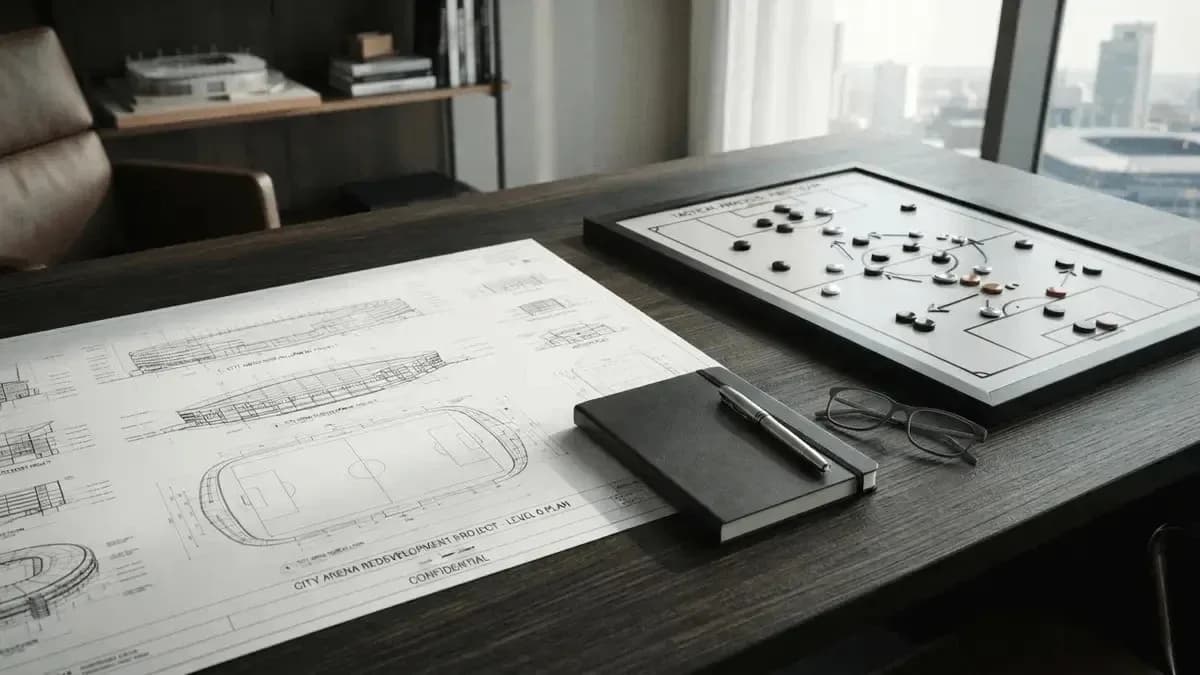
Marotta highlighted the new stadium project as a decisive passage in Inter’s modernisation. This is not a luxury item in his eyes; it’s a structural necessity.
He framed the arena as a long-term lever, a way of shifting the club’s economic base in a landscape dominated by Premier League broadcast deals and commercial muscle. The project, he stressed, is fully aligned with the Oaktree ownership group, a signal that the boardroom and the president are pulling in the same direction.
Inter are not just chasing players. They are trying to rebuild the stage on which those players perform.
Winning Now, Building for Tomorrow
All of this is happening against the backdrop of a team that is hardly struggling domestically. Inter come off a season in which they lifted both the Serie A title and the Coppa Italia. On home soil, they imposed themselves. In Europe, it was a different story. The Champions League exposed the distance still to travel.
Asked about ambitions for the new campaign, Marotta did not lower the bar. The expectations, he said, remain unchanged: Inter enter every competition aiming for the maximum result. That is the standard he believes the club must live with.
He reminded everyone that Inter are accustomed to winning, but he was quick to strip away any sense of entitlement. Behind every trophy, he insisted, lie passion, struggle, work ethic, and a deep sense of belonging.
No promises of galáctico summers. No mirage of Premier League-style spending sprees. Just a stark choice: build smarter, or fall behind.
Inter have made theirs. Now the season will reveal whether creativity and competence can still bend a football economy that so often seems ruled only by cash.
Related News
Carlos Alcaraz Calls for Change After Laver Cup Court Conditions
Alexander Zverev Secures Laver Cup Victory for Team Europe with Straight-Set Win Over Learner Tien
Novak Djokovic Shares Fitness Update Before China Open Return After US Open Upset
Shubman Gill's Captaincy Record Across All Formats: Tests, ODIs, T20Is, and IPL
Kuldeep Yadav Named Player of the Match Over Virat Kohli Despite Century in IND vs WI 1st ODI
India Advances to Asian Games 2026 Cricket Semi-Finals After Rain Washout Against Afghanistan