
Mexico City Celebrates World Cup Opener with a 2–0 Victory
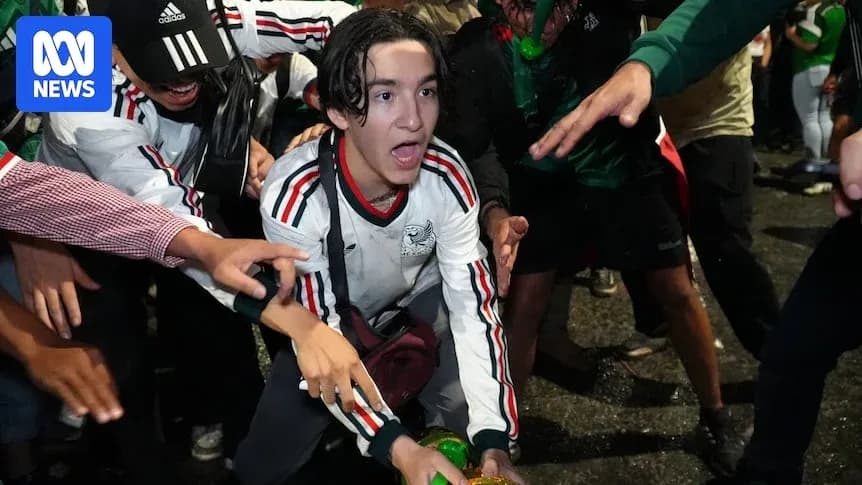
By the time the teams walked out, Mexico City had already played its first half.
The clues were scattered across the night before: frantic last-minute scrambles for green jerseys from street vendors, pavements choked with shoppers and singers, and a growing crowd orbiting El Ángel de la Independencia as if drawn by gravity. Horns blared, drums thudded, and voices bounced off the buildings long past midnight.
If this is how Mexico treats the eve of a World Cup opener, the real thing was always going to erupt.
Paseo de la Reforma turns into a World Cup carnival
Mexico’s players did their part, handling the nerves and the weight of expectation to beat South Africa 2–0 in the first match of this World Cup, shared across Mexico, Canada, and the USA. That result was the spark. The city supplied the fuel.
Once the final whistle sounded, the afterparty broke loose. Supporters poured down Paseo de la Reforma, the city’s grand boulevard morphing into a pedestrian-only river of green shirts, flags, and noise. Traffic surrendered. The street belonged to the game.
Beer flew in great arcs, drenching strangers who didn’t mind in the slightest. Cans of fake snow hissed into the air. Conga lines snaked around plastic World Cup trophies held aloft as if they were the real thing. Street vendors worked at full tilt, firing out tacos, snacks, and souvenirs. Glow sticks lit up the night in neon streaks.
A free concert hammered away in the background. This wasn’t a polite celebration of three points. This was Mexico doing what it always does when the men’s national team wins big: turning its victory monument on a busy roundabout into an all-night declaration of identity.
This is their Fed Square, their gathering point, but with a stamina that shrugs at sunrise.
Roaring stands, shaking legs
The energy had been building all day.
Outside the stadium, traditional performers warmed up the crowd, dancers and musicians giving the occasion the feel of a festival rather than a group-stage curtain-raiser. Inside, the volume hit another level.
Eighty thousand fans roared through the opening ceremony, voices rising especially for Shakira, the World Cup’s unofficial queen, who still holds this stage like few others. Yet those were just rehearsals.
The real sound came with the goals.
Each strike detonated around the bowl, the second capped by Raúl Jiménez’s header — a moment heavy with meaning. Years after the horrific head injury that threatened his career, he climbed, met the cross, and buried it. The net rippled, and so did the stands. It wasn’t just a goal; it felt like a full-circle exhale from a country that had waited and worried with him.
Then came the future.
When 17-year-old Gilberto Mora stepped off the bench in the second half, the response almost matched Jiménez’s moment. No hesitation, no prompting. The crowd rose and chanted his name in unison, the sort of welcome Mexico reserves for those it believes can change everything.
On the touchline, coach Javier Aguirre understood the scale of what his players were walking into. A veteran of the 1986 World Cup on home soil, he has seen this storm before.
“The start of the World Cup, is a brutal scenario, it makes your legs shake a little,” he said. From the calm of the training centre to streets heaving with fans, the shift is jarring. “You come from the training centre to here, the people, the fans are in the street and that tells the player, ‘Wow, wow, wow.’”
The numbers told their own story. “Never, never in 25 matches we had one case of cramps, today we had three players with cramps. It’s a very strong emotional state.”
The squad now has to bottle that emotion, seal it, and move on to the next group game. The supporters have no such obligation. Their lid is off, and staying off.
“It means everything. It means a lot,” one fan said in the crush of celebration. “It’s putting us back on the map. It shows that Mexico is present in the world of football.”
Infantino’s wish granted — for now
High above the noise, one man in a suit will sleep easier, at least temporarily. FIFA president Gianni Infantino spent the day before the tournament railing against the criticism aimed at his organisation, slipping into early-2000s slang as he urged everyone to “chillax.”
Now the football has started, the chill has been duly prescribed. Mexico’s opening win and the scenes that followed delivered exactly what FIFA craves: colour, noise, emotion, and a host nation in full voice.
Infantino can lean back for a moment, but the questions circling this tournament have not dissolved.
Mexico breathes football. Across the northern borders, the picture is different. In Canada and the United States, “soccer” still fights for space in crowded sporting markets. The blockbuster fixtures with global stars will draw huge crowds, that much is certain. The doubt lies elsewhere.
Will fans pay steep ticket prices to watch the so-called off-Broadway acts, the lesser-known teams and lower-profile clashes that fill out a World Cup schedule? And in the United States, how visible will Immigration and Customs Enforcement be around venues and fan zones? ICE’s presence, or lack of it, could shape who feels safe enough to join the party.
Those issues, and many more, will return as the tournament unfolds.
For one night in Mexico City, none of that mattered. The streets, the songs, the beer showers, and a 2–0 win did all the talking.
Related News

UFC 332 Preview: Natalia Silva vs. Wang Cong Fight Card, Odds, Start Time, and Details
Andy Roddick Responds to Andre Agassi’s Comments on Alexander Zverev at the Laver Cup

Knicks Prepare for Flexible Roles in Title Defense

Rui Hachimura Swaps Lakers Fans to Clippers in Surprising Jersey Exchange

Who Will Be the NBA's Next First-Time All-Stars? Top Picks and Long Shots for 2027

How Strong Is Your Team at Home? Check Out the 2026 Brasileirão Home Standings