
Michael O’Neill Commits to Northern Ireland Ahead of Euro 2028
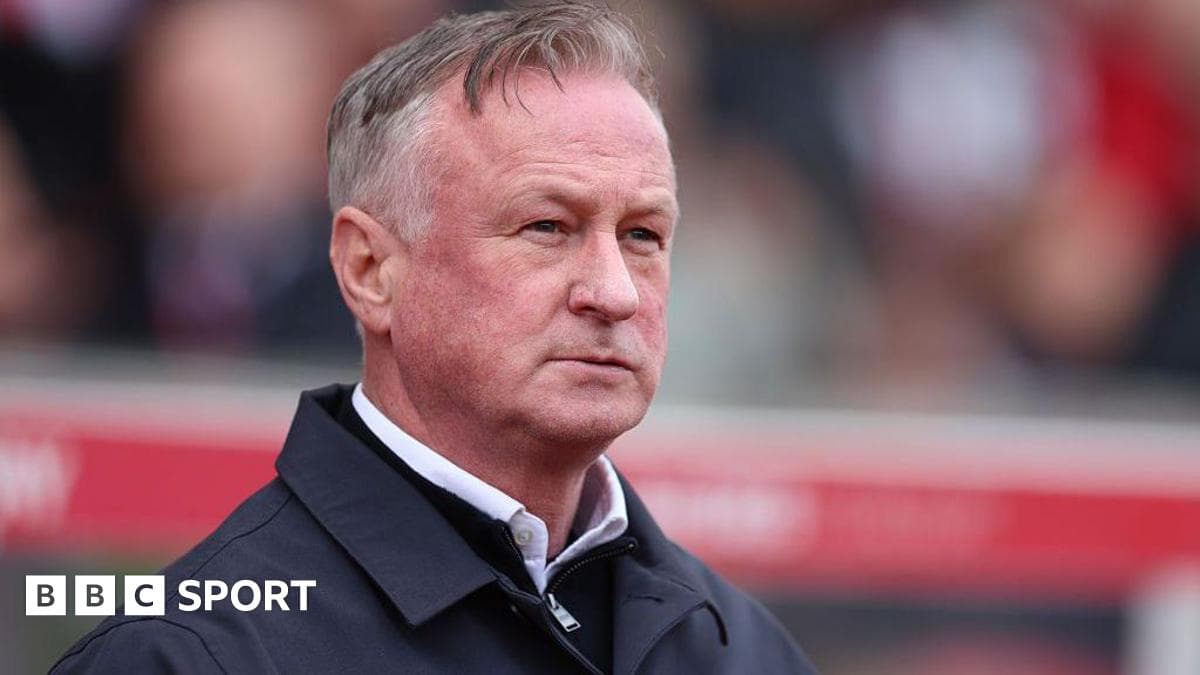
Michael O’Neill has turned his back on club management, for now at least, and nailed his colours firmly to the Northern Ireland mast.
The 56-year-old will not take the Blackburn Rovers job on a permanent basis, choosing instead to remain as Northern Ireland head coach and lead another tilt at the European Championships.
Club crossroads, country calling
O’Neill walked into Ewood Park in February as a firefighter, an interim appointment asked to steady a listing Championship side while still steering his country. It was an awkward job share on paper, but he made it work.
Fifteen games. Five wins, five draws, five defeats. Blackburn survived, finishing 20th in the second tier and easing fears of a slide into League One. The brief had been clear: keep Rovers up. He did.
All the while, though, he warned that this was temporary. He said repeatedly he could not do both jobs on a permanent basis. At some point, one dressing room would have to take priority.
That moment has arrived.
“Following discussions with the club, Michael has decided to continue his long-term commitment to his role as Northern Ireland head coach, with a focus on leading the national team towards qualification for the Uefa European Championships in 2028,” Blackburn confirmed in a statement.
O’Neill, for his part, left on warm terms.
“Blackburn Rovers is a historic football club with a proud tradition and passionate supporters. I have thoroughly enjoyed my time working with the players, staff and everyone around the club,” he said, before making his choice clear.
“After careful consideration, I have decided that my long-term focus must remain with Northern Ireland and the journey towards the European Championship campaign ahead.”
Blackburn will now start the search for a new permanent head coach, with updates promised “in due course”. They at least have the luxury of time before the 2026-27 campaign.
A second act with Northern Ireland
For Northern Ireland, this is a powerful vote of confidence in a project O’Neill has already reshaped once.
Across his two spells in charge, he has taken the national team into 104 matches, winning 38, drawing 23 and losing 43. The raw numbers tell only part of the story. Under him, Northern Ireland reached Euro 2016, their last appearance at a European Championship finals, and the target now is to repeat that feat for Euro 2028.
The Irish FA made no attempt to hide their relief.
“We are delighted Michael has decided to stay on as Northern Ireland manager. He has built another exciting squad of players and we now look forward to building on this momentum as we plan for both the Uefa Nations League campaign this autumn and the subsequent qualifiers for Euro 2028 with Michael at the helm,” read their statement.
Supporters will feel the same. O’Neill had hinted in March that he would “return to the status quo” for the June fixtures, but by April he admitted a decision was still pending. That uncertainty flicked on a few alarm bells. The resolution has come quickly, and decisively.
Now, there is clarity on both sides. O’Neill can throw himself fully into international work; Blackburn can reshape their future without wondering if their interim boss might stay.
Building a new core
This second spell with Northern Ireland has echoed the first in one crucial way: he inherited a struggling side. Ian Baraclough’s tenure had left the team short on results and direction. Qualification for Euro 2024 slipped away, as did this year’s World Cup, but the performances began to harden and sharpen under O’Neill again.
The evolution has been most obvious in the age profile. When Northern Ireland faced Italy in a World Cup play-off in March, O’Neill’s starting XI had an average age of just 22.5 years – the country’s second youngest on record since World War Two.
And that was without three key players: Conor Bradley, Dan Ballard and Ali McCann. Even with them missing, the youthful core held. The ceiling for this group sits high.
He has shaped them into a more competitive, more attractive side, one that looks built for the long run rather than a short burst at qualification.
The schedule now sharpens the focus. June brings friendlies against Guinea in Cadiz and France in Lyon. In September, the Nations League campaign begins, with Northern Ireland drawn in Group B2 alongside Hungary, Georgia and Ukraine.
These are not glamour fixtures for the sake of it. They are measuring sticks for a squad still learning its limits.
Eyes on 2028
The Irish FA will know that, had O’Neill walked away, the job would have been more appealing now than when he returned in 2022. The foundations are stronger, the squad younger and more dynamic, the sense of direction clearer.
They will also know continuity matters. No upheaval, no reset before the Nations League starts. No new man trying to learn names and systems on the fly.
With O’Neill staying, the narrative changes. This is no longer a rebuild in its infancy; it is a project entering its decisive phase. The manager who once took Northern Ireland to a European Championship after a period of patient construction now has a second chance to do the same with a new generation.
The question, as the journey towards Euro 2028 begins, is simple: can he turn promise into another historic summer?
Related News
Carlos Alcaraz Urges an End to Matches Ending in the Early Hours
Carlos Alcaraz Criticizes Late US Open Finish After 3:30 a.m. Match
Jannik Sinner Set for ATP 500 Return in Beijing with Novak Djokovic Also Competing
Meet Iva Jovic: The American Tennis Prospect Making Waves
Flavio Cobolli Shares Insights on Practice Session with Jannik Sinner Ahead of Comeback
Till vs Romero: Fight Details, Undercard, and Viewing Info for This Weekend