
Nicolas Pépé's Historic Redemption for Ivory Coast
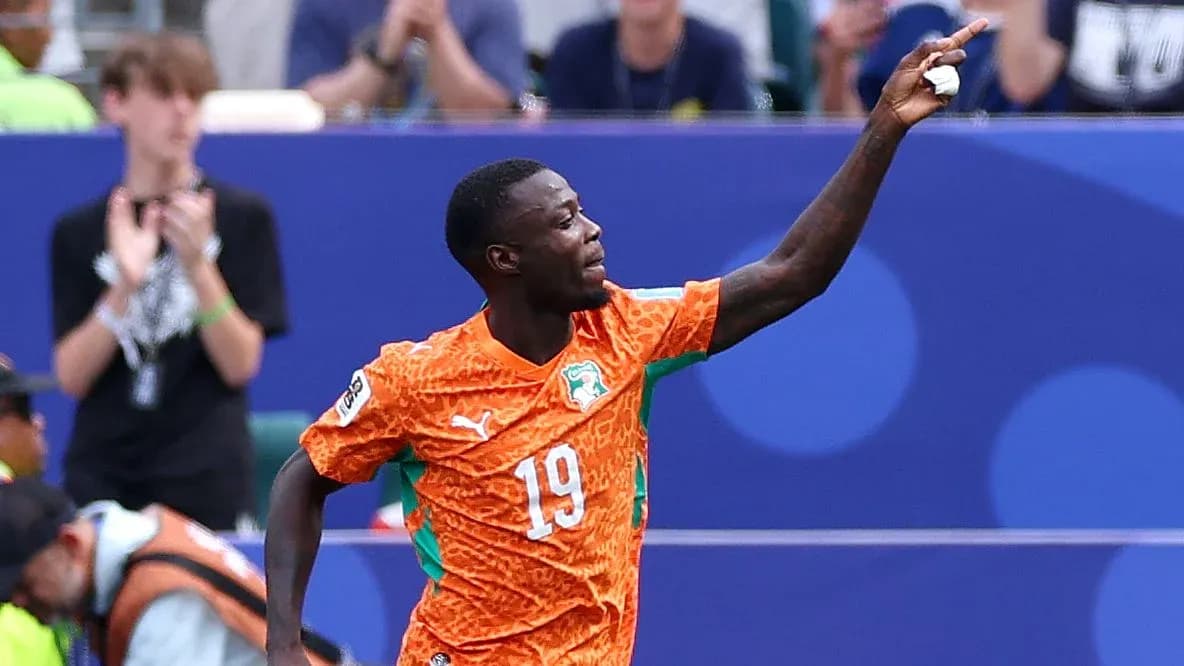
Nicolas Pépé was supposed to be a fading subplot in Ivory Coast’s story. Seven months ago he was watching the Africa Cup of Nations from home, omitted from the squad and seemingly drifting out of the national picture. In Philadelphia, he walked back into the spotlight and tore the script in half.
Two chances. Two ruthless finishes. One statement night.
Pépé’s redemption, written in orange
It took him seven minutes to announce himself. A loose Curacao touch, a moment’s hesitation at the back, and Yan Diomande pounced first, sliding the ball into space. Pépé didn’t rush. One touch to steady himself, one calm finish to punish the mix-up, and Ivory Coast were in front with the kind of goal that looks simple only when a player’s confidence has returned.
The second was anything but simple. On 65 minutes, with Curacao still clinging to hope, Pépé cut inside and wound back the clock. That familiar left foot, that familiar arc. The ball screamed into the top corner, a vintage strike that would not have looked out of place in his most electric nights at Lille. For a player who left Arsenal under a cloud, this felt like a cleansing.
This is why Emerse Fae brought him back. Not on sentiment, but on form. Pépé has rediscovered his edge in Spain with Villarreal, and now he has handed his country a landmark World Cup moment.
A barrier finally broken
Ivory Coast have paraded legends before. Didier Drogba. Yaya Touré. Names that reshaped the club game and carried a continent’s hopes. Yet at World Cups, the story had always soured early. Group-stage exits in 2006, 2010, 2014; frustration wrapped in regret for a so‑called “Golden Generation” that never quite cracked the code on the biggest stage.
This time, the ceiling shattered.
The 2-0 win over Curacao sends the Elephants through to the knockout rounds for the first time, second in Group E with six points and a new chapter written. No late heartbreak, no arithmetic on the final day. Just a clean, controlled job and a historic qualification that felt long overdue.
Fae did not try to hide what it meant.
“My message to fans would be to enjoy this historic qualification, celebrate it,” he said. “Once we are done celebrating, please continue sending us positive vibes so we can go as far as we can in this tournament. I am very happy with this result. Not everything was perfect but not conceding is good for our morale. Now our group has to bask in this victory. It is easy to recuperate after a victory.”
The coach knows nights like this are about more than tactics. They are about a nation finally seeing a different reflection on the world stage.
A team, not just a talisman
The spotlight naturally swung to Pépé, but Fae pushed it back onto the group. He sees something building inside this squad: a calmness, a togetherness that the great names of the past never managed to turn into World Cup progress.
“This group is growing. They are all at their first World Cup but they are growing well - it is a team that sticks together,” he said. “Even the players competing for similar positions are laughing together, always together. We have healthy competition which helps every player give their best.”
That unity showed in the details. Ivory Coast did not dazzle from first whistle to last, yet they controlled the key areas. They tightened up when they had to. They refused to give Curacao the open spaces they thrived on earlier in the group. When the Caribbean side did break through, they found Yassin Fofana in firm, unyielding form.
Curacao finished with only two shots on target. Against a side with Ivory Coast’s attacking power, that kind of clinical edge at the back matters as much as any highlight-reel goal.
Curacao bow out with heads high
For Curacao, the journey ends here, but it ends with respect. As the smallest nation by population ever to reach a World Cup, they arrived in the United States as a curiosity. They leave as a serious football story.
They had already shown their teeth by taking a point off Ecuador. Against Ivory Coast, they refused to be passengers. The Blue Wave pushed, pressed and forced moments of anxiety, especially late in the first half when Juninho Bacuna found himself with a golden chance to level. He could not take it. In tournaments like this, those misses linger.
Still, Dick Advocaat saw the bigger picture.
“This team has outdone itself against world-class sides,” the Curacao manager said. “[Ivory Coast’s] wingers are worth 50m each … The most important thing when we set out was qualifying for the Gold Cup. And only once we’d done that, qualifying for the World Cup.”
Asked if Curacao could come back to this stage, Advocaat refused to dampen the mood. “When you see how we played the second and third game,” he said, “that’s very promising.”
They exit with only one point, but with a blueprint and belief that this was not a one-off miracle.
Elephants in the knockout jungle
Now comes the real test. Ivory Coast step into the round of 32 as something they have never truly been at a World Cup: dangerous outsiders with momentum and a clear identity.
Waiting for them will be either Kylian Mbappé’s France or Erling Haaland’s Norway. Two very different storms, both ferocious in their own way. On paper, the Ivorians will not be favourites in either tie.
But paper has never scored a goal.
With Pépé reborn, Diomande knitting play, and a defence that has quietly become hard to prise open, the Elephants carry the look of a team no giant will relish facing. The Golden Generation never got this far.
The question now is simple: how far can this new one dare to go?
Related News
Anthony Joshua Names Murat Gassiev as Next Opponent if He Defeats Tyson Fury
UFC 332: Start Time and Fight Highlights for Natalia Silva vs. Wang Cong
Court McGee Opens Up About Choosing UFC 332 as His Final MMA Fight
WBC Orders Lightweight Title Unification: William Zepeda vs Jadier Herrera
BCCI Pension List: Monthly Payments to Retired Indian Cricketers in 2025
Why Fury vs Joshua Is Set for Cardiff, and Dua Lipa’s Unexpected Role