
Nigeria’s Super Falcons Unveil Squad for 2026 Women’s Africa Cup of Nations
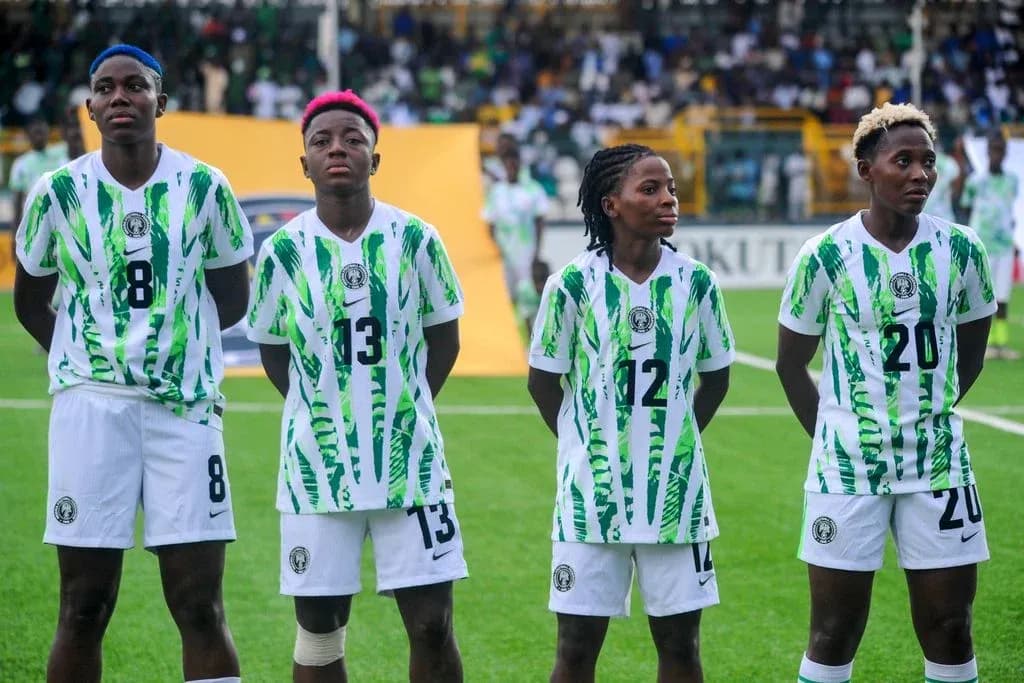
Nigeria’s Super Falcons have drawn the curtain back on their 25-woman squad for the 2026 Women’s Africa Cup of Nations in Morocco, a group tasked with extending the country’s dominance and delivering an 11th continental crown.
Head coach Justine Madugu, through the Nigeria Football Federation, has gone for a familiar spine laced with hungry new faces for a tournament that runs from July 26 to August 16. The message is clear: the queens of African women’s football are not ready to give up their throne.
Ajibade leads, Oshoala returns, Plumptre absent
At the heart of it all is captain Rasheedat Ajibade. The forward has evolved into the emotional and tactical reference point of this team, and she will carry the armband into Morocco.
Alongside her, six-time African Women’s Player of the Year Asisat Oshoala is back in the mix, still the headline act in a forward line stacked with firepower. When Nigeria need a goal, eyes will still drift first to Oshoala.
Behind them, Chiamaka Nnadozie stands firm. The Brighton & Hove Albion goalkeeper has grown into one of the continent’s most reliable shot-stoppers and is expected to retain her status as first choice after a string of standout performances for club and country.
There is a notable omission. Star defender Ashleigh Plumptre does not make the list as she continues her recovery from surgery. Her absence strips Nigeria of a composed, ball-playing presence at the back and forces Madugu to lean more heavily on his defensive depth.
Experience, youth and a familiar winning burden
Nigeria travel to Morocco with history on their shoulders and a target on their backs. Ten WAFCON titles, the most successful side the continent has seen. Their latest came at the last edition, when they silenced the home crowd by edging Morocco 3-2 in the final. Now they arrive not just as champions, but as the standard everyone else measures themselves against.
Madugu’s squad is built across the pitch with that expectation in mind: three goalkeepers, eight defenders, five midfielders and nine forwards.
In goal, Nnadozie is joined by Comfort Erhabor of Portsmouth Ladies and Abia Angels’ Fatima Oloko, both pushing to prove they can step in if called upon.
The defence blends hardened campaigners and emerging names. Osinachi Ohale and Michelle Alozie bring big-tournament know-how, while Oluwatosin Demehin and Rofiat Imuran add youthful energy. Shukurat Oladipo, Glory Ogbonna, Sikiratu Isah and Christy Ucheibe round out a back line that will be asked to protect leads as much as build from the rear.
Midfield belongs to Ajibade, but she will not carry the load alone. Halimatu Ayinde offers steel and positional discipline, Deborah Abiodun brings legs and bite, Toni Payne supplies control and versatility, and Jennifer Echegini adds a creative spark between the lines. It is a unit designed to press, to recycle, and to release the forwards early.
Up front, Madugu is spoilt. Oshoala sits at the top of a deep attacking cast: Folashade Ijamilusi, Esther Okoronkwo, Chinwendu Ihezuo, Francisca Ordega, Gift Monday, Uchenna Kanu, Omorinsola Babajide and Joy Omewa all make the cut. Different profiles, same threat. Power, pace, width, aerial presence – the tools to break down deep blocks and punish teams that dare to open up.
Many of these players arrive from Europe’s top leagues, others from North America, Asia and the Nigerian Women’s Football League. The mix of global exposure and domestic hunger has long been one of Nigeria’s competitive edges. Madugu will lean on it again.
Group C: Old scars, new dangers
The path begins in Group C, where Nigeria have been drawn alongside Zambia, Egypt and Malawi. On paper, the Super Falcons remain favourites. On the pitch, they know nothing will be handed to them.
First up is Malawi on Tuesday, July 28, at Al Madina Stadium in Rabat. It is a historic fixture: the first senior competitive meeting between the two nations. Tournament debutants often play without fear; Nigeria will be expected to impose their rhythm early and avoid any opening-day jitters.
Then comes a grudge match.
On Saturday, August 1, at the same venue, Nigeria meet Zambia. The Super Falcons have won two of the three previous clashes between the sides, but the most recent memory belongs to the Copper Queens – a 1-0 victory in the third-place playoff at WAFCON 2022. That result stung. This one already feels circled in red ink in the Nigerian dressing room.
The group stage closes on Wednesday, August 5, against Egypt at the Rabat Region Stadium. The history books tell of a 6-0 Nigerian win in their only previous WAFCON meeting back in 1998, at the inaugural African Women’s Championship. The present is more nuanced. Egypt have steadily invested in their women’s programme and will not arrive as cannon fodder.
Every point will matter. Every lapse could be punished.
Continental glory and a World Cup ticket
The stakes in Morocco stretch beyond another African title. WAFCON 2026 doubles as Africa’s qualification route to the 2027 FIFA Women’s World Cup in Brazil. Reach the semi-finals and a World Cup ticket is guaranteed.
For Nigeria, a nation that measures its women’s team by global standards, anything less would be a shock.
The squad is set. The challenge is clear. Now the question hangs over the Super Falcons: can this blend of proven stars and emerging talent carry the weight of history, fend off a continent that has closed the gap, and still find a way to stay on top?
Related News

Anthony Joshua Names Murat Gassiev as Next Opponent if He Defeats Tyson Fury

UFC 332: Start Time and Fight Highlights for Natalia Silva vs. Wang Cong
Court McGee Opens Up About Choosing UFC 332 as His Final MMA Fight
WBC Orders Lightweight Title Unification: William Zepeda vs Jadier Herrera
BCCI Pension List: Monthly Payments to Retired Indian Cricketers in 2025
Why Fury vs Joshua Is Set for Cardiff, and Dua Lipa’s Unexpected Role