
Nobby Stiles: World Cup Hero's Death Sparks Inquest
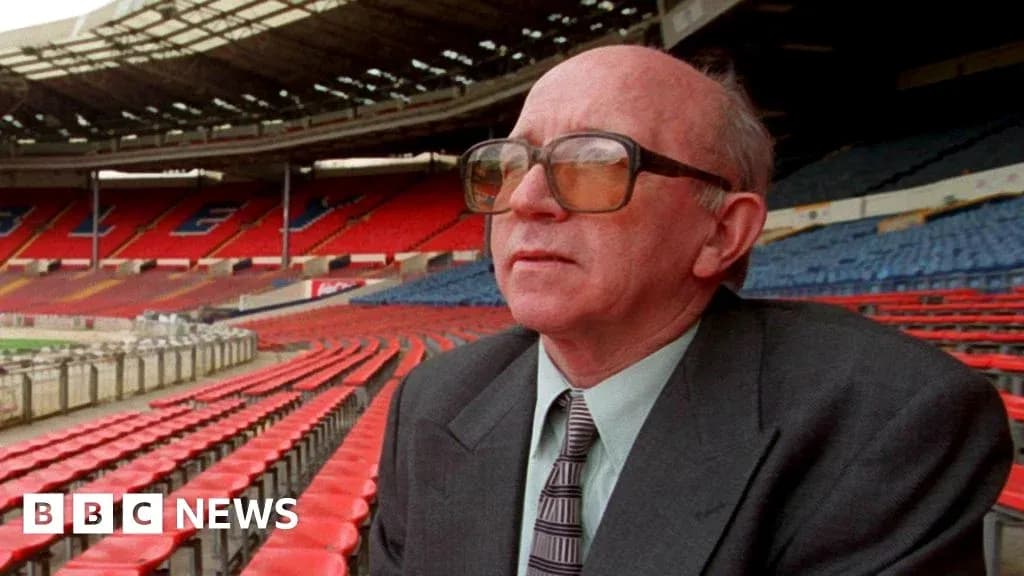
Nobby Stiles, one of English football’s most iconic World Cup winners, died with a traumatic brain injury and chronic traumatic encephalopathy (CTE), a court has heard – and a coroner has now ruled that a full inquest into his death must finally take place.
The decision, delivered at Stockport coroner’s court by area coroner for Greater Manchester South Chris Morris, pulls one of the 1966 heroes into the centre of football’s most uncomfortable and increasingly bitter battle: the sport’s duty of care to those who built its history.
A World Cup hero at the heart of a modern crisis
Stiles, who died in 2020 aged 78, was the snarling, tough-tackling defensive midfielder who shadowed Eusebio in the 1966 World Cup semi-final and danced, toothless and euphoric, across the Wembley turf with the trophy. Born in Manchester in 1942, he played nearly 400 times for Manchester United and earned 28 caps for England, his game defined by bravery, timing – and, crucially, repeated contact with the ball in an era when it was far heavier than today.
In court, Morris confirmed that a brain specialist who examined Stiles’s medical records concluded he was suffering from high-stage CTE, a degenerative brain disease strongly associated with repeated head trauma. The coroner also cited “stage three limbic predominant age related TDP-43” and small vessel cerebrovascular disease as contributing factors.
Then came the key line.
“On the basis of that cause of death, particularly the inclusion of a traumatic injury included in the cause of death, I’m satisfied an inquest is required into the sad death of Mr Stiles,” Morris told the court.
A delay that angers a family
What stunned many in the room was Morris’s admission that Stiles’s death had not been referred to the coroner at the time.
He told the court that, “for reasons not entirely clear to me”, the case was not initially reported to his office. Only after the family provided further information did the investigation begin, leading to Wednesday’s ruling that a full inquest hearing will now be held at the same court.
For a family that has spent years campaigning for recognition of the damage done to former players, that delay is not a minor detail. It goes to the heart of their argument: that football has been too slow, too reluctant, to confront the consequences of its own past.
Families pushing back
John Stiles, Nobby’s son, has become one of the most prominent voices in this fight. He leads Football Families for Justice (FFJ), a group pressing the game’s authorities to support ex-players who, they say, are living – and dying – with conditions caused by their years on the pitch.
He is also among dozens of former professionals and relatives taking legal action against the Football Association, the Football Association of Wales and the English Football League. The claim is stark: that the governing bodies were “negligent and in breach of their duty of care” to players by failing to protect them from the long-term risks of repeated head impacts.
Lawyers for the families argue that football’s leaders knew, or should have known, for decades that heading the ball in training and matches carried a significant risk of brain injury. They say the science, the warnings, and the mounting number of damaged former players were all there.
The sport’s institutions reject that charge.
A game under scrutiny
In March, lawyers for The Football Association told the High Court that “it has not been established by science” that heading a ball or “occasional” concussion leads to permanent brain damage. That phrase – “not been established” – sits uneasily alongside the growing list of high-profile inquests and diagnoses involving former players.
In January, an inquest into the death of Gordon McQueen, the former Scotland, Manchester United and Leeds United defender, concluded that heading the ball was “likely” to have contributed to the brain injury that played a part in his death at 70. Another towering figure of the British game, another defender from an era when centre-halves attacked everything in the air, lost to a condition now sitting under the microscope.
Now Nobby Stiles joins that roll call in a formal, legal sense.
The inquest into his death will not change the medals he won, the memories he created, or the way he is revered at Old Trafford and across England. But it may sharpen the questions facing a sport that has grown rich and global on the backs – and heads – of men like him.
As the hearing opens on Wednesday, the image will be hard to ignore: a World Cup winner, decades later, at the centre of a courtroom, forcing football to decide how much responsibility it is finally willing to accept.
Related News
Anthony Joshua Names Murat Gassiev as Next Opponent if He Defeats Tyson Fury
UFC 332: Start Time and Fight Highlights for Natalia Silva vs. Wang Cong
Court McGee Opens Up About Choosing UFC 332 as His Final MMA Fight
WBC Orders Lightweight Title Unification: William Zepeda vs Jadier Herrera
BCCI Pension List: Monthly Payments to Retired Indian Cricketers in 2025

Why Fury vs Joshua Is Set for Cardiff, and Dua Lipa’s Unexpected Role