
Norway Upsets Brazil in World Cup Round of 16 Clash
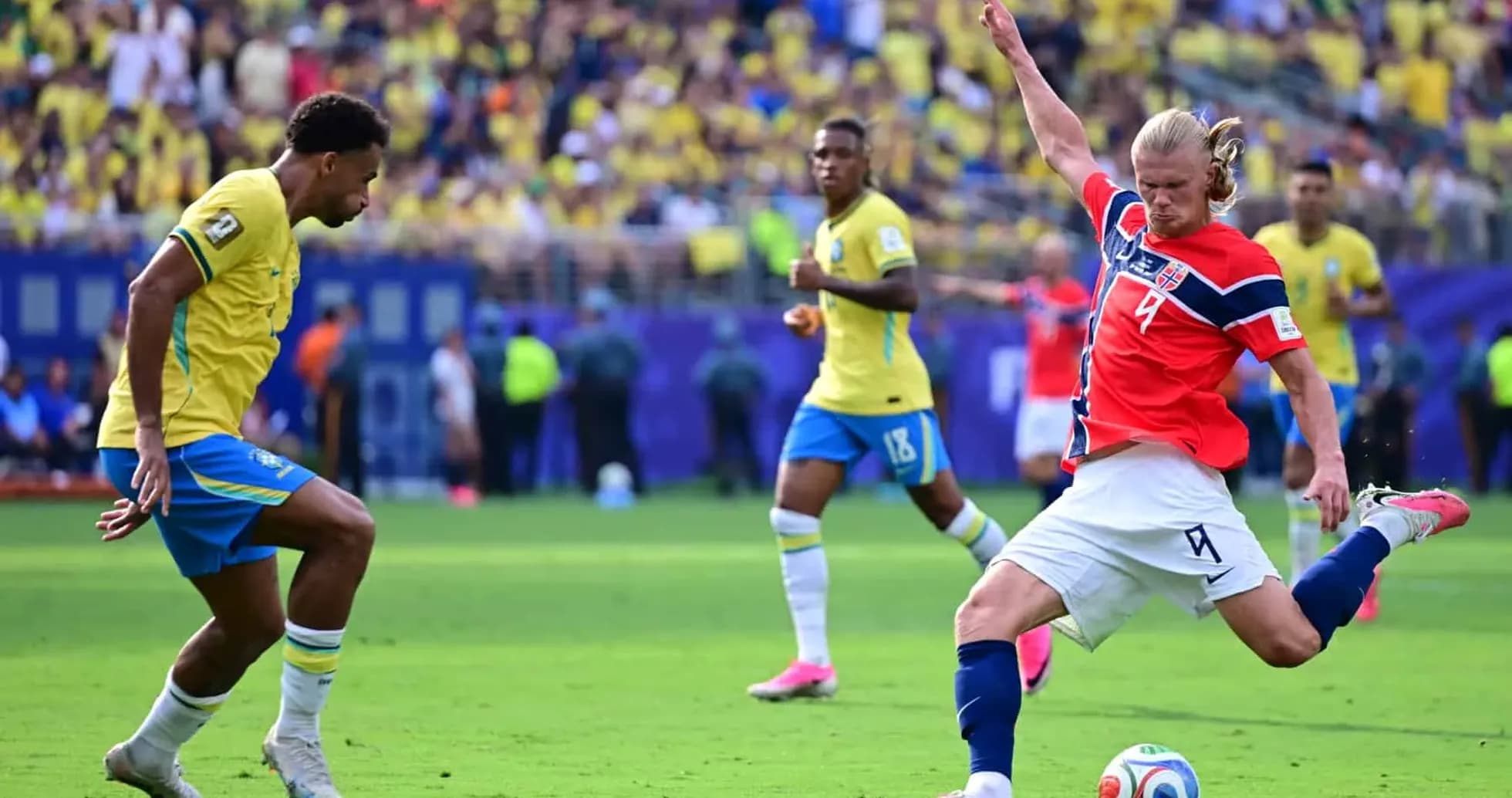
MetLife Stadium in East Rutherford hosted a Round of 16 clash that felt like a generational pivot in world football: Brazil, five-time champions and group winners from Group C, against a Norway side arriving from Group I with a new, ruthless edge. By the end of 90 minutes, the scoreboard read Brazil 1–2 Norway, and the balance of power in this World Cup felt subtly, but unmistakably, altered.
I. The Big Picture: Styles Colliding on the Knockout Stage
Heading into this game, Brazil’s season profile suggested control and restraint. Overall they had played 5 matches, winning 3, drawing 1 and losing 1. At home they had played 4, with 2 wins, 1 draw and 1 defeat; on their travels they had played 1 and won it. Their attacking output was solid rather than wild: in total this campaign they had scored 10 goals and conceded 4, a goal difference of +6. At home they averaged 1.8 goals for and 1.0 against, away they were far more explosive going forward at 3.0 for and 0.0 against. This was a Brazil built on control, not chaos.
Norway arrived as something closer to a controlled storm. In total this campaign they had also played 5 matches, winning 4 and losing just 1, with no draws. Their attacking numbers were ominous: 12 goals for and 9 against overall, a goal difference of +3. At home they averaged 2.0 goals scored and 3.0 conceded, away 2.7 scored and 1.0 conceded. They did not do clean games; they did shootouts. Crucially, they had yet to keep a single clean sheet, but they had also failed to score in none of their matches. This was a team that guaranteed drama.
The formations told their own story. Carlo Ancelotti set Brazil up in a 4‑4‑2, a pragmatic tweak from the 4‑3‑3 that had been their most-used shape (3 appearances) in the tournament. Stale Solbakken stayed loyal to Norway’s 4‑3‑3, the framework that had underpinned 4 of their 5 lineups. Where Brazil sought balance and structure, Norway leaned into verticality and direct threat.
II. Tactical Voids and Hidden Costs
Brazil’s squad sheet carried a quiet warning: the absence of Raphinha and Lucas Paquetá, both ruled out with hamstring muscle injuries. Raphinha’s missing verticality on the right and Paquetá’s connective tissue between midfield and attack forced Ancelotti into a flatter, more orthodox midfield line.
On paper, the quartet of Rayan, Bruno Guimarães, Casemiro and G. Martinelli offered work rate, control and wide threat. But without Paquetá’s half-space invention and Raphinha’s stretching of the last line, Brazil’s 4‑4‑2 risked becoming a straight-line system, easier for Norway’s compact 4‑3‑3 to read.
Disciplinary trends added another layer. In total this campaign Brazil had accumulated a spread of yellow cards with notable spikes: 25.00% of their yellows came between 31–45 minutes, another 25.00% between 61–75, and a late-game surge of 12.50% between 76–90 and a further 12.50% from 91–105. This hinted at a side that often had to foul to reset games as intensity rose. Casemiro, already on 2 yellows, and Danilo, also on 2, embodied that edge.
Norway’s card profile was more concentrated. In total this campaign 50.00% of their yellows arrived in the opening 15 minutes, and 50.00% between 46–60. They started halves on the front foot, sometimes too aggressively, but tended to settle thereafter. In a knockout tie, that early physicality would be aimed squarely at Vinícius Júnior and Matheus Cunha.
Penalties were another quiet subplot. Brazil had earned 2 penalties overall, scoring 1 and missing 1; Bruno Guimarães’ profile even included a missed spot kick. Norway had been more wasteful: in total this campaign they had 1 penalty and missed it, scoring none. Neither side came into this tie with a spotless record from the spot, a detail that loomed over every VAR check in the box.
III. Key Matchups: Hunter vs Shield, and the Engine Room
The headline duel was brutally simple: Erling Haaland against Brazil’s central pairing of Marquinhos and Gabriel, with Alisson behind them.
Haaland’s World Cup had been devastating. In total this campaign he had 7 goals in 4 appearances, playing every one of Norway’s 360 minutes from the start. He had taken 15 shots, 12 on target, and averaged a rating of 8.3. He was not just scoring; he was the system. Norway’s overall average of 2.4 goals per game was, in many ways, the statistical echo of his presence.
Brazil’s shield was formidable. Overall this campaign they had conceded just 4 goals in 5 matches, only 0.8 per game. At home, that tightened to exactly 1.0 per match, with 2 clean sheets in total (1 at home, 1 away). Marquinhos’ leadership, Gabriel’s aggression and Alisson’s command formed a triangle designed specifically for nights like this.
Behind that duel, the engine room framed the game’s rhythm. Bruno Guimarães entered as one of the tournament’s premier playmakers: 4 assists in 5 appearances, 191 passes at 86% accuracy, 10 key passes and 11 tackles with 1 blocked shot. He was Brazil’s metronome and their primary line-breaking passer.
Across from him, Martin Ødegaard mirrored that role for Norway. In total this campaign he had 3 assists in 4 appearances, with 263 passes at an even more clinical 90% accuracy, 4 key passes and 6 tackles. Where Bruno mixed bite and vision, Ødegaard offered pure orchestration, drifting between the lines to connect Sander Berge and Patrick Berg with the front three of A. Nusa, Haaland and Alexander Sørloth.
Casemiro was the hinge. With 14 tackles, 4 successful shot blocks and 6 interceptions overall, he was Brazil’s insurance policy against Norway’s counters—but his 2 yellows and tendency to pick up bookings in those 31–45 and 61–75 windows meant one mistimed challenge could tilt the midfield balance.
Out wide, Vinícius Júnior against Julian Ryerson and David Wolfe was Brazil’s best route to destabilising Norway’s back four. Vinícius arrived with 4 goals and 1 assist in 5 matches, 14 shots (11 on target), 36 dribble attempts with 16 successful, and 9 key passes. His duel with Ryerson on the right and the covering angles of Kristoffer Ajer would dictate how high Norway’s full-backs dared to play.
IV. Statistical Prognosis and Tactical Verdict
On their travels, Norway’s attack had averaged 2.7 goals per game, conceding 1.0. That away profile mapped almost perfectly onto the final 2–1 scoreline. Brazil’s home average of 1.8 scored and 1.0 conceded suggested a tighter contest, but Norway’s refusal to play low-scoring football dragged the tie toward their preferred chaos.
From an xG-oriented lens—using the proxies of shots, chance creation and conversion—Norway’s higher-scoring, higher-conceding pattern always threatened to overwhelm Brazil’s controlled structure if the Seleção failed to land an early punch. Brazil had failed to score in none of their matches, but Norway had also never been shut out. Something had to give; it turned out to be Brazil’s defensive record.
Tactically, the decisive intersection lay between Norway’s relentless front three and Brazil’s slightly stretched 4‑4‑2 without Paquetá. With Ødegaard finding pockets between Casemiro and Bruno, and Haaland pinning Marquinhos and Gabriel, Norway repeatedly forced Brazil’s wide midfielders—Rayan and Martinelli—into deeper, reactive positions. That blunted Brazil’s transitions and left Vinícius and Cunha more isolated than Ancelotti would have liked.
Following this result, the narrative is clear. Norway’s high-variance, Haaland-led model has proven it can unseat even the most balanced of giants, while Brazil’s controlled, structurally sound approach was undone by the absence of key creative pieces and a system that, on the night, could not quite bend without breaking.
Related News
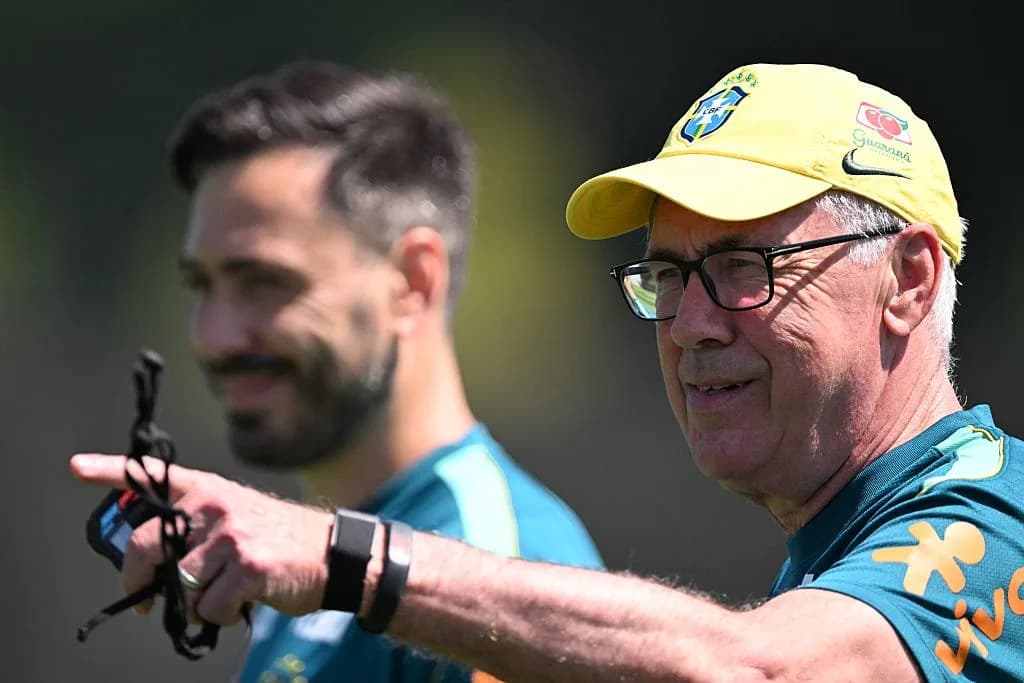
Brazil's First Post-World Cup Friendly: What Should the Lineup Be?
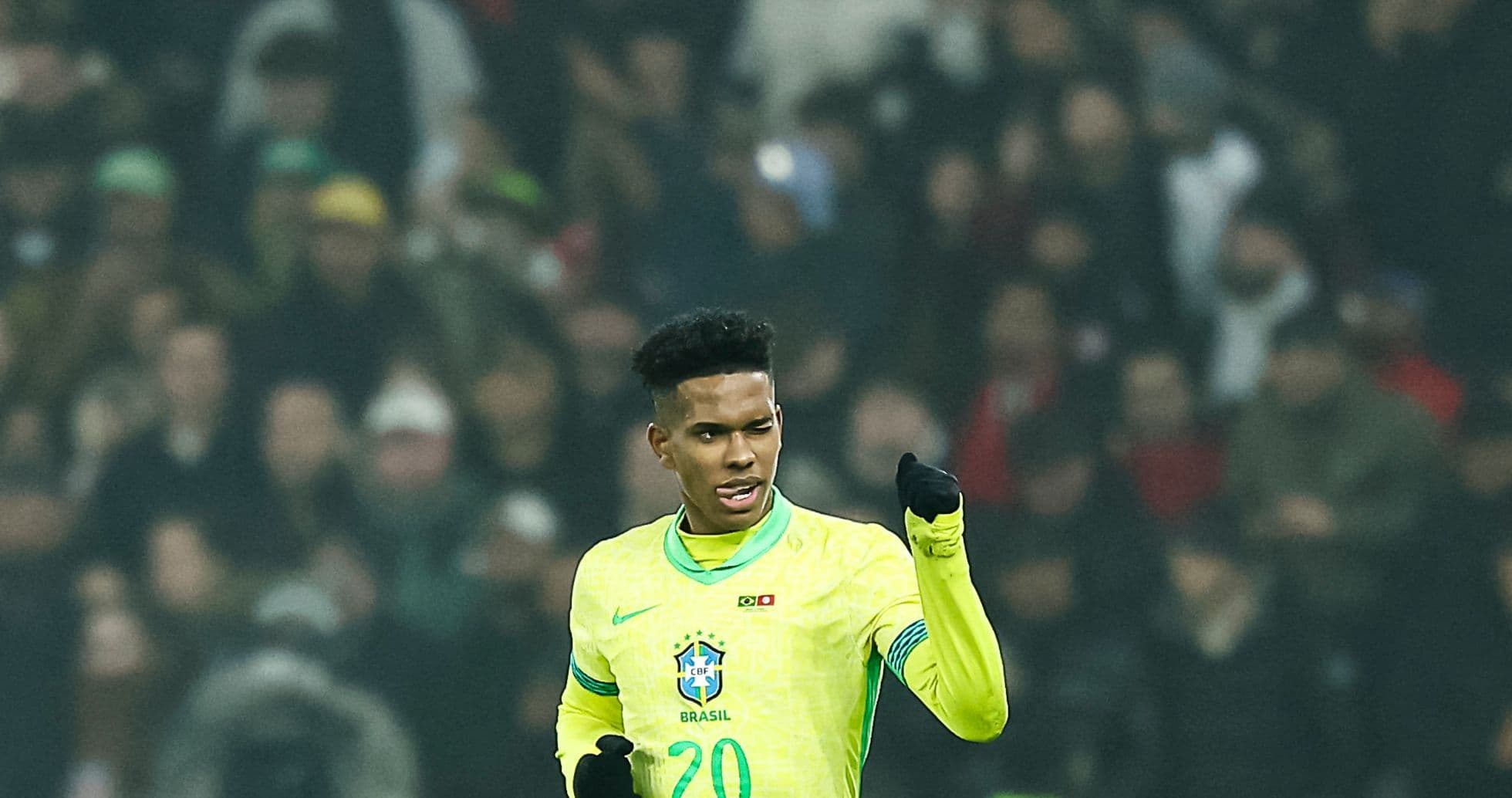
Estevao Opens Up on World Cup Heartbreak and His Unexpected Return to Brazil Under Ancelotti
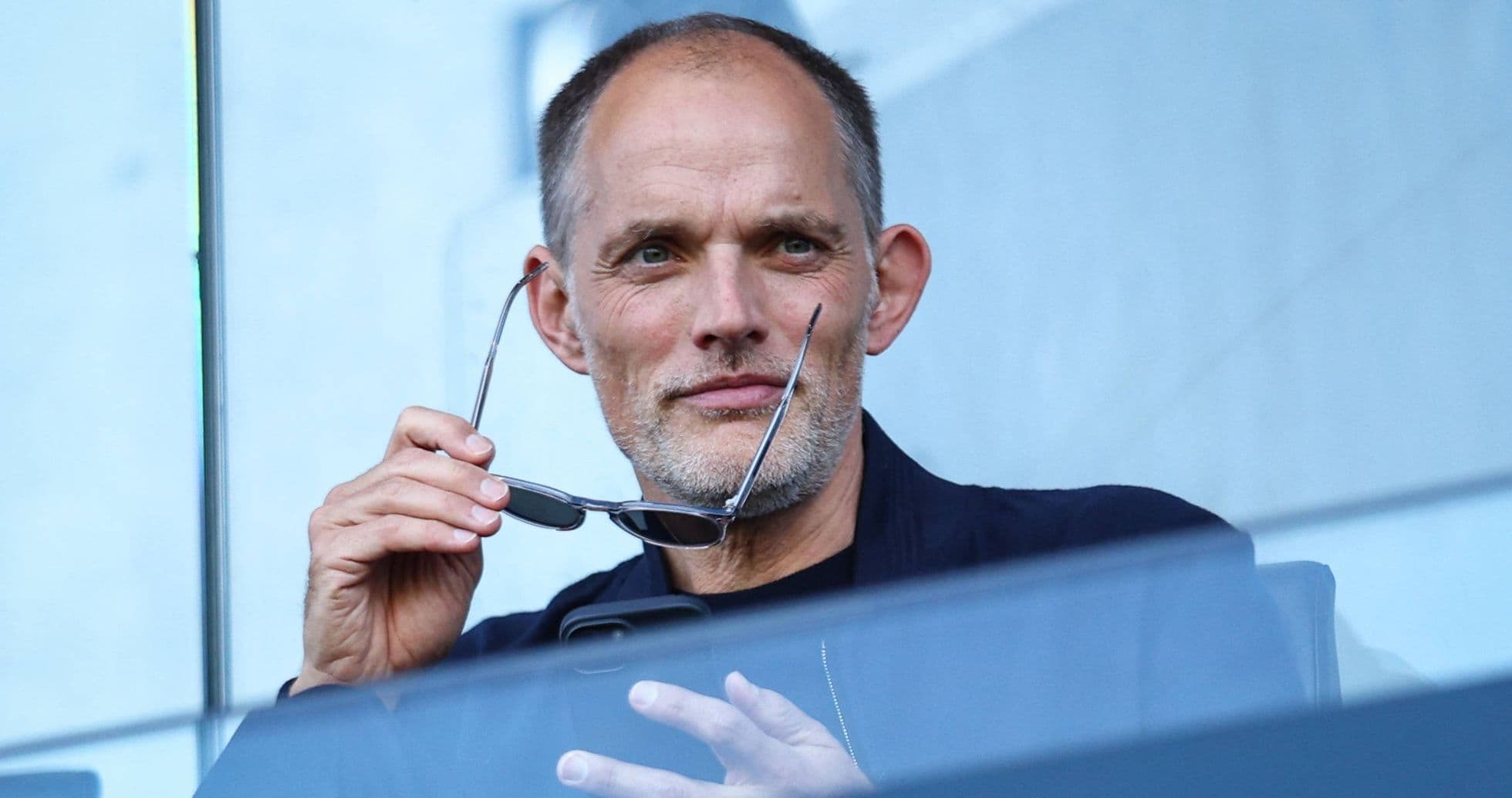
Thomas Tuchel Shares Unusual Regret After England's 10-Man World Cup Victory Over Mexico
South Korea Names Robert Moreno as Interim Coach After World Cup Exit
Jude Bellingham Returns to Form at Real Madrid Following World Cup Success

Chloe Kelly, Beth Mead and 13 Lionesses Target Big WSL Seasons Ahead of England's 2027 World Cup Campaign