
Old Trafford’s Future: Funding Challenges for a 100,000-Seat Stadium
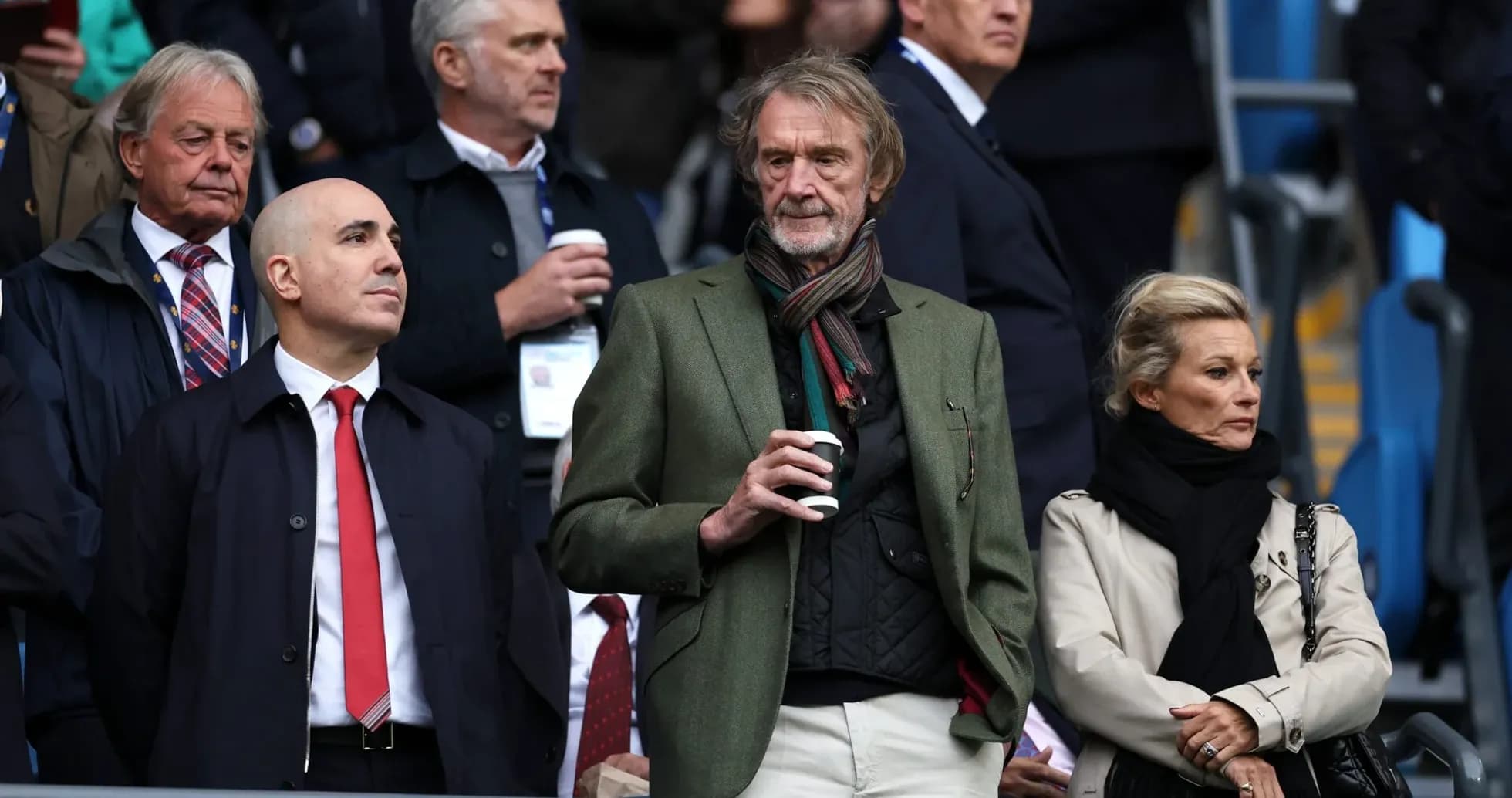
Manchester United have finally cleared the biggest physical obstacle to building a new Old Trafford. The club now owns the land it needs on Wharfside, opposite the previously targeted Freightliner site that proved unworkable.
The dream of a 100,000-seat stadium no longer feels like a sketch on a presentation slide. It has a postcode.
What it doesn’t yet have is a bankable plan to pay for it.
Land in Place, Politics in Flux
For months, land acquisition was the sticking point. Without it, all the talk of a vast, modern arena to replace the ageing Old Trafford was little more than noise. That hurdle has now been removed.
But just as the project takes a step forward on the ground, the landscape around it shifts in Westminster.
Andy Burnham, the outgoing mayor of Manchester and long-time advocate for government-backed regeneration around Old Trafford, is set to move into Downing Street as Prime Minister. As mayor, Burnham supported public money for the wider regeneration of the area but not for the stadium itself. That distinction matters now more than ever.
With Burnham changing roles and national priorities likely to harden around public spending, the prospect of significant state help for a football ground looks as remote as ever. The regeneration project may find support. The stadium will almost certainly be left to fend for itself.
That leaves Sir Jim Ratcliffe facing a brutally simple equation: how far is he prepared to go to pay for a new home?
Naming rights. Equity sales. Debt. Fans priced to the limit. Every option is on the table, and none comes without a cost.
Heritage vs Revenue
The question that has hovered for years now looms over the whole project: what price, if any, would Manchester United accept to sell the naming rights to Old Trafford?
This is no longer a theoretical debate about tradition versus modernity. It cuts to the heart of whether the club can afford to build what it wants, where it wants, at the scale it craves.
GRV Media’s head of football finance, Adam Williams, believes the numbers are brutal.
He argues United may simply not be able to fund a 100,000-seat stadium without selling stakes in the club or the stadium itself. The financial conditions that allowed Tottenham Hotspur to build their ground have changed dramatically.
“Tottenham built their stadium at a time when interest rates were at historic lows,” Williams notes. Much of Spurs’ debt sat at fixed rates between two and three per cent. Today, the Bank of England’s base rate stands at 3.75 per cent, and any lender dealing with United will add a premium on top.
The club’s recent refinancing tells its own story. The $425m notes they rolled over came in at 5.36 per cent. That may not be the ceiling. Lenders will look hard at United’s risk profile.
Spurs entered their stadium project with virtually no debt. United already sit on around £1.4bn, before transfer liabilities are even counted. On top of that, Ineos – Ratcliffe’s empire – has seen its credit rating downgraded by multiple agencies in recent years.
Less security. Higher risk. Higher rates.
Williams’ conclusion is stark: United are likely to pay roughly double the interest rate Spurs secured on their stadium financing.
Costs Rising, Margins Shrinking
The problems do not end with the cost of borrowing.
Construction itself is far more expensive than it was when Tottenham built their ground. Raw materials. Labour. Geopolitical tension. Supply chain disruption. Every line on the budget has crept upwards.
United’s own £2bn estimate for the project already looks light to the experts Williams has spoken to. Large capital projects in sport and infrastructure rarely come in on time and on budget. They run late. They run over. They test patience and balance sheets.
So United face a double hit: they will likely have to borrow more than Spurs did and pay more for the privilege.
Williams calls it “a monumentally complex financing project”. The likely outcome? A patchwork of funding sources: personal seat licences, bonds, bank loans, possible equity sales, naming rights, and a relentless drive to squeeze every possible pound out of the matchday and commercial operation.
But even that might not be enough if the stadium can’t generate genuine profit, not just impressive headline revenue.
Spurs are the warning sign. They have almost quadrupled matchday income since leaving White Hart Lane. Yet they still lose money in most seasons. Stadium income alone doesn’t magically erase interest payments, operating costs and the rest of the financial ecosystem around a modern super-arena.
The lesson is clear. An extra £100m in matchday and sponsorship income is not a silver bullet. What matters is what’s left after the bills are paid.
Williams boils it down to three unpalatable routes if United want this new Old Trafford to happen:
- A) Sell a stake in the club or spin the stadium off as a separate business and sell part of that.
- B) Launch another IPO.
- C) Drive up prices and commercialisation at the new stadium so aggressively that it covers the interest in the short term but risks “corroding the club’s soul in the long term.”
Each path has consequences. Each touches the club’s identity as much as its balance sheet.
Debt, Delay and a Moving Target
United’s recent decision to refinance $425m of debt with a new $500m deal underlines how active the club already is in the debt markets. To some, it looks like a controlled reshaping of the balance sheet under Ratcliffe’s eye. To others, it is a warning that the financial load is already heavy before a single brick of a new stadium has been laid.
The original timeline now looks increasingly optimistic. When the project was first floated in 2025, the target was completion by 2031. We are now five months from 2027. Construction has not started. Designs are still, effectively, theoretical.
Every month without a shovel in the ground pushes the calendar further back. Every delay risks higher costs, tougher borrowing conditions, and more political and economic uncertainty.
The funding question is no longer a background concern. It is the central issue that will decide whether the new Old Trafford is a reality or a grand idea that never quite finds its moment.
United do have options. Multiple funding routes can be blended and staged. But each takes time to structure, to negotiate, to sell to investors and, crucially, to sell to supporters.
The club’s latest stated ambition is to host the 2035 Women’s Euros final at the new stadium. That target now feels like the real working deadline: nine years to design, finance, build and open a 100,000-seat arena worthy of the name Old Trafford.
Only once construction actually begins will anyone be able to talk about a realistic timetable. Until then, the date will keep sliding, the costs will keep shifting, and the tension between heritage and revenue will only sharpen.
At some point soon, Manchester United must decide what Old Trafford is worth – not just in pounds and interest rates, but in how much of themselves they are willing to sell to build it.
Related News

Anthony Joshua Names Murat Gassiev as Next Opponent if He Defeats Tyson Fury

UFC 332: Start Time and Fight Highlights for Natalia Silva vs. Wang Cong

Court McGee Opens Up About Choosing UFC 332 as His Final MMA Fight
WBC Orders Lightweight Title Unification: William Zepeda vs Jadier Herrera

BCCI Pension List: Monthly Payments to Retired Indian Cricketers in 2025

Why Fury vs Joshua Is Set for Cardiff, and Dua Lipa’s Unexpected Role