
Oviedo vs Getafe: A Crucial La Liga Clash

With three rounds left in La Liga’s 2025 regular season, bottom‑placed Oviedo host 7th‑placed Getafe at Estadio Nuevo Carlos Tartiere in a match that is season‑defining for the relegation battle. In the league phase, Oviedo sit 20th on 28 points with a goal difference of -28, currently in the relegation zone to LaLiga2, while Getafe are 7th on 44 points and still within reach of European positions. The stakes are asymmetric: Oviedo must turn home fixtures like this into points to keep survival hopes alive, while Getafe can use an away win to consolidate a top‑half finish and keep outside pressure on the European race.
Head-to-Head Tactical Summary
The recent head-to-head record tilts slightly towards Getafe, with both league and friendly context offering different tactical clues.
On 13 September 2025 in La Liga (Regular Season - 4) at the Coliseum in Getafe, the hosts beat Oviedo 2-0, leading 2-0 at half-time before closing the game out with the same scoreline. That match underlined Getafe’s ability to establish an early advantage at home and then manage space without over-committing.
In friendlies, the dynamic has been more balanced. On 26 July 2025 in a Club Friendlies 5 match, Getafe and Oviedo drew 1-1, with Oviedo leading 1-0 at half-time before Getafe found a response. A year earlier, on 24 July 2024 in Club Friendlies 3 at Ciudad Deportiva Fernando Santos de la Parra in Getafe, Oviedo won 1-0, again leading 1-0 at half-time and protecting a narrow margin through 90 minutes.
Looking further back to Segunda División in 2016, the pattern is split by venue. On 19 February 2017 at Jorge Garbajosa in Oviedo, the hosts won 2-1 after leading 1-0 at half-time, showing they could convert a home lead into three points. On 18 September 2016 at Coliseum Alfonso Pérez in Getafe, the home side overturned a 0-1 half-time deficit to beat Oviedo 2-1, highlighting Getafe’s capacity to adjust and press higher when chasing a result.
Global Season Picture
- League Phase Performance: In the league phase, Oviedo’s numbers explain their position: 20th on 28 points from 34 matches, with only 6 wins, 10 draws and 18 losses. They have scored 26 goals and conceded 54, for a goal difference of -28. At home they have 4 wins, 6 draws and 7 losses, with just 9 goals for and 17 against, underlining a blunt attack and only moderately solid home defence. Getafe, in contrast, are 7th with 44 points from 34 matches (13 wins, 5 draws, 16 losses), scoring 28 and conceding 36 (goal difference -8). Away from home they have 7 wins, 2 draws and 8 losses, with 14 goals scored and 21 conceded, making them a relatively dangerous away side despite a negative goal balance.
- All-Competition Metrics: Across all phases of the competition, Oviedo’s attack has been low-volume, averaging 0.8 goals per match (26 total in 34), with 0.5 at home and 1.0 away. Defensively they concede 1.6 goals per match overall (54 in 34), with 1.0 at home and 2.2 away, and have managed 9 clean sheets but have failed to score in 17 of 34 games, which is a high frequency of attacking blanks. Their tactical base has been a 4-2-3-1 in 24 matches, with occasional switches to 4-3-3 and 4-4-2. The card profile shows a tendency to accumulate yellow cards in the middle and late phases of games (notably 31-45 and 61-75 minutes), with red cards spread across the second half and added time, indicating discipline issues when chasing or protecting results. Getafe, across all phases, also average 0.8 goals per match (28 in 34) and concede 1.1 (36 in 34), reflecting a more compact defensive structure than Oviedo. They have 10 clean sheets and have failed to score in 15 matches, suggesting a conservative, low-scoring game model. Their predominant formation is 5-3-2 (18 matches), supplemented by 4-4-2 and 5-4-1, pointing to a back‑five defensive platform and emphasis on structural solidity. Their yellow cards cluster around 31-45 and 76-90 minutes, consistent with aggressive defending in key phases.
- Form Trajectory: In the league phase, Oviedo’s recent form string is “LLDWW”, meaning two consecutive losses followed by a draw and then back-to-back wins before this run ended. This indicates a late-season uptick after a poor stretch, but the two latest defeats show that momentum is fragile and inconsistency remains a problem. Getafe’s form string “LLWLW” shows a sequence of two losses, a win, another loss, then a win. This stop‑start pattern is typical of a mid‑table side with a relatively low scoring profile: they are capable of reacting after defeats but have struggled to string together a sustained unbeaten run that would firmly lock in a European challenge.
Tactical Efficiency
Across all phases of the competition, Oviedo’s efficiency profile is skewed: they combine a low scoring rate (0.8 goals per match) with a high concession rate (1.6), which points to an imbalanced game plan where defensive fragility undermines any attacking progress. The frequent use of 4-2-3-1 suggests an attempt to keep a double pivot screen in front of the defence, but 54 goals conceded and 17 away goals against 37 conceded show that their block has been too easy to break, especially on transitions. The high number of failed-to-score matches (17) means that even when the defence is relatively stable, they often lack the cutting edge to turn territory into goals.
Getafe’s tactical efficiency is more coherent. With 28 goals for and 36 against across all phases, they operate in narrow-scoreline environments, leaning on structure rather than volume of chances. The reliance on 5-3-2 and 5-4-1 indicates a low-risk approach, prioritising compactness and forcing opponents into wide areas. Ten clean sheets from 34 matches underline a defence that, while not elite, is clearly more robust than Oviedo’s. Their 15 matches without scoring show that the trade-off for that solidity is limited attacking output, but their away record in the league phase (7 wins from 17) suggests they are efficient at exploiting specific moments—set pieces, counters—rather than sustained pressure.
In a comparative “Attack/Defense Index” frame, Oviedo profile as a side with a weak defence and sub-par attack (26 for, 54 against in the league phase), while Getafe’s indices would show a below-average attack but relatively stronger defence (28 for, 36 against). That contrast suggests that if this game becomes stretched, Oviedo’s defensive numbers make them vulnerable; if it stays tight, Getafe’s structure and away efficiency give them a clear edge.
The Verdict: Seasonal Impact
From a seasonal perspective, this fixture is far more consequential for Oviedo than for Getafe. In the league phase, Oviedo’s 28 points and -28 goal difference leave them in deep relegation trouble; with only three matches left, dropping points at home to a mid‑table opponent would severely damage their chances of avoiding LaLiga2. A win, by contrast, would push them towards the low‑30s in points, potentially closing the gap to safety and adding belief after an inconsistent “LLDWW” run. Given their low scoring averages and defensive record, any positive result here would signal a tactical step forward—either through improved compactness or more efficient finishing.
For Getafe, sitting 7th on 44 points, the seasonal impact is more about upside than survival. An away win would likely keep them in the conversation for European qualification, especially if teams above them drop points, and would help convert their patchy “LLWLW” form into a more convincing late-season surge. A draw would be acceptable in terms of maintaining a top‑half finish, but it would probably weaken their push towards the European spots. A defeat would not endanger them in the relegation picture, but it would underline their attacking limitations and could open the door for teams below to challenge their 7th place.
Overall, the match projects as a clash between a desperate, structurally fragile bottom side and a more organised, low-scoring away team. If Oviedo fail to turn this home opportunity into at least a draw, their path to survival narrows sharply. If Getafe can impose their compact model and take advantage of Oviedo’s defensive numbers, this could be the result that confirms them as a solid top‑half side and keeps a late European push mathematically alive.
Related News

Barcelona Dominates Sevilla in Tactical Showdown
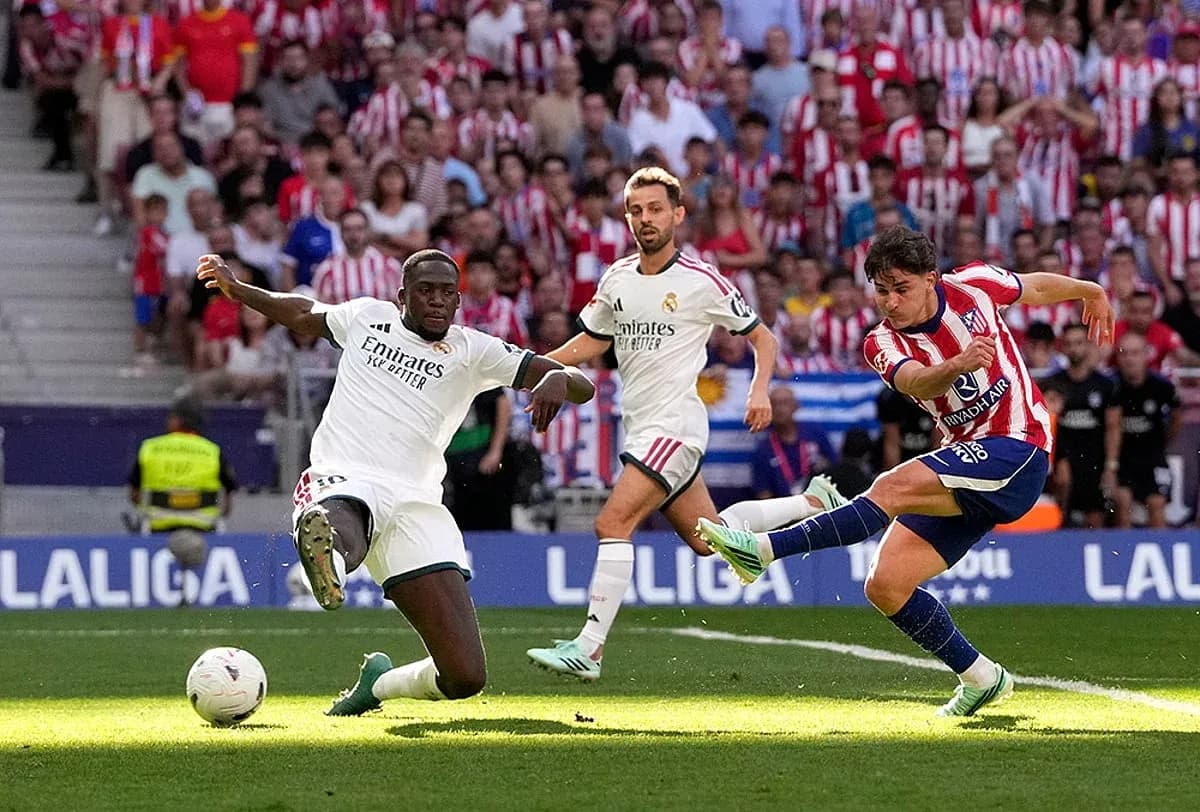
Atletico Madrid vs Real Madrid: A Tactical Derby Analysis

La Liga Officials Admit Refereeing Mistake in Madrid Derby Over Lee Kang-in's Tackle on Federico Valverde

Elche vs Real Madrid: A Clash of Opposites in La Liga

Atletico Madrid Dominates Osasuna 4-0 in La Liga Showdown

Barcelona's Dominance: 7-2 Triumph Over Racing Santander