
Parma vs Sassuolo: Tactical Showdown in Serie A Finale
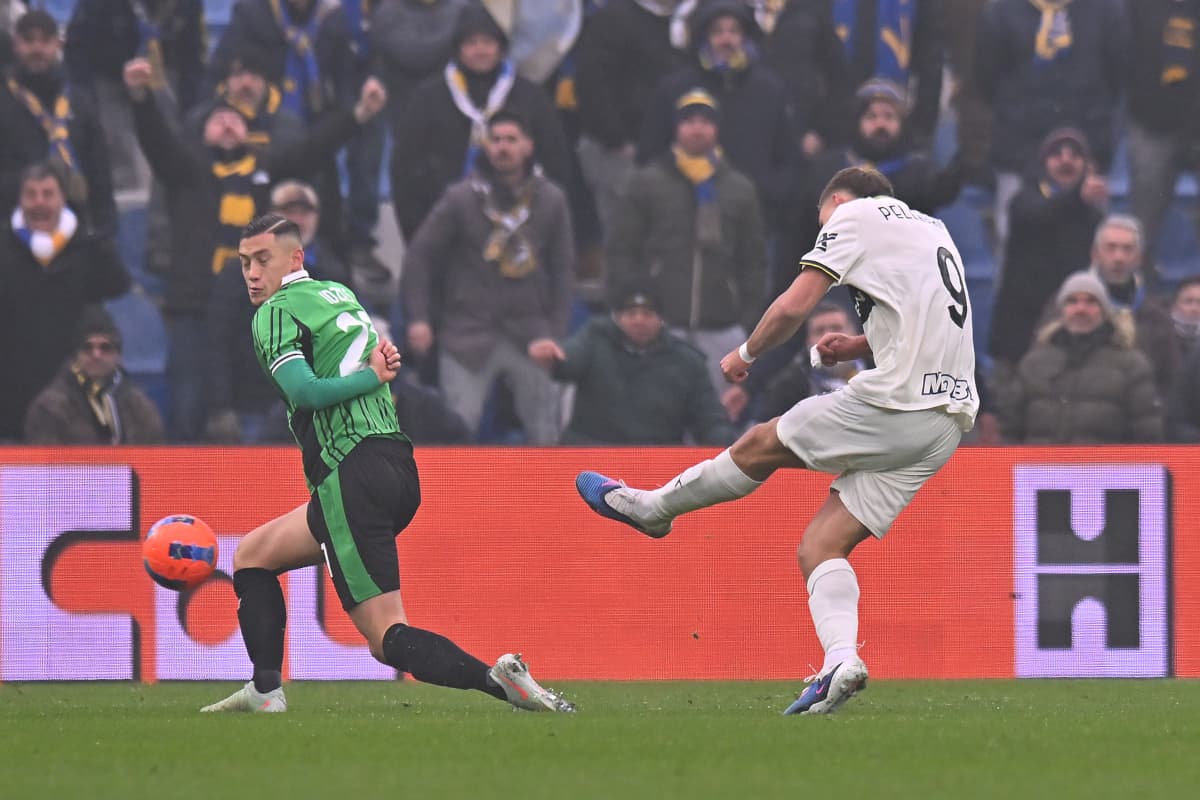
Parma host Sassuolo at Stadio Ennio Tardini in the final round of Serie A in 2026, a mid-table match that will lock in final positions rather than decide survival or Europe. In the league phase, Parma come into Round 38 in 13th on 42 points, while Sassuolo sit 11th on 49 points; the main stakes are marginal prize-money jumps and the psychological weight of finishing closer to the top half versus sliding back toward the lower pack.
Head-to-Head Tactical Summary
On 3 January 2026 in Serie A at MAPEI Stadium - Città del Tricolore, Sassuolo and Parma drew 1-1, with a 1-1 scoreline at half-time and no further goals in the second half, reflecting a balanced contest in Reggio Emilia. On 2 August 2023 in a club friendly at Stadio Ennio Tardini, Parma edged a 1-0 home win over Sassuolo, again tight and controlled, with 0-0 at half-time before Parma found a second-half breakthrough. On 1 August 2021, also a club friendly at Stadio Ennio Tardini, Sassuolo won 3-0 away against Parma, a rare clear-margin result in this recent series. Going back to Serie A on 16 May 2021 at Stadio Ennio Tardini, Sassuolo beat Parma 3-1, overturning a 1-1 half-time score with two second-half goals. Earlier that league year, on 17 January 2021 at MAPEI Stadium - Città del Tricolore, the sides drew 1-1, with Parma leading 1-0 at half-time before Sassuolo equalised after the break. Overall, recent meetings show a pattern of low-to-moderate scoring, with three 1-1 draws, one 1-0 Parma home win, and two Sassuolo wins by larger margins (3-0 and 3-1), split across both Reggio Emilia and Parma.
Global Season Picture
- League Phase Performance:
In the league phase, Parma’s 42 points from 37 matches (10 wins, 12 draws, 15 losses) are underpinned by a very low-output attack and a vulnerable defence: 27 goals for and 46 against (goal difference -19). Sassuolo’s 49 points from 37 (14 wins, 7 draws, 16 losses) reflect a more aggressive but still leaky profile, with 46 goals for and 49 conceded (goal difference -3). Parma’s home numbers (15 scored, 25 conceded) show that Ennio Tardini has not been a fortress, while Sassuolo’s away record (21 scored, 23 conceded) is broadly competitive and consistent with their overall mid-table standing. - Season Metrics:
In the league phase, Parma’s statistical profile confirms a low-scoring, safety-first approach: 27 goals for in 37 games (0.7 per match) and 46 against (1.2 per match) across all venues, with 16 matches where they failed to score and 12 clean sheets, pointing to long spells of risk-averse football and reliance on structure rather than attacking volume. Sassuolo, by contrast, average 1.2 goals scored and 1.3 conceded per match (46 for, 49 against), indicating a more open, trading-chances style that still leaves them in the red defensively. Parma’s varied use of back-three systems (most commonly 3-5-2) and frequent yellow cards clustered between minutes 31-60 and 76-90 signal a team that often has to absorb pressure and break up play. Sassuolo’s heavy use of 4-3-3 and a high concentration of yellow cards late in games (particularly minutes 76-90) suggests a side that pushes tempo and often defends transitions in the final stages. (No possession or xG values are provided in the dataset, so efficiency must be inferred from goals and defensive records.) - Form Trajectory:
In the league phase, Parma’s recent form string of “LLLWW” shows a sharp late upswing after a three-match losing streak: two consecutive wins have effectively secured mid-table safety and injected momentum into this finale. Sassuolo’s “LLWDW” form indicates a more oscillating pattern: two defeats, then a stabilising draw, followed by two wins. Both sides therefore enter the final day on upward curves, but Parma’s back-to-back victories contrast with Sassuolo’s slightly more volatile run, making this a test of which trajectory is more sustainable under end-of-season pressure.
Tactical Efficiency
With no explicit Attack/Defense Index values provided in the comparison data, the efficiency picture must be drawn from the season-long statistics. In the league phase, Parma’s attack is low-volume and low-yield (0.7 goals per match, 16 failures to score), which points to a conservative, low-risk shot profile that rarely overwhelms opponents. Defensively, conceding 1.2 goals per match with 12 clean sheets suggests that when their structure holds they are solid, but once breached they struggle to chase games, given their limited scoring capacity.
Sassuolo’s efficiency is almost the mirror image: 1.2 goals scored per match but 1.3 conceded. Their higher goal output relative to Parma indicates more aggressive chance creation, but the near-identical concession rate reveals that this attacking ambition comes at a defensive cost. The presence of heavy defeats (such as a 0-5 home loss in their “biggest loses” profile) alongside strong attacking wins (3-0 and 0-3) underscores a high-variance style: they can overwhelm weaker or open opponents but are exposed when transitions go against them.
Comparing these profiles, Parma’s “defence-first, low-scoring” identity (27 for, 46 against) contrasts with Sassuolo’s “high-variance, open” model (46 for, 49 against). In practical terms, any Attack/Defense Index built on goals, xG and shot volumes would likely grade Parma as defensively oriented but offensively inefficient, while Sassuolo would rate higher in attacking threat but lower in defensive control. This sets up a final-day clash where Parma will try to compress space and keep the scoreline tight, while Sassuolo are more likely to accept a stretched game in search of incremental gains in the table.
The Verdict: Seasonal Impact
For Parma, this match is about consolidating a stabilising year back in mid-table and potentially nudging closer to the top half. A win would take them to 45 points and could close the gap to Sassuolo to a single point, reframing the narrative from “survival with a negative goal difference” to “competitive mid-table side with late-season momentum”. That matters for internal belief, for the perception of their 3-5-2 base system, and for off-season planning: finishing strongly strengthens the case to add targeted attacking quality rather than overhaul the structure.
For Sassuolo, protecting and potentially improving on 11th place is key to validating their more expansive style. Victory away at Stadio Ennio Tardini would lift them to 52 points, underlining that, despite a negative goal difference, their attacking output is enough to keep them in the upper half of the mid-table pack. Dropping points, however, risks being overtaken or compressed by teams immediately behind them and would highlight the cost of their defensive looseness over the year.
In the broader picture, this is not a title or relegation decider, but it is a strategic benchmark game. Parma can confirm that a low-scoring, structurally sound approach is a viable base to build from if they can again restrict Sassuolo’s attack and edge a result. Sassuolo, meanwhile, will see this as a chance to prove that their higher-risk, higher-reward football can travel and deliver points on the final day. The result will shape how both clubs interpret 2026: for Parma, either a platform season to grow from or a warning that they remain too close to the bottom metrics; for Sassuolo, either evidence that their attacking identity can underpin gradual progress, or a reminder that without defensive tightening they are capped at mid-table volatility.
Related News

David Alaba Poised for Surprising Move to Udinese in Serie A
Milan Dominates Lecce: Tactical Analysis of a 3-0 Victory

Juventus Defeats Atalanta 2-0: Tactical Insights and Key Matchups
Frosinone's Tactical Mastery Shines in 2–0 Victory Over Como
Fiorentina and Napoli Share Points in Serie A Clash
AS Roma vs Inter: Tactical Insights from Serie A Clash