
Phoenix Rising's Tactical Crossroads After 0–2 Loss to Louisville
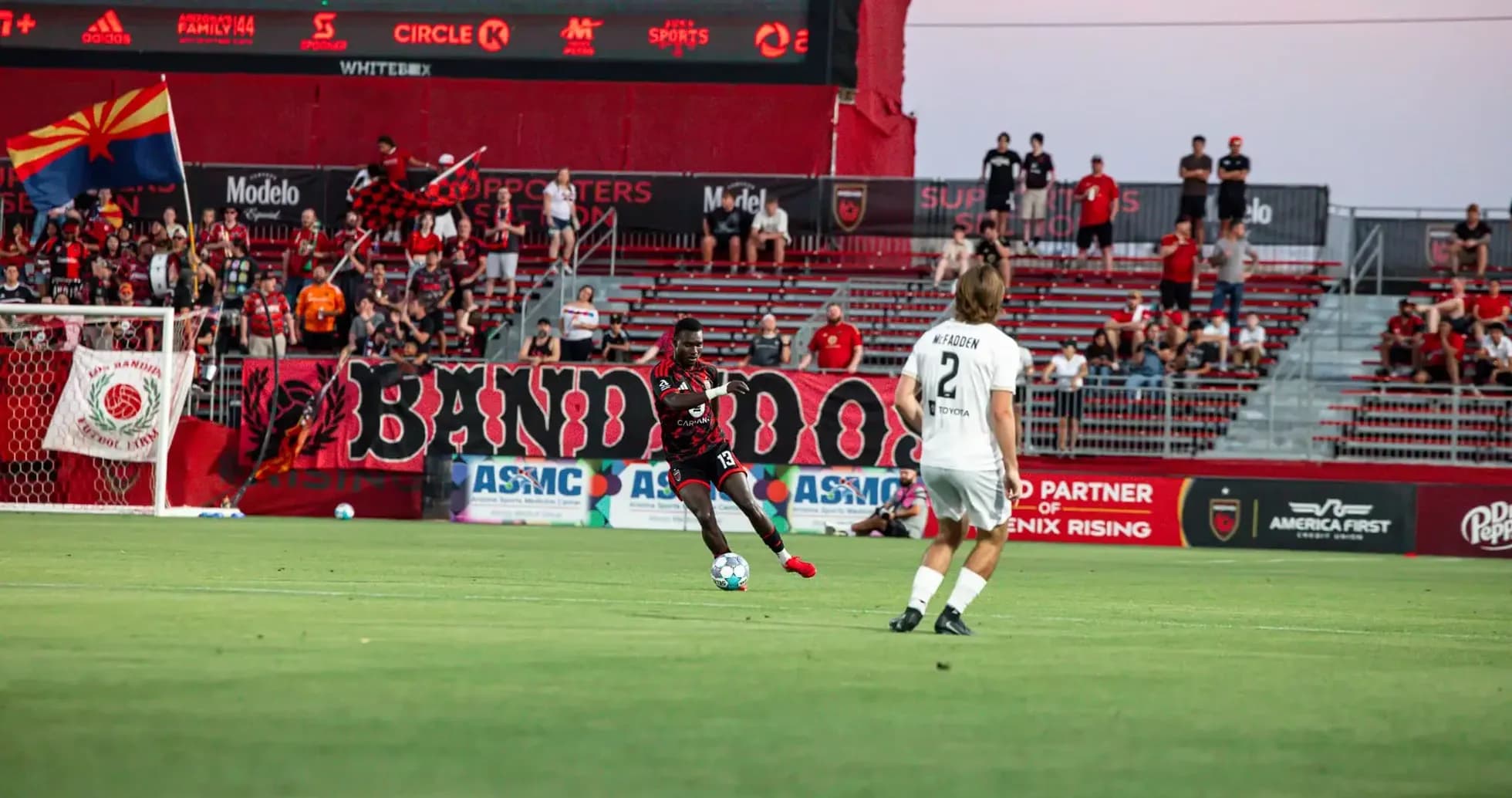
Under the desert lights of Wild Horse Pass Stadium, Phoenix Rising’s 0–2 defeat to Louisville City felt less like an isolated bad night and more like a tactical crossroads for both squads. Following this result in the USL Championship group stage, the contrasting identities of a methodical Phoenix side and a more volatile, punchy Louisville outfit came into sharper focus.
Phoenix came into the night as a solid, if unspectacular, contender: 5th in their group with 16 points, a narrow overall goal difference of +1 built on 15 goals scored and 14 conceded across 12 matches. At home they had been steady rather than ruthless, with 2 wins, 3 draws and just 1 defeat, scoring 9 and allowing 6. Louisville arrived with a more chaotic profile: 2nd in the group on 20 points from 13 games, 22 goals for and 20 against overall, leaning into high-event football. On their travels they had taken 3 wins, 2 draws and 2 defeats, with 13 goals scored and 11 conceded – an away attack averaging 1.9 goals per game, but one that always leaves the door slightly ajar.
Phoenix’s starting XI under Pa-Modou Kah told its own story. With P. Rakovsky in goal, a back line built around C. Smith and P. Mar Boye, and the versatile JP Scearce, they set up as a side that prefers structure first. In midfield, A. Vukovic and L. Biasi were the pivots for ball circulation, while D. Gomez and J. Moursou offered the connective tissue between lines. The attacking trident of G. Rivera, I. Sacko and D. Rivera was more about fluidity than a single reference point: three players comfortable drifting into pockets, combining, and trying to unbalance a back four rather than bullying it.
Louisville, under Simon Bird, leaned into a more direct competitive edge. D. Faundez in goal was shielded by a rugged defensive core of A. McFadden, S. Totsch, K. Adams and A. Dia – a group built to contest first and second balls. The midfield of T. Davila, Z. Duncan and B. Dayes looked designed to compress space and spring quickly into transition, while E. Davila and M. Akale worked between lines to feed C. Donovan, the central striker and natural “hunter” of the side’s attack.
If this was a 1/8-final-type matchup in terms of stakes – two teams sitting in promotion play-off positions – the tactical voids were less about absences and more about tendencies under pressure. Phoenix’s season-long data reveals a side that can control games but doesn’t always turn that control into a cutting edge. At home they average 1.5 goals scored and 1.0 conceded, but across the campaign they have already failed to score in 3 matches and rely heavily on precision: 5 penalties in total, all converted, underlining how much they depend on set-piece opportunities and composure in the box.
Defensively, Phoenix’s discipline is a double-edged sword. Their yellow card distribution shows a pronounced spike between 46–60 minutes (34.15%) and another late surge between 76–90 minutes (24.39%). That pattern hints at a team that starts each half controlled but grows increasingly stretched as intensity rises and game states become urgent. More tellingly, both of their red cards this season have come in the 31–45 minute window (100.00% of their reds), suggesting that when frustration builds before half-time, composure can crack.
Louisville’s card profile is different but complementary to their attacking posture. Their yellows cluster in the 46–60 and 76–90 windows as well, each band accounting for 23.81% of their bookings. They are a team that ramps up aggression after the interval and sustains it into the dying minutes. Yet they have avoided red cards entirely, indicating controlled aggression rather than recklessness – a crucial distinction in high-stakes fixtures.
The “Hunter vs Shield” matchup in this contest was Louisville’s away attack versus Phoenix’s home defensive record. On their travels, Louisville’s 13 goals from 7 games (1.9 per match) ran straight into a Phoenix back line that had allowed only 6 in 6 home outings (1.0 per game). In theory, Phoenix’s shield should have been strong enough to blunt Louisville’s thrust, especially with Rakovsky behind a relatively settled defensive unit. Instead, Louisville’s ability to sustain pressure across both halves and exploit transitional moments broke that equilibrium, delivering the 0–2 full-time scoreline.
In the “Engine Room,” Phoenix’s possession-focused core of Vukovic, Biasi and Gomez met Louisville’s more vertical trio of T. Davila, Z. Duncan and B. Dayes. Phoenix’s season form – a run of LDDDLWWWDLWL – shows a side that can string together control-based performances but is vulnerable when tempo spikes and the match becomes stretched. Louisville’s longer arc – WWWWLDWLLLLDW – reveals higher peaks and deeper troughs, yet their best sequences come when their midfield can turn turnovers into quick service for E. Davila, Akale and Donovan.
Following this result, the statistical prognosis for both squads sharpens. Phoenix still look like a side whose underlying numbers are built on balance: 1.3 goals scored and 1.2 conceded per game overall, 4 clean sheets and 4 matches where they failed to score. They are always close, rarely blown away, but their margin for error is thin. Louisville, with 1.7 goals scored and 1.5 conceded per match overall and only 3 clean sheets, live on the edge – but their higher attacking ceiling, especially away, gives them more ways to win nights like this.
From a tactical preview standpoint going forward, Phoenix must find a way to add a more ruthless final-third presence to the fluid front line of G. Rivera, Sacko and D. Rivera, and to manage the emotional spikes that lead to cards around half-time and in the second half. Louisville, meanwhile, will continue to lean on the spine of Totsch, Duncan and Donovan, trusting that their controlled aggression and away scoring power can carry them deep into the promotion picture, even if it means living with defensive risk.
In the end, this 0–2 was more than a scoreline; it was a reminder that in a league defined by fine margins, the team willing to embrace volatility – and execute in the key windows of each half – often walks away with the points.
Related News
San Antonio's Tactical Edge Secures 2–1 Victory Over Colorado Springs

Charleston Battery Dominates Loudoun United 4–1 in Statement Win

Miami FC vs Orange County SC: USL Championship Clash Highlights
Colorado Springs vs San Antonio: USL Championship Group Stage Preview

Charleston Battery vs Loudoun United: Match Preview
Miami FC vs Orange County SC Match Preview