
Pochettino's Risky Rotation Leads to U.S. Loss Against Turkey
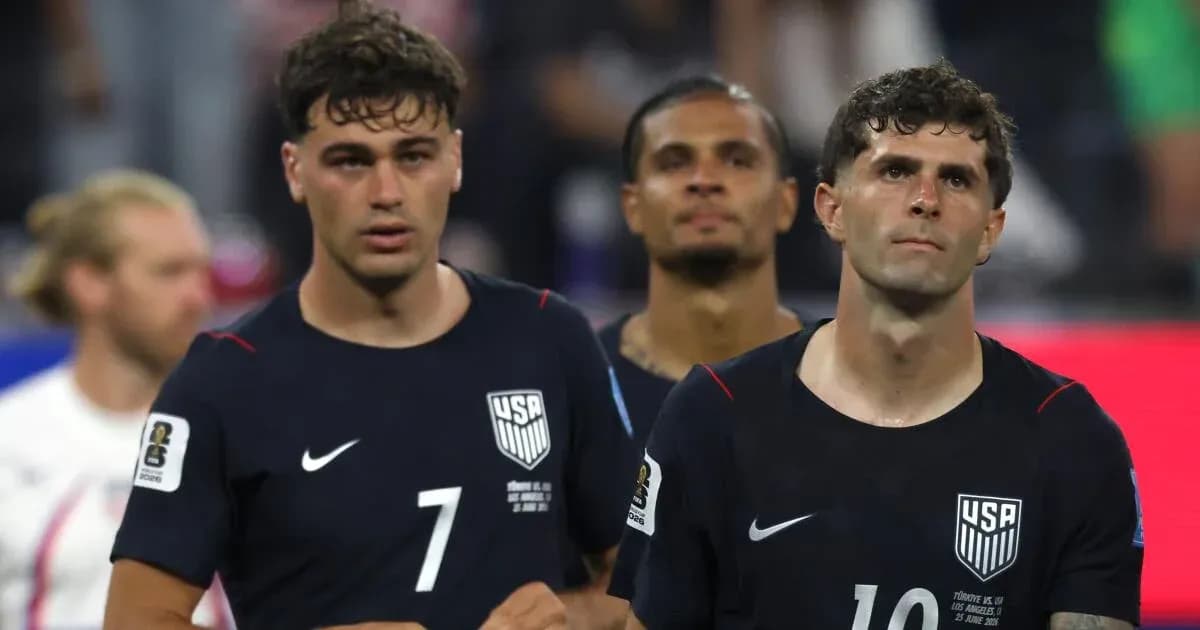
Mauricio Pochettino has spent 18 months turning the U.S. national team into a laboratory. Formations bent, tactics twisted, hierarchies challenged. No sacred cows, no comfort zones. The message to his players has been blunt: why shouldn’t this team make a deep run at a home World Cup?
On Thursday night, the experiment bit back.
With qualification for the knockout rounds already secured, Pochettino rolled the dice harder than any American coach has at a World Cup, making nine changes to his starting XI for the group-stage finale against already-eliminated Turkey. The unbeaten record went with it, Kaan Ayhan stabbing home deep into stoppage time to seal a 3-2 Turkish win on their final touch of the tournament.
The U.S. still finish top of the group at 2-1-0. The bracket remains favorable. The mood? Less straightforward.
A bold gamble, and an early payoff
If this was a risk, it didn’t look like one at kickoff.
Inside three minutes, Auston Trusty – a surprise starter, a World Cup novice – smashed the U.S. in front with the second-fastest goal in the country’s World Cup history. The move was born from another debutant’s composure: Sebastian Berhalter, making his first World Cup start, whipped a long, teasing corner across the face of goal. Trusty killed it with his first touch, then ripped a left-footed shot from the far edge of the six-yard box, threading it between Ugurcan Cakir and the near post.
Pochettino’s rotation suddenly looked like genius again. Fresh legs, fresh ideas, same ruthless edge.
That illusion lasted seven minutes.
Turkey, playing with the freedom of a side already sent home, snapped back. Arda Guler, the Real Madrid midfielder who has spent the last year being told he is the future, slipped away from Mark McKenzie at the top of the box, gliding onto a pass from Kenan Yildiz. One touch, one glance, then a lifted left-footed finish over Matt Turner at the penalty spot.
It was the first shot Turner had faced all tournament. It brought the first U.S. lead surrendered at this World Cup. A new kind of test.
Turkey punch back
The Americans didn’t pass it.
On Turkey’s second effort on target, Orkun Kokcu punished them again. In the 31st minute, Eren Elmali drove in from the left and squared a centering ball that found Kokcu at the edge of the six-yard box. Kokcu didn’t hesitate, redirecting into the back of the net to hand the U.S. its first deficit of the tournament.
The game turned ragged. Turkey, in their first World Cup since 2002 and already eliminated, leaned into the occasion with a chippy, combative edge. Every duel felt personal. Every whistle drew a reaction. The U.S., so smooth and authoritative in dominant wins over Paraguay and Australia, suddenly looked like what they were: a heavily rotated side still learning each other’s movements on the fly.
Pochettino had chosen rhythm for his squad over rhythm for his starting XI. The trade-off was clear on the scoreboard.
Berhalter steps up, and Pulisic returns
The response came from the same young midfielder who had sparked the opening goal.
Four minutes into the second half, a set piece again unsettled Turkey. A loose ball spilled out to the top of the area, where Berhalter lingered in space. He didn’t snatch at it. He waited that extra heartbeat, then skipped a right-footed shot just inside the near post to level the score at 2-2.
“The ball just popped out and I knew if I just stayed calm and just made a swing motion, that I had a chance,” he said. “You practice those a lot and to see that go in was awesome.”
A goal and an assist in his first World Cup start. On another night, that’s the headline.
Instead, the spotlight shifted to a familiar figure.
Ten minutes after Berhalter’s equalizer, Christian Pulisic stepped onto the pitch for the first time since the opening half of the first game, finally freed from a nagging left calf issue. Pochettino didn’t ease him in; Pulisic immediately went hunting up the left wing, carving open Turkey’s back line three times in quick succession.
Each time, danger. Each time, no finish.
Those misses, half-chances and almost-moments, grew heavier as the clock ticked into stoppage time.
A late sting and a lingering question
The pressure finally told – at the wrong end.
Deep into stoppage time, with the U.S. seemingly content to take the draw and the group, Turkey snatched their only win of the tournament. A scramble in front of Turner’s goal turned chaotic, bodies flying, clearances half-made. Ayhan, hemmed in by three U.S. defenders, found just enough space to prod the ball over the line.
Turkey’s World Cup ended on that touch. The U.S.’s perfect record ended with it.
For Pochettino, the result came with an immediate question: had he pushed his rotation too far? He didn’t blink.
“The objective was to finish first and we are first,” he said. “Now it is the next stage and it is going to be a final. And we are ready. We are much better than before that game because we had players now with 90 minutes in their legs and performing and really to help if we need from the beginning or after from the bench.
“It’s all positive. And I am so positive and I am happy.”
The numbers back up at least part of that claim. His nine changes between group games are the most any American coach has ever made at a World Cup. When Alejandro Zendejas came on in the 76th minute, he became the 23rd U.S. player to appear in this tournament, another record. Pochettino didn’t just rotate; he spread this World Cup across almost his entire roster.
Inside the dressing room, the players leaned into that narrative.
“We know everyone’s ready to step up at any moment,” Berhalter said. “I think you saw that today. We let some moments get away from us, but I thought the performances overall were good.
“It’s every little kid’s dream across the United States of America to play in a home World Cup, and just in a World Cup in general. People made their debuts today, so congratulations everyone. This is what everybody looks forward to.”
Brenden Aaronson, too, framed the sting as fuel.
“You can always take these things as fuel, having that moment in the last one where they score,” he said. “It’s tough. We wanted to walk away with no losses in the group stage. But it was still a fantastic group stage.
“Not worried whatsoever. We’re going to move on to the next one and be ready to go for Bosnia.”
Momentum or mirage?
Turkey’s role in all this shouldn’t be overlooked. Back on the World Cup stage after a 24-year absence, eliminated before kickoff, they played like a team determined not to leave quietly. The tackles were sharp, the duels nasty, the celebrations raw. If they were going out, they were taking a piece of the group winners with them.
For the U.S., the real verdict on Pochettino’s gamble comes next.
They head to Santa Clara for a round-of-32 clash with Bosnia and Herzegovina, the third-place team from Group B. The Americans arrive with their primary objective met – first place secured – and a squad in which 21 players have now started and 23 have seen the field.
They also arrive off a last-kick defeat, their aura of early-tournament control punctured.
Pochettino insists the momentum remains. Wednesday will reveal whether this loss was a useful jolt or the first crack in a carefully built surge toward something bigger.
Related News

Anthony Joshua Names Murat Gassiev as Next Opponent if He Defeats Tyson Fury

UFC 332: Start Time and Fight Highlights for Natalia Silva vs. Wang Cong
Court McGee Opens Up About Choosing UFC 332 as His Final MMA Fight
WBC Orders Lightweight Title Unification: William Zepeda vs Jadier Herrera

BCCI Pension List: Monthly Payments to Retired Indian Cricketers in 2025

Why Fury vs Joshua Is Set for Cardiff, and Dua Lipa’s Unexpected Role