
Portland Thorns W Dominates Bay FC W in 2-0 Victory
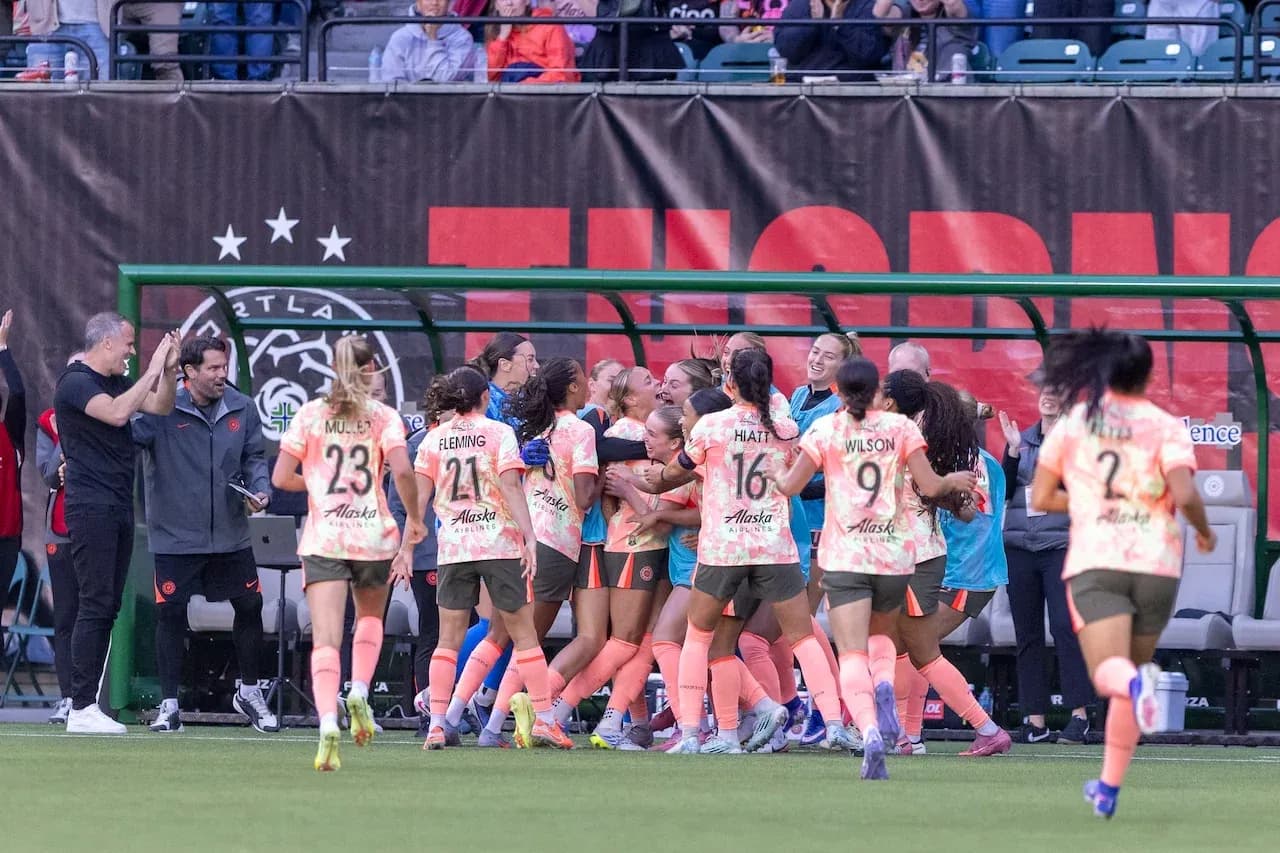
Under the Providence Park lights, this felt less like a routine group-stage date and more like a quiet statement of hierarchy. Portland Thorns W, already sitting 1st in the NWSL Women standings with 23 points and a goal difference of 8, hosted a Bay FC W side trying to claw their way up from 13th. The table said top versus strugglers; the pitch, in a 2-0 home win, largely confirmed it.
Both coaches trusted the same shape, mirroring each other in 4-2-3-1. For Portland, Robert Vilahamn doubled down on the club’s seasonal identity: front-foot, possession-leaning, and structurally secure. Heading into this game, Portland had played 11 league fixtures in total, winning 7 with only 2 defeats. At home they had been ruthless: 5 played, 4 wins, 1 draw, 0 losses, scoring 8 and conceding none. That defensive perfection at Providence Park was the quiet force behind everything.
Emma Coates’ Bay FC came in with a different emotional weight. Their 11 points from 9 games, with a goal difference of -5, told of a side that competes but cracks. On their travels, they had split their 4 games evenly between success and failure: 2 wins, 0 draws, 2 losses, 4 scored, 6 conceded. There is threat there, but not enough insulation around it.
The lineups framed the story. For Portland, M. Arnold in goal sat behind a back four of R. Reyes, I. Obaze, S. Hiatt, and M. Vignola. In front of them, the double pivot of C. Bogere and J. Fleming acted as the hinge between the defensive platform and a creative band of three: M. Muller, P. Tordin, and M. Alidou d’Anjou, all funnelling supply into lone forward S. Wilson.
Bay FC’s mirror was clear: J. Silkowitz in goal, a back line of S. Collins, B. Courtnall, J. Anderson, and A. Denton; a holding duo of C. Hutton and H. Bebar; then T. Huff, D. Bailey, and R. Kundananji supporting the experienced C. Girelli up top. On paper, it was a like-for-like tactical duel. In practice, Portland’s structure had more layers.
The absences list offered no alarms, so this was close to full-strength against full-strength. The disciplinary backdrop, however, cast a shadow over how both midfields would approach the contest. Portland’s season card profile showed a propensity for late yellow cards: 27.27% of their yellows arriving in the 76-90’ window, with another 18.18% between 61-75’. They also had a history of red cards concentrated early and just after the break, with 50.00% of reds between 0-15’ and 50.00% between 46-60’. Bay FC’s yellow distribution skewed heavily towards the final half-hour and stoppage time: 21.05% between 61-75’, 21.05% between 76-90’, and another 21.05% between 91-105’. Their only red card this season had come deep into added time, in the 91-105’ band.
That disciplinary map shaped the tempo narrative. Portland, knowing their own tendency to accumulate cards late, leaned on early control and game-state management. Bay, whose emotional spikes often arrive in the closing stages, were always likely to chase rather than dictate.
Hunter vs Shield
In the “Hunter vs Shield” duel, the contrast was stark. Portland’s attack, heading into this game, had scored 17 goals in total across the season, at an overall average of 1.5 goals per match. At home they were producing 1.6 goals per game and, crucially, conceding 0.0. Seven clean sheets overall, five of them at Providence Park, underline a side that doesn’t just score—they suffocate. Bay FC’s attack, by comparison, had produced 8 goals in total at 0.9 per game, with 1.0 on their travels. It is functional rather than ferocious, and when matched against Portland’s home defensive record, the burden on C. Girelli and the supporting trio was always going to be immense.
Portland’s shield was anchored by R. Reyes and C. Bogere, both with notable disciplinary histories but also defensive impact. Reyes, a top red-card figure in the league, had still contributed 5 blocked shots and 9 interceptions this season; Bogere, another prominent name in the red-card charts, had 29 tackles, 2 blocked shots, and 10 interceptions. Their aggression is a double-edged sword, but in this match it leaned towards control rather than chaos, protecting Arnold and enabling the full-backs to step into higher lines.
For Bay, the engine room was defined by C. Hutton and T. Huff. Hutton, a leading yellow-card recipient with 3 yellows, is also their key ball-winner: 24 tackles, 2 blocked shots, and 20 interceptions, plus 366 passes at 76% accuracy. Huff, meanwhile, blends forward thrust with risk, with 7 shots (5 on target), 1 goal, 1 assist, and a disciplinary record that includes both yellow and yellow-red. In theory, this duo should have been the fulcrum to disrupt Portland’s rhythm and launch transitions. In reality, Portland’s territorial dominance pinned them deeper than they would have liked, turning enforcers into fire-fighters.
The creative “Engine Room” battle higher up the pitch was even more tilted. Portland’s season has been orchestrated by O. Moultrie and P. Tordin, even if neither started here. Moultrie, with 4 goals and 4 assists plus 22 key passes and 77% passing accuracy, is one of the league’s premier chance-creators. Tordin, with 3 goals, 3 assists, and 17 key passes, offers a more vertical, duel-heavy profile, winning 43 of 93 duels. Their presence in the squad, even off the bench, shapes opposition game-plans: Bay had to respect the possibility of them entering and raising the tempo late.
Bay’s creative counterweight is A. Pfeiffer, who has 2 goals and 2 assists in just 4 appearances, with 5 shots (4 on target) and 5 key passes. Yet Pfeiffer did not feature in this starting XI, leaving Bay reliant on Huff, Bailey, and Kundananji to connect with Girelli. Without their most efficient young creator on the pitch from the start, Bay’s attacking patterns were more predictable, easier for Portland’s double pivot to read and smother.
Statistically, the broader campaign context made this 2-0 feel almost inevitable. Portland’s overall goals against average of 0.8, combined with 1.5 goals for, creates a sustainable positive margin. At home, the numbers are even more brutal: 8 scored, 0 conceded across 5 matches. Bay FC, meanwhile, concede 1.5 goals per game on their travels and score only 1.0. Match that against Portland’s Providence Park fortress, and the xG balance—though not explicitly given—leans heavily towards the hosts both in volume and quality of chances.
Following this result, the narrative is clear. Portland Thorns W continue to look like a side built for late-season pressure: a stable 4-2-3-1 base, a deep attacking rotation featuring the likes of Moultrie, Tordin, and S. Smith in the wider season context, and a home record that borders on impenetrable. Bay FC W, for all their flashes, remain a team searching for cohesion between a combative midfield, a promising young creator in Pfeiffer, and an experienced spearhead in Girelli.
Tactically, this was less a dramatic twist and more a confirmation. Portland’s structure, discipline in key zones, and superior squad depth translated their statistical superiority into a controlled, almost inevitable 2-0. For Bay, the lesson is stark: against the league’s most complete unit, mere resistance is not enough—you need a plan that can bend a fortress.
Related News
Portland Thorns W vs Houston Dash W: NWSL Women Clash

Kansas City W vs Denver Summit W: NWSL Women Showdown
Portland Thorns W vs Houston Dash W Prediction: Key Stats and Tips
Washington Spirit W vs Angel City W Prediction: Key Stats and Betting Tips
Racing Louisville W vs San Diego Wave W Predicted Lineups and Team News
Kansas City W vs Denver Summit W Prediction: Key Stats and Betting Tips