
Portland Timbers II Edges Tacoma Defiance 1-0 in MLS Next Pro
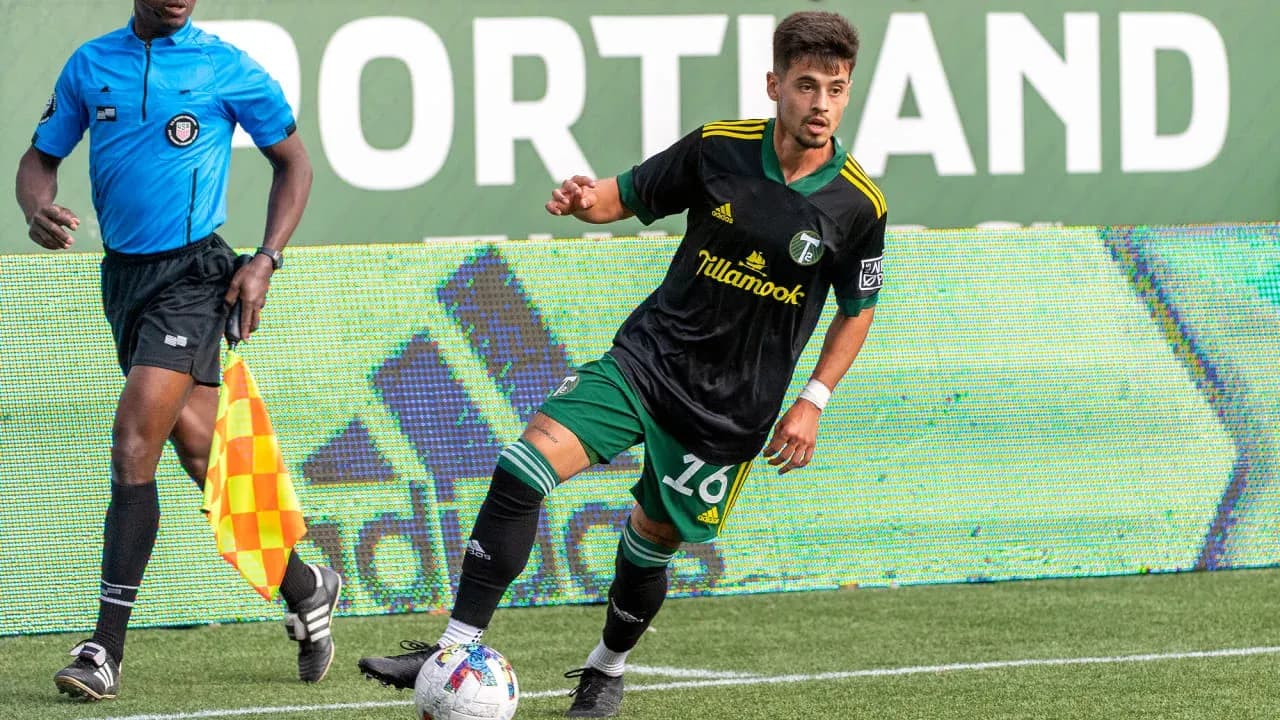
Providence Park under the late spring lights staged a quietly pivotal night in the MLS Next Pro Group Stage, as Portland Timbers II edged Tacoma Defiance 1-0 in a tight, attritional contest. Kick-off came at 20:00 UTC, and by full time Portland had protected a 1-0 half-time lead, banking three points that reinforce their status as a front-runner in the Pacific Division, while Tacoma’s stop-start campaign absorbed another blow.
Heading into this game, the seasonal profiles of the two sides already hinted at the narrative that would unfold. Portland arrived as a curious kind of leader: top of the Pacific Division with 23 points from 12 matches, yet with a goal difference locked at 0 overall – 15 goals scored and 15 conceded. Their season has been defined by volatility: seven wins, five defeats, and not a single draw. At home they had split their eight fixtures perfectly down the middle, four wins and four losses, with 10 goals for and 10 against. That symmetry underlined a team that either hits its attacking rhythm or gets exposed in transition, with little middle ground.
Tacoma, by contrast, travelled as a side still searching for equilibrium. Sixth in the Pacific Division and on 14 points from 13 matches, they carried a negative goal difference of -6, the product of 13 goals scored and 19 conceded overall. On their travels they had been particularly fragile: six away games had yielded two wins and four defeats, with 5 goals scored and 12 conceded. An away goalsAgainst average of 2.0 per match underscored a structural softness that Portland, averaging 1.4 goalsFor at home, were always likely to probe.
Jack Cassidy’s selection for Portland was revealing in its balance and intent. Without a declared formation, the shape had to be read through personnel. S. Joseph, wearing 91, anchored the back, the presumptive last line in a side that has often had to live with defensive risk. Ahead of him, the outfield core blended energy and technical profiles: A. Bamford and N. Lund offered work-rate and vertical running, while C. Ondo and H. Mueller added ball-carrying and line-breaking potential. The inclusion of C. Griffith, shirt 39 and the club’s leading figure across the league’s attacking metrics tables, gave Cassidy a focal point capable of linking play and attacking the box.
Alongside Griffith, creative and connective duties fell to E. Izoita and V. Enriquez, with N. Santos and L. Fernandez-Kim providing width and pressing lanes. D. Cervantes, in 47, completed a starting XI that looked designed to attack Tacoma’s known frailty between lines rather than simply sit on their divisional advantage.
On the Tacoma side, the lineup told a different story. With no coach listed and no explicit formation, the XI projected a more reactive, transitional identity. M. Shour in 41 provided the base in goal, shielded by a defensive cohort including D. Alvarez, A. Lopez, G. Sandnes, and C. Gaffney. In front of them, the likes of X. Gnaulati, M. O’Neill, and C. Phoenix suggested an emphasis on counter-attacking lanes and quick vertical progression, while E. Carli, S. Gomez, and M. Bronnik offered movement and pressing options higher up.
The tactical voids in this fixture were less about absences – there was no formal list of missing or questionable players – and more about structural weaknesses encoded in the season-long data. Portland’s defensive record at home, conceding 13 goals in eight matches with a goalsAgainst average of 1.6, pointed to vulnerability when forced to defend deep for extended spells. Tacoma, meanwhile, had failed to score in three away fixtures this season and five overall, illustrating how often their attacking plan has simply not materialised, especially when chasing games.
Disciplinary trends also shaped the psychological undercurrent. Portland’s yellow card distribution showed a pronounced spike between 61-75 minutes, where 30.00% of their cautions this season have been collected, and another 20.00% arriving between 76-90. That paints a picture of a side that grows increasingly combative – and occasionally ragged – as matches tighten late on. Tacoma’s bookings are more front-loaded in the middle phases: 26.32% of their yellows have come between 31-45 minutes, and another 26.32% from 46-60, suggesting that their intensity and perhaps desperation peak around half-time and the early second half.
Within that frame, several key matchups defined the contest. The “Hunter vs Shield” duel centred on Portland’s attacking ensemble – with Griffith as a symbolic spearhead – against Tacoma’s away defence that had already allowed 12 goals in six road games. Portland’s home goalsFor average of 1.4, combined with Tacoma’s 2.0 goalsAgainst away, created a statistical expectation of clear chances for the hosts if they could sustain pressure and force Tacoma’s back line into repeated defensive actions.
In the “Engine Room”, the battle for control hinged on Portland’s midfield trio of Bamford, Lund, and Ondo against Tacoma’s central cluster of Gnaulati, O’Neill, and Phoenix. Portland’s season-long refusal to draw – 12 matches, seven wins and five losses, with 0 draws in total – reflects a midfield that plays on the edge, pushing for incision rather than containment. Tacoma’s pattern of eight defeats in 13, but with brief two-game winning streaks, mirrors a side that can dominate stretches when their midfield presses and transitions click, yet collapses when that intensity cannot be sustained.
From a statistical prognosis standpoint, the contours of the match fit the pre-game models. Portland’s overall goalsFor average of 1.3 and goalsAgainst average of 1.5, combined with Tacoma’s 1.2 goalsFor and 1.5 goalsAgainst overall, pointed towards a narrow-margin encounter in which one moment of quality or one defensive lapse could decide it. Portland’s perfect penalty record this season – 2 penalties taken, 2 scored, 100.00% – underlined their composure in high-leverage situations, even though spot-kicks did not feature on this particular night.
Following this result, the 1-0 scoreline at Providence Park can be read as a microcosm of both teams’ campaigns. Portland leaned into their attacking ambition just enough to carve out the decisive goal, then relied on a defensive unit that, while statistically porous, held its nerve when it mattered. Tacoma once again found themselves on the wrong side of fine margins, their away defensive issues kept in check for long stretches but ultimately punished, and their attack unable to break down a home side that has grown accustomed to living in the tension between risk and reward.
In a playoff race framed by the Eastern Conference description of promotion pathways and 1/8-final ambitions, Portland’s capacity to grind out narrow home wins, even with a zeroed goal difference, may prove decisive. Tacoma, meanwhile, leave Portland knowing that until their away defensive numbers shift and their attack finds consistency, nights like this – close, combative, but ultimately empty-handed – will continue to define their season.
Related News

MLS Winners and Losers: Cavan Sullivan’s USMNT Rise, St. Louis City SC’s Smart Moves, and Chicago Fire’s Hugo Cuypers Gap

MLS Winners and Losers: Portland Timbers' Historic Hat-Trick, Josh Sargent Shines, and Cavan Sullivan's Rising Star
Tacoma Defiance Injury List: Players Out and Return Dates vs Colorado Rapids II

Carolina Core injury list: Players out, potential return dates
Tacoma Defiance vs Colorado Rapids II Predicted Lineups and Team News

Orlando City II vs Huntsville City Predicted Lineups and Team News