
Portugal vs Spain: World Cup 2026 Round of 16 Preview

Two giants of European football meet again on 6 July 2026, this time on neutral ground in the World Cup Round of 16, with Portugal listed as the home team and Spain as the away side. The venue details are still to be confirmed, but the stakes could not be clearer: for Portugal, this is a chance to turn a solid group phase into a deep run; for Spain, it is an opportunity to confirm an almost flawless start and justify their status as slight favourites in both data models and betting markets.
Season Context
Portugal arrive in the knockout phase from Group K with 5 points from 3 matches, scoring 6 goals and conceding just 1. That return (6 goals for, 1 against across 3 games) underlines a side that has been efficient at both ends, converting enough chances while keeping things tight defensively to secure progression.
Spain come from Group H in even stronger shape, topping their group with 7 points from 3 games. They have scored 5 goals and, crucially, have yet to concede (5 goals for, 0 against in 3 matches), a profile that fits a controlled, possession-heavy team that has largely kept opponents away from their penalty area.
Form & Momentum
Portugal’s form line reads “WDWD”, a sequence that speaks of consistency and resilience (unbeaten with 6 goals scored and 1 conceded over 3 official group matches). Using those standings numbers, Portugal are averaging 2.0 goals scored and 0.3 goals conceded per game, a balance that justifies describing them as both dangerous in attack and disciplined in defence (goal difference +5).
Spain’s form string is “WWWD”, and the underlying figures from the standings back up the impression of a side in full control (5 goals scored, 0 conceded in 3 matches). That means an average of 1.7 goals scored per game and a perfect defensive record so far (0.0 goals conceded per match), supporting the view of Spain as a very secure unit at the back and efficient going forward.
Head-to-Head Patterns
Recent competitive history between these neighbours has been tense and finely balanced. The most recent clash came on 8 June 2025, when Portugal and Spain drew 2-2 in the UEFA Nations League Final (UEFA Nations League, season 2024, June 2025), with Portugal eventually lifting the trophy after a penalty shootout following extra time.
On 27 September 2022, Spain travelled to Estádio Municipal de Braga and edged a tight encounter 1-0 against Portugal (UEFA Nations League, season 2022, September 2022), a classic away win built on defensive organisation and a single decisive moment. Earlier that same calendar year, on 2 June 2022, Spain and Portugal shared a 1-1 draw in Sevilla at Estadio Benito Villamarín, with Spain as the home side and Portugal as the visitors (UEFA Nations League, season 2022, June 2022).
Beyond the Nations League, their World Cup history also carries drama: for example, on 15 June 2018 they produced a 3-3 thriller with Portugal at “home” and Spain away (World Cup, season 2018, June 2018), underlining how volatile and high-stakes this rivalry can be on the biggest stage.
Tactical Preview
Portugal’s statistical profile in the World Cup suggests a team comfortable in a structured, balanced setup. Their most used formation in the broader World Cup data is a 4-2-3-1, played 4 times, which fits a squad rich in attacking midfielders and wide forwards. With 6 goals scored and only 1 conceded in 3 group matches (from standings), Portugal combine a potent attack with a tight back line, and the broader tournament stats show 8 goals for and 2 against across 4 games in the wider sample, reinforcing the idea of a side that usually creates and converts chances while rarely being overrun.
Personnel-wise, Cristiano Ronaldo stands out as a central attacking reference. Cristiano Ronaldo, listed as an Attacker, has scored 3 goals in 4 World Cup appearances with Portugal in this dataset, with 7 shots on target from 11 attempts and 1 successful penalty, plus a passing accuracy of 84%. Cristiano Ronaldo’s presence in a 4-2-3-1 as the lone striker, supported by creative midfielders like Bruno Fernandes and Bernardo Silva (both registered as Midfielders), gives Portugal a classic structure: double pivot for control, three advanced creators, and a penalty-box finisher.
Spain’s tactical identity is reflected in their formations: they have alternated between 4-3-3 and 4-2-3-1, each used 2 times in the broader World Cup data. The defensive numbers are striking: 0 goals conceded across 3 group matches in the standings, and 0 conceded across 4 games in the wider statistical sample, backed by 4 clean sheets. That defensive perfection (0.0 goals conceded per game) suggests an aggressive pressing structure with excellent control of space.
In attack, Spain have also scored 8 goals across 4 games in the broader data, matching Portugal’s overall output, but with a different distribution of responsibility. Mikel Oyarzabal, listed as an Attacker, has 4 goals and 1 assist in 4 appearances, with 8 shots on target from 15 attempts and a strong average rating of 7.7. Mikel Oyarzabal’s numbers point to a clinical finisher who can operate as a wide forward or central striker within either 4-3-3 or 4-2-3-1. Around him, midfielders like Rodri, Pedri and Dani Olmo (all registered as Midfielders) enable Spain to dominate possession and create sustained pressure rather than relying solely on transitions.
The comparison model’s overall index is almost perfectly balanced, with Spain just ahead: the total comparison index reads 48.5% for Portugal versus 51.5% for Spain. The form index leans towards Spain (56% vs 44%), the attack index is dead level (50% vs 50%), while the defence index heavily favours Spain (100% vs 0%), reflecting Spain’s clean-sheet record against Portugal’s occasional concessions.
Statistical Snapshot
- Competition: World Cup, season 2026 — 6 July 2026.
- Venue: null, null.
- Prediction: Win or draw — Combo Double chance : draw or Spain and -3.5 goals.
- Win Probabilities: Home 10% / Draw 45% / Away 45%.
- Model: Portugal 48.5% — Spain 51.5%.
Betting Verdict
The prediction model leans towards Spain avoiding defeat, recommending a double chance on draw or Spain combined with under 3.5 goals. The win-probability model gives Portugal just 10%, with draw and Spain each at 45%, aligning with Spain’s superior defensive record (0 goals conceded in the group) and slightly stronger form index. The odds markets broadly agree: Spain’s away price ranges from roughly 1.87 to 1.99, implying an approximate winning chance between about 50.3% and 53.5%, while Portugal’s home odds between roughly 3.80 and 4.10 suggest an implied range of about 24.4% to 26.3%. Given the recent head-to-head pattern of tight, low-margin games and the model’s expectation of under 3.5 goals, the most data-backed angle is to side with Spain on the double chance, anticipating another cagey, tactical contest rather than a goal-fest.
Related News

Brazil's First Post-World Cup Friendly: What Should the Lineup Be?
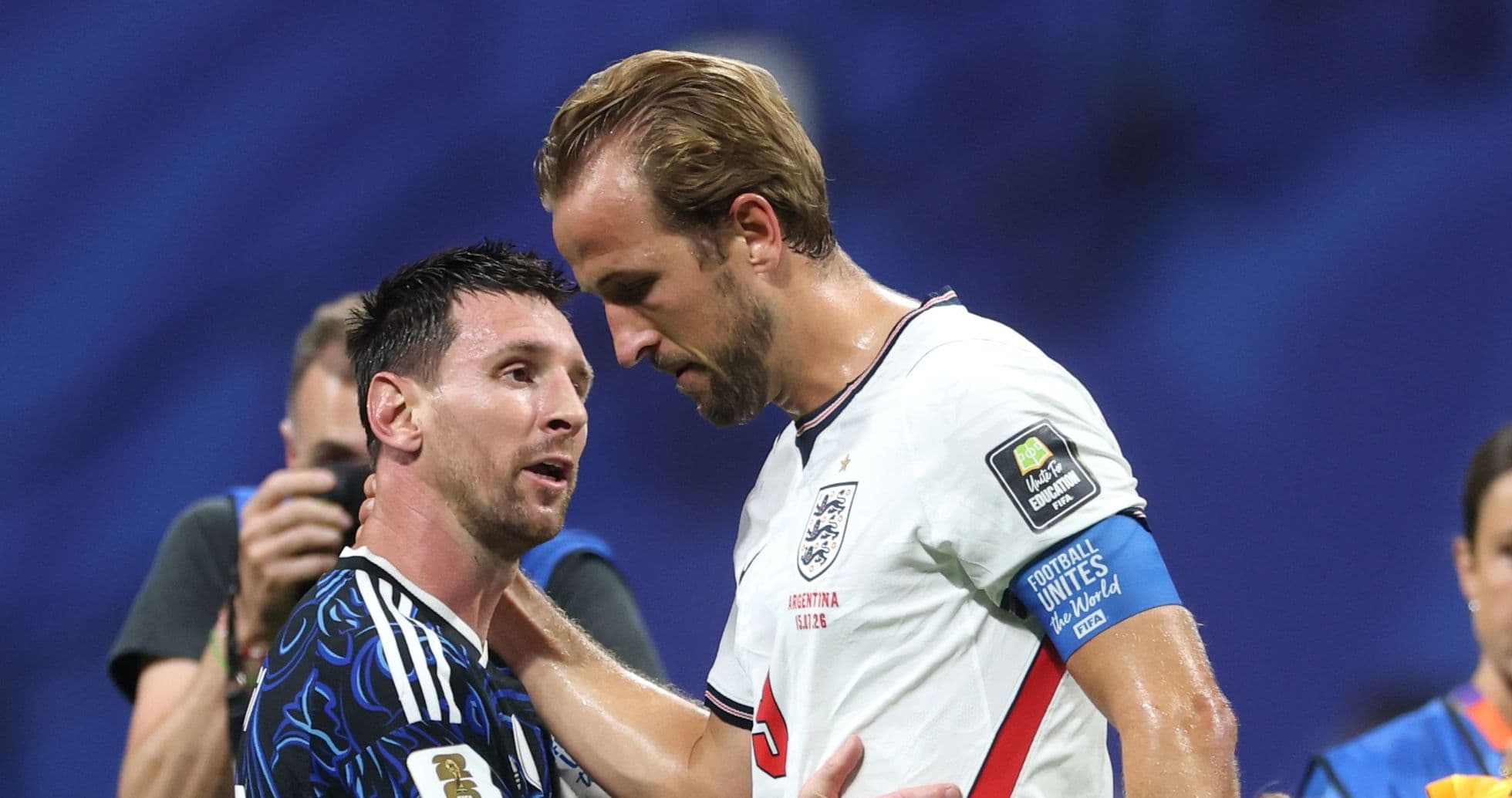
Harry Kane Calls England’s World Cup Exit to Argentina His Deepest International Pain

Estevao Opens Up on World Cup Heartbreak and His Unexpected Return to Brazil Under Ancelotti

Thomas Tuchel Shares Unusual Regret After England's 10-Man World Cup Victory Over Mexico

South Korea Names Robert Moreno as Interim Coach After World Cup Exit

Jude Bellingham Returns to Form at Real Madrid Following World Cup Success