
Portugal's Tactical Mastery in 2-1 Victory Over Croatia
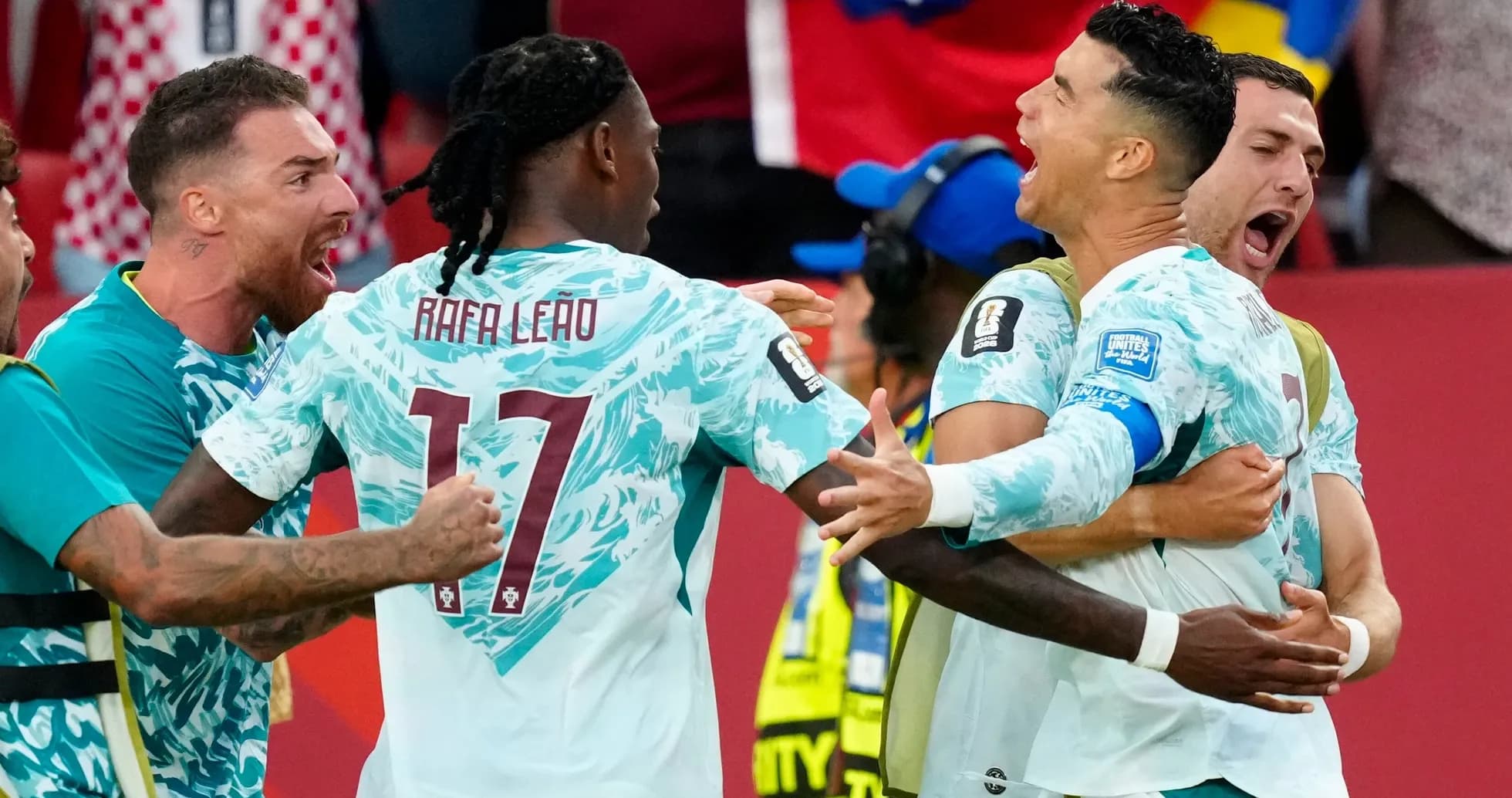
Portugal’s 2-1 win over Croatia at BMO Field in this World Cup Round of 32 tie was a study in territorial control, structural tweaks, and high‑risk, high‑reward game management. Roberto Martinez’s side leaned into a 4-2-3-1 that functioned as a ball-dominant, position-heavy system, while Zlatko Dalic mirrored the shape but built a far more direct, transition-oriented plan. Across 90 minutes, Portugal’s 61% possession and 584 passes framed the story; Croatia’s threat came from compressing the pitch and striking through vertical surges and set transitional moments.
Portugal's Tactical Setup
Martinez’s 4-2-3-1 was built on a wide, expansive first line. Nuno Mendes and João Cancelo pushed high and narrow at times, creating a pseudo back three in rest defence with Rúben Dias and Renato Veiga plus the ball-far full-back. João Neves and Vitinha as the double pivot gave Portugal a strong circulation base: 584 total passes with 91% accuracy (532 accurate) underline how rarely they were forced into rushed decisions. The ball was consistently progressed into the half-spaces, with Bruno Fernandes and Rafael Leão stepping inside to overload between Croatia’s lines, leaving Pedro Neto and Cristiano Ronaldo to stretch depth and pin the centre-backs.
Croatia's Defensive Approach
Croatia, also nominally in a 4-2-3-1, defended much more compactly. The double pivot of Luka Modrić and Mateo Kovačić sat tight in front of Josip Šutalo and Marin Pongračić, trying to funnel Portugal outside and then spring forward once possession was regained. Their 368 passes at 85% accuracy show a willingness to play when settled, but the attacking plan leaned heavily on direct runs and early deliveries, particularly from Ivan Perišić on the left and Nikola Vlašić working from the right side of the line of three. Ante Budimir was a classic reference point, occupying Dias and Veiga, allowing late runners like Petar Sučić and Martin Baturina to arrive around second balls.
Shot Profile Analysis
The shot profile reflects these contrasting approaches. Portugal generated 15 total shots, with 10 inside the box, but only 3 on goal. The high volume and 2.18 xG suggest they repeatedly reached promising zones but were often crowded at the moment of release, evidenced by 4 blocked shots. Croatia, with 13 shots and also 10 inside the box, produced 6 on target from fewer overall attempts, a more efficient conversion of box entries into genuine tests of Diogo Costa (Portugal). Their xG of 1.34, combined with that on-target count, shows that Dalic’s side were dangerous whenever they managed to break Portugal’s structure.
Goalkeeper Performances
In goal, Diogo Costa (Portugal) was busy despite his team’s territorial dominance, making 5 saves. The negative goals prevented figure (-0.45) indicates that, relative to shot quality, he conceded slightly more than expected, a reflection of Croatia’s ability to generate clean looks when they did break through. At the other end, Dominik Livaković (Croatia) faced fewer on-target efforts (2 saves) but was constantly under threat from Portugal’s positional pressure and penalty-box presence. His own goals prevented metric also sat at -0.45, underlining that both goalkeepers were beaten by finishes roughly in line with, or slightly better than, the chances created against them.
Turning Point in the Match
The turning point in the match came in the second half, both tactically and emotionally. Croatia’s opener through Perišić changed the game-state, forcing Portugal to accelerate their tempo and commit more numbers forward. Martinez’s reaction was decisive: a triple substitution wave around the hour — with Bernardo Silva, Francisco Conceição, Gonçalo Ramos and Nélson Semedo entering in place of fatigued or tactically reoriented starters — injected verticality and fresh pressing energy. The pattern of play after those changes showed Portugal attacking with a front line that constantly rotated: Ramos occupying central spaces, Leão and Conceição attacking the half-spaces and wide channels, and Bernardo Silva knitting combinations between the lines.
Pressure and Discipline
This more aggressive posture, combined with Portugal’s superior passing structure, tilted the field even further. The 9-5 corner advantage and the 1-4 offsides count (Portugal more disciplined in timing runs) underline how Portugal were able to sustain pressure without repeatedly straying beyond the last line. Croatia, by contrast, were caught offside four times, a symptom of trying to break out quickly against a high line rather than patiently constructing attacks.
Discipline also shaped the game’s rhythm. Portugal committed only 6 fouls to Croatia’s 12, a reflection of how often Martinez’s side defended in structure rather than in emergency situations. Rúben Dias’s yellow card for “Elbowing” at 17' was an isolated incident rather than a trend of physical overreach. Croatia’s two yellows — Modrić for “Tripping” at 59' and Perišić for “Unsportsmanlike conduct” deep into added time — told a different story: one of increasingly strained attempts to disrupt Portugal’s flow and then late frustration as the game slipped away.
VAR Interventions
VAR interventions were tactically significant even though they did not change the scoreboard. A potential goal by Cristiano Ronaldo was disallowed for offside at 61', a warning sign for Croatia about Portugal’s ability to attack the space behind. Later, potential goals by Petar Sučić and Joško Gvardiol were also disallowed for offside (81' and 90+13'), illustrating Croatia’s reliance on fine-margin, high-line-breaking runs once they were chasing the game. These moments highlight how both teams walked the tightrope of timing versus risk in their attacking schemes.
Conclusion
Ultimately, the statistical verdict aligns with the eye test: Portugal’s superior possession, passing accuracy, and territorial control provided the platform for a 2-1 scoreline that matched their 2.18 xG edge over Croatia’s 1.34. Croatia’s efficiency in turning limited possession into 6 shots on target kept them competitive, but their higher foul count, greater offside frequency, and inability to consistently escape Portugal’s press left them defending for too long. Portugal’s 4-2-3-1, once adjusted with the right substitutions, proved more adaptable over 90 minutes than Croatia’s mirrored shape, and that tactical flexibility was ultimately decisive at BMO Field.
Related News
Brazil's First Post-World Cup Friendly: What Should the Lineup Be?
Harry Kane Calls England’s World Cup Exit to Argentina His Deepest International Pain
Estevao Opens Up on World Cup Heartbreak and His Unexpected Return to Brazil Under Ancelotti

Thomas Tuchel Shares Unusual Regret After England's 10-Man World Cup Victory Over Mexico

South Korea Names Robert Moreno as Interim Coach After World Cup Exit

Jude Bellingham Returns to Form at Real Madrid Following World Cup Success