
Racing Louisville W Shocks Portland Thorns W with 3–1 Victory
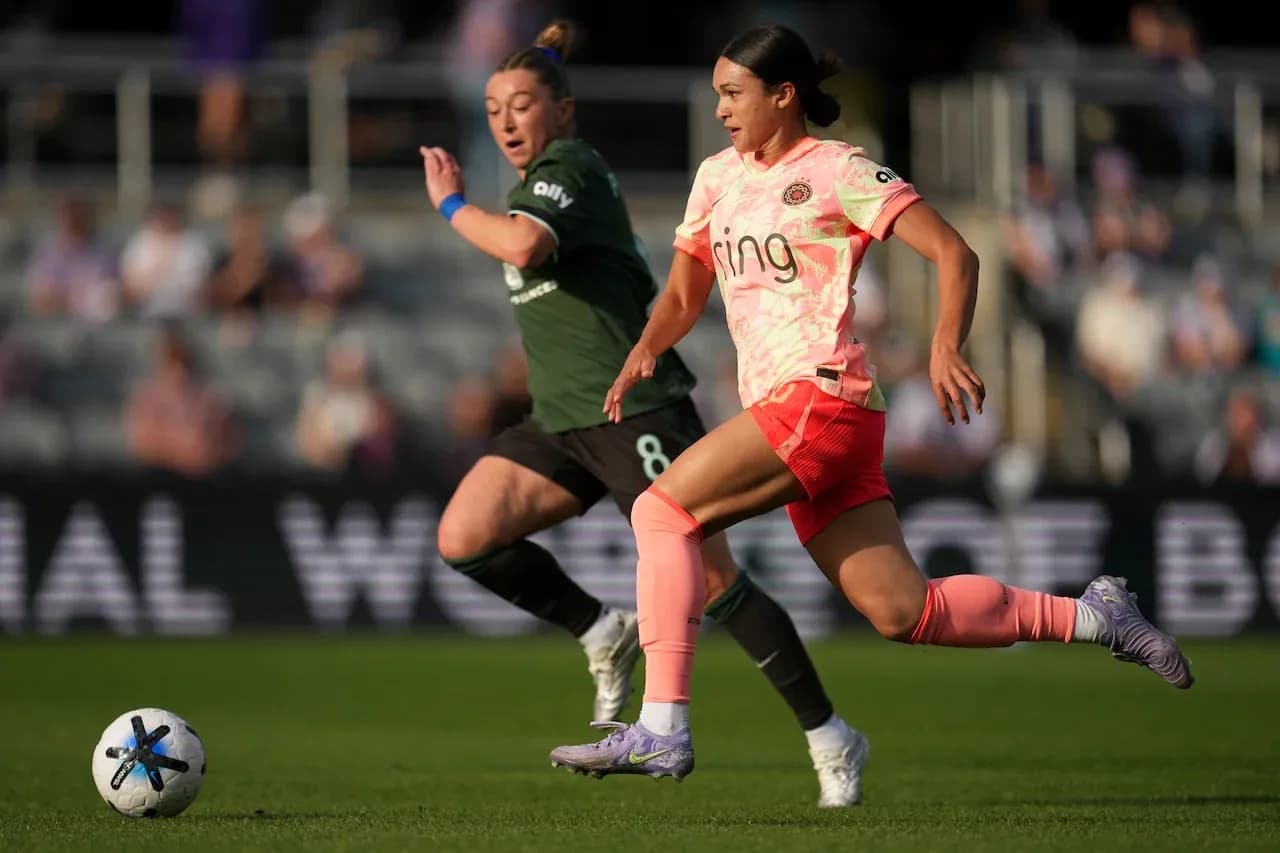
Under the Friday night lights at Lynn Family Stadium, a bottom‑of‑the‑table side rewrote the script. Racing Louisville W, 14th in the NWSL Women standings heading into this game with just 7 points and a goal difference of -2, met league leaders Portland Thorns W, who arrived in Louisville on 19 points and a +6 goal difference. On paper, it was a mismatch. On the pitch, it finished 3–1 to Racing, a statement win that felt like a season pivot rather than a one‑off upset.
Both coaches trusted a 4‑2‑3‑1, but the systems carried very different identities. Beverly Yanez’s Racing have been chaotic and front‑foot: at home this season they had scored 8 goals in 3 matches, an average of 2.7 per game, but conceded 5 (1.7 per game) and had yet to keep a clean sheet. Robert Vilahamn’s Portland, by contrast, had built their title charge on control and structure: overall they had allowed just 9 goals in 9 matches (1.0 per game), with 5 clean sheets and a perfect defensive record at home. On their travels, though, the Thorns were more human, conceding 9 in 6 away games (1.5 per match). Louisville’s attacking volatility met Portland’s one clear vulnerability: defending away from home against teams willing to trade punches.
I. The Big Picture: how the game was framed
Racing’s season to this point had been split in two. At home they were unbeaten, with 2 wins and 1 draw, 8 goals scored and 5 conceded. Away, they had lost all 5, scoring 5 and conceding 10. Their overall averages – 1.6 goals for and 1.9 against per match – painted a side that could hurt anyone but rarely controlled a full 90.
Portland, meanwhile, came in as the league’s benchmark. Overall they had 15 goals scored in 9 matches (1.7 per game) and only 9 conceded. Their attack was multi‑headed: Reilyn Turner and Olivia Moultrie both sat on 4 goals in total, with Pietra Tordin adding 3. Moultrie, already the league’s top creator with 4 assists and 22 key passes, was the technical hub. Turner, a midfielder on paper but a penalty‑box predator in practice, had 4 goals from 12 shots and 80 duels, winning 51 of them – an all‑action threat between the lines and in the box.
II. Tactical Voids and Disciplinary Undercurrents
There were no listed absentees, so both managers had close to full decks. The voids, then, were more structural than personnel‑driven.
For Racing, the issue all season has been defensive stability. They had yet to record a clean sheet anywhere, and their card profile hinted at emotional matches: 27.27% of their yellow cards overall had come in the 91–105' window, a sign of late‑game strain when defending leads or chasing deficits. The double pivot of Taylor Flint and Katie O’Kane, both starting here, has been central to that tension. O’Kane, with 2 yellow cards and 14 fouls committed in total, walks the line between disruptor and risk.
Portland’s disciplinary record was more complex. They had seen 2 red cards overall this season, with one in the 0–15' range and another in 46–60'. Reyna Reyes already had a straight red on her record, while Cassandra Bogere carried a yellow‑plus‑second‑yellow dismissal. The Thorns’ yellow cards were spread but heavy in intensity: 20.00% between 0–15', 20.00% in 31–45', 20.00% in 61–75', and 20.00% in 76–90', with an extra 10.00% in an undefined range. This is a side that presses high, fouls to stop transitions, and accepts bookings as the cost of aggression.
III. Key Matchups: Hunter vs Shield, Engine Room vs Enforcer
The headline duel was “Hunter vs Shield”: Portland’s attacking trident against Racing’s fragile but improving back four and their home defensive record.
For Louisville, the focal point was Sarah Weber. With 3 goals and 1 assist in total, from just 8 shots and 5 on target, Weber has been ruthlessly efficient. She came into this fixture as Racing’s top scorer and a rare constant in an otherwise rotating attack. Her presence at the tip of the 4‑2‑3‑1 allowed Yanez to surround her with runners: Kayla Fischer and Ella Hase between the lines, with Makenna Morris linking midfield and attack. Fischer, with 2 assists and 12 key passes in total, is Racing’s creative edge, a ball‑carrier who has attempted 26 dribbles and won 43 of 105 duels.
Facing them was a Portland defense that had been nearly flawless at home but more exposed away. On their travels, the Thorns had conceded 9 goals in 6 matches, and their most damaging away defeat was a 3‑1 scoreline – precisely the margin Racing would go on to repeat. The physical presence of Sam Hiatt and Carolyn Calzada at center‑back, plus Reyes and Mary Alice Vignola at full‑back, is usually enough to protect Mackenzie Arnold. But when the midfield screen is broken, the back line can be dragged into space.
That is where the “Engine Room” duel came in: Flint and O’Kane versus Bogere and Jessie Fleming. Bogere, with 22 tackles and 7 interceptions in total, is a pure ball‑winner, but she also brings risk: 12 fouls committed and a prior dismissal. Fleming, more metronomic, knits play and allows Moultrie to push higher. Racing’s double pivot, by contrast, is more vertical. O’Kane has 192 total passes at 71% accuracy and 10 key passes; she wants to break lines early, not simply recycle.
The other decisive battle was on Portland’s left side, where Tordin and Moultrie often combine. Tordin’s 3 goals and 3 assists, plus 10 key passes and 11 shots, make her a dual‑threat wide forward. Moultrie, with 4 goals, 4 assists, 285 total passes and 22 key passes, is the league’s most complete attacking midfielder. Together they usually overload half‑spaces, dragging full‑backs inside and isolating center‑backs. Here, they ran into Arin Wright and Courtney Petersen, both comfortable stepping out of the line and supported by O’Kane dropping into the channel.
IV. Statistical Prognosis and What This Result Tells Us
On the numbers heading into this game, Portland should have carried the xG edge: a side averaging 1.7 goals per match overall, with 5 clean sheets and no games failed to score, against a Racing team conceding 1.9 per match and yet to shut anyone out. The Thorns’ away average of 1.5 goals for and 1.5 against suggested a likely high‑event contest, but one they were favored to shade.
Instead, the 3–1 scoreline tilts the narrative toward Racing’s home identity. Their attacking average at Lynn Family Stadium – 2.7 goals per game – was no statistical mirage; it translated directly onto the night. Weber’s penalty pedigree (2 scored in total for the season, 100.00% conversion) and Fischer’s creative volume made them logical protagonists in a match where Racing leaned into chaos rather than shying away from it.
For Portland, this defeat exposes the fault line between their home and away selves. A defense that has not conceded at home but has allowed 9 on their travels is now clearly trend, not blip. The red‑card history of Reyes and Bogere, and the spread of yellows across all phases of the match, underline how thin the margin is when their press is half a step late.
Following this result, the tactical verdict is twofold. Racing Louisville are no longer just plucky underdogs with good home numbers; they are a genuine home force whose aggressive 4‑2‑3‑1, powered by Weber’s finishing and Fischer’s and O’Kane’s verticality, can unpick even the league leaders. Portland Thorns remain a title contender, but their away defensive structure is now a clear target for every opponent. On nights like this, the numbers warned us: an explosive home attack plus an elite visitor with an away‑day soft spot is a recipe for exactly the kind of upset Lynn Family Stadium just witnessed.
Related News

Kansas City W vs Denver Summit W: NWSL Women Showdown

Portland Thorns W vs Houston Dash W Prediction: Key Stats and Tips

Washington Spirit W vs Angel City W Prediction: Key Stats and Betting Tips

Racing Louisville W vs San Diego Wave W Predicted Lineups and Team News

Kansas City W vs Denver Summit W Prediction: Key Stats and Betting Tips

Racing Louisville W vs San Diego Wave W: NWSL Clash Preview