
Raphinha's World Cup Ambitions: From Barça Struggles to Brazil's Key Player
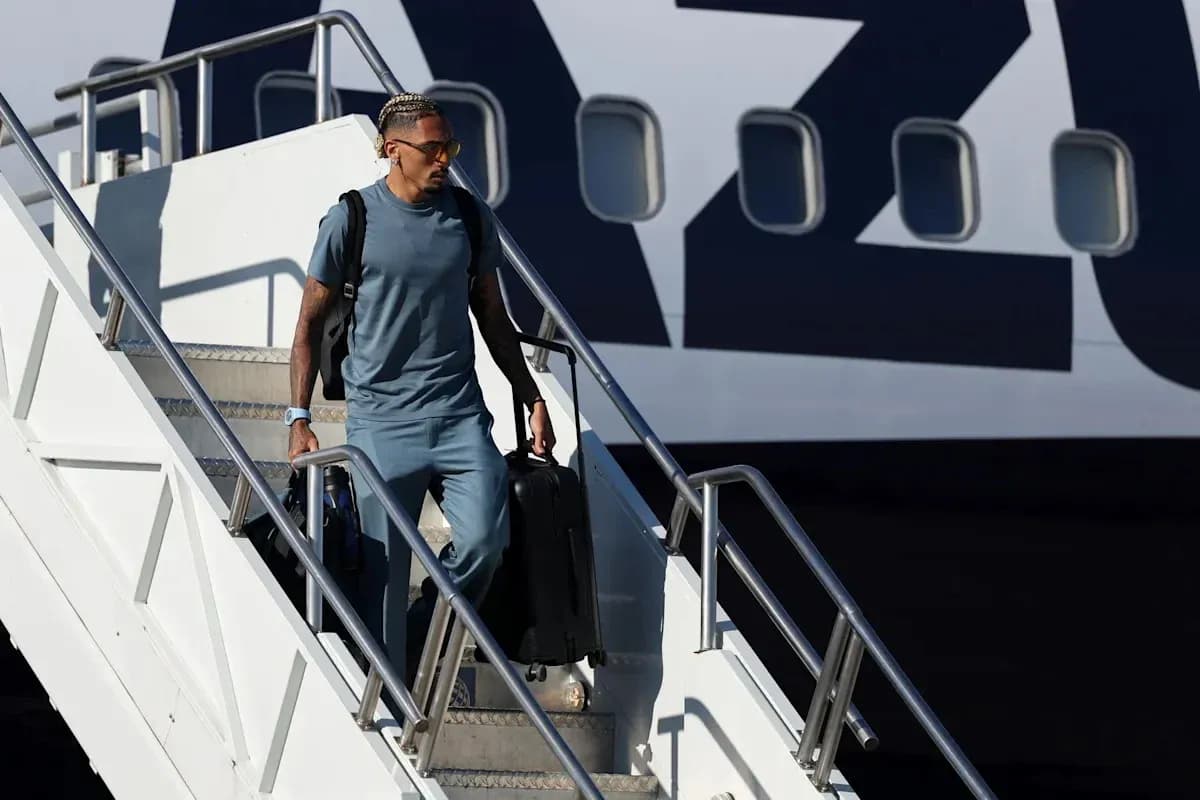
Raphinha’s club season never quite caught fire. Muscle strains, stop-start form, and the constant churn of Barcelona’s forward line left him fighting for rhythm rather than headlines. Yet as Brazil pivot towards the 2026 FIFA World Cup, the 29-year-old cuts a very different figure: clear-eyed, unapologetically ambitious, and utterly locked in on football’s biggest prize.
Whenever he was fit, he still moved the needle at Barça. He stretched defences, dragged full-backs into places they didn’t want to go, and remained one of the side’s most incisive attacking outlets. Those flashes, scattered between layoffs, are part of the reason he travels with Brazil not as a fringe option, but as one of the trusted lieutenants for a tilt at a sixth world title.
Now the noise of club football fades into the background. The horizon is North America, and a World Cup that Brazil feel they cannot afford to let pass them by.
Backing Vinicius, backing himself
Raphinha speaks about this Brazil squad with the assurance of someone who knows the standard inside the dressing room. Talent is not the question. Tempering it, channelling it, turning it into something ruthless over a month-long sprint – that is where the work lies.
At the heart of that ambition stands Vinicius Jr., the Real Madrid star who has already built a catalogue of big-game moments in Europe. Raphinha sees in him a player capable of carrying that form into the national shirt when it matters most.
“Vini is young, but given his experience and achievements, he can decide a World Cup match and bring home the sixth title,” he says, a line that lands less as flattery and more as expectation.
Then comes the twist. He doesn’t place himself in Vinicius’ shadow.
“I include myself in that group.”
It is a revealing admission. Raphinha is not just talking about Brazil’s golden pieces; he is staking his own claim as one of the men who must shape the decisive nights. For a player whose club year has been punctured by injuries, that is not false bravado. It is a statement of responsibility.
Leaders, lessons, and the thin margins of a World Cup
Raphinha’s words keep circling back to one theme: leadership. Not the badge-wearing, armband kind, but the quiet, constant guidance that seasoned internationals must provide in a tournament where a single lapse can turn a campaign to dust.
He is blunt about the stakes.
“We’ve arrived very well prepared. We have to work hard on our defence. If we defend well, our chances of winning are very high.”
Attackers rarely lean on the back line as the starting point of their optimism. Raphinha does. He has seen enough knockout football to know that Brazil’s flair only matters if the foundations hold.
He also knows what a World Cup can do to even the most polished squads.
“This tournament is short and treacherous. There’s little time to get organised. We’re trying to adapt and be as ready as possible so we don’t make mistakes.”
Short. Treacherous. Two words that strip away the romance and leave the reality: three games to get out of the group, one bad half away from disaster in the knockouts. Preparation becomes an obsession. Adaptation is non-negotiable.
For Brazil, that means the veterans must carry more than just their own form. They must absorb pressure, steady nerves, and drag the younger players through the moments where the shirt feels a size too heavy.
Raphinha, now in that middle band of experience, is embracing that role.
Ancelotti’s trust and a search for peak form
Behind the scenes, another relationship shapes his confidence: Carlo Ancelotti. The Italian, now at the helm of the national team, knows Raphinha well from the other side of the clásico divide. They spent their club days as rivals in Spain, but the winger talks about him with a warmth that underlines how quickly that dynamic has shifted.
“Ancelotti is very happy with what I’ve been bringing to training and matches, but I know I can do much more and I’m still searching for my best form,” Raphinha admits.
There is no attempt to disguise the gap between where he is and where he wants to be. The coach’s approval is there, the minutes are likely to follow, yet the player is still chasing that sharper edge – the version of himself that can turn tight games with a single action.
“Even though we were rivals (in Spain), we had a good relationship,” he adds, a reminder that respect outlived the club battle lines.
That mutual trust now carries real weight. Ancelotti needs wide players who can both work and decide, who understand the grind of elite football and the ruthlessness of tournament play. Raphinha, battle-hardened by his uneven year at Barcelona, fits that profile.
He arrives in this World Cup cycle not as the headline act, not as the prodigy, but as something just as valuable: a winger who knows the scars of a difficult season, feels the urgency of a country, and still believes he belongs among the men who can bring Brazil’s sixth star home.
Related News
UFC 332 Preview: Natalia Silva vs. Wang Cong Fight Card, Odds, Start Time, and Details
Andy Roddick Responds to Andre Agassi’s Comments on Alexander Zverev at the Laver Cup
Knicks Prepare for Flexible Roles in Title Defense
Rui Hachimura Swaps Lakers Fans to Clippers in Surprising Jersey Exchange

Who Will Be the NBA's Next First-Time All-Stars? Top Picks and Long Shots for 2027
How Strong Is Your Team at Home? Check Out the 2026 Brasileirão Home Standings