
Roger Schmidt Returns to Red Bull as Klopp’s Successor
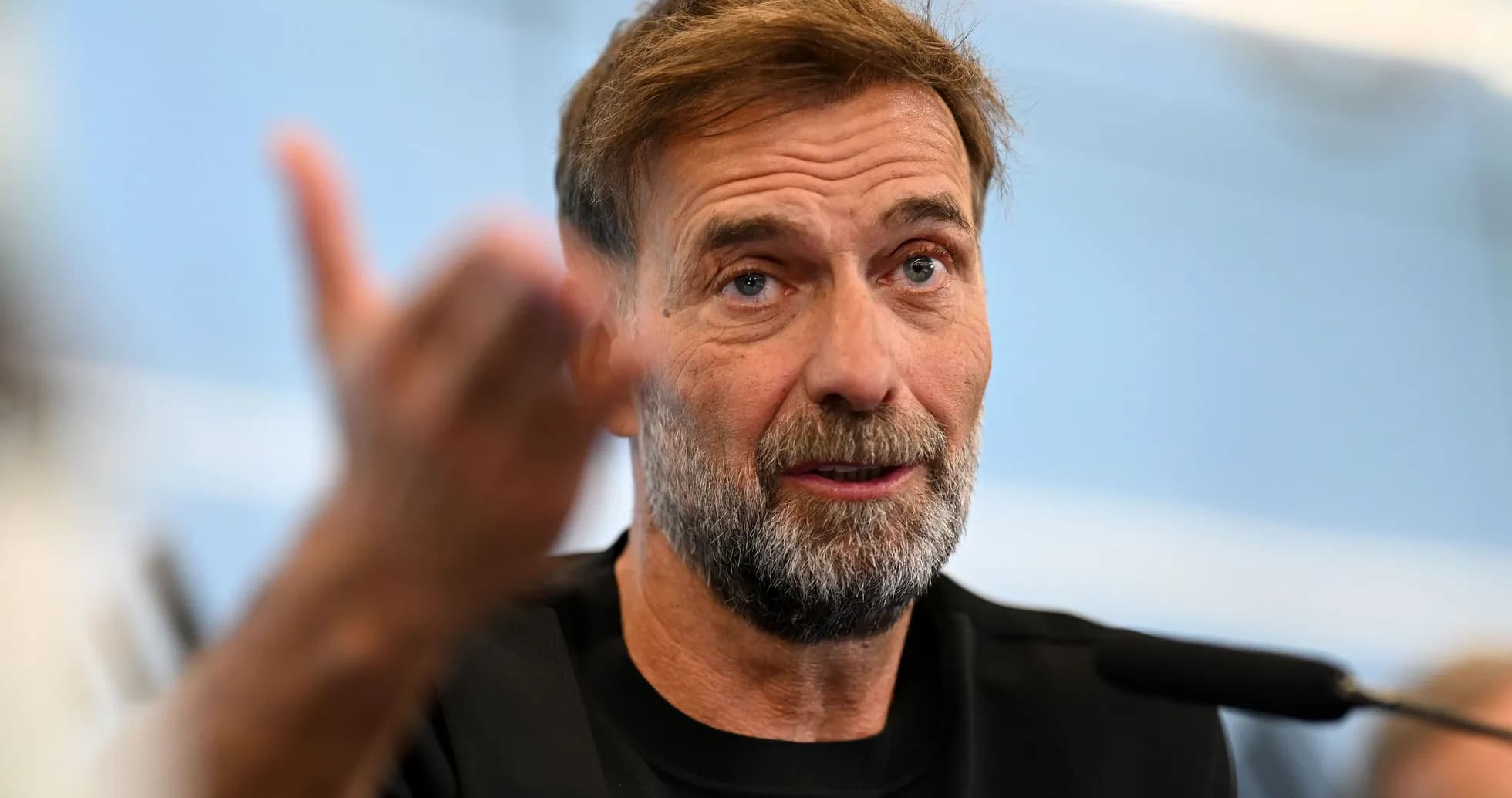
Red Bull has turned to a familiar face to fill one of the most powerful roles in its global football operation. Roger Schmidt, once the driving force behind RB Salzburg’s high-octane rise, will take over as Head of Global Soccer on 1 October, stepping into the position vacated by new Germany head coach Jürgen Klopp.
The 59-year-old has signed a long-term contract, a clear signal that Red Bull sees him not as a stopgap, but as the architect of its next era.
Back to the “Red Bull cosmos”
For Schmidt, this is not a leap into the unknown. It is a return to the environment that first catapulted him onto the European stage.
Between 2012 and 2014, he turned RB Salzburg into a relentless machine. His second season brought the Austrian league and cup double, but the trophies told only part of the story. Salzburg played with a ferocity and tempo that came to define the Red Bull brand. That body of work earned him a move to the Bundesliga and Bayer Leverkusen in 2014, where his intense, pressing-heavy style again drew attention in one of Europe’s top leagues.
From there, his path wound through PSV Eindhoven (2020–2022) and Benfica (2022–2024), two clubs where expectations are permanent and patience is short. He added further proof that his methods travel, that his football can live in different cultures and still carry his signature: front-foot, aggressive, demanding.
Most recently, Schmidt stepped away from the dugout and into the boardroom. Since October 2025 he has served as Global Sports Director in Japan’s J.League, a role he was contracted to hold until 2027. Red Bull’s pull, and the scale of the project on offer, has cut that stay short.
Mintzlaff’s choice
Red Bull CEO Oliver Mintzlaff did not hide his enthusiasm at bringing Schmidt back into the fold.
“We are very pleased to welcome Roger Schmidt back to Red Bull,” he said, highlighting “his many years of experience, his outstanding football expertise and his clear understanding of our philosophy” as decisive factors. In Mintzlaff’s eyes, Schmidt is not just another name in a crowded market of executives; he is “the right person to be responsible for the sporting direction of our global football portfolio”.
That phrase matters. Red Bull’s network stretches across continents and competitions, built on a clear idea: identify young talent early, develop it ruthlessly, and sell or promote at the highest level. Mintzlaff underlined that Schmidt has “an outstanding reputation for developing young talents and successfully promoting them at the highest level” – exactly the profile required to oversee a multi-club project that lives or dies by its pipeline.
Filling Klopp’s shoes
The job Schmidt inherits has grown in prestige and complexity in recent years. At the start of 2025, Klopp, fresh from his legendary spells at Borussia Dortmund and Liverpool, took up the newly defined role of Head of Global Soccer at Red Bull. It put one of the game’s most charismatic figures at the top of a far-reaching football empire.
That arrangement ended when Germany came calling. Klopp stepped in to replace Julian Nagelsmann after a disappointing World Cup, with Nagelsmann resigning as national team head coach. Klopp’s new deal with the DFB runs until after the 2030 World Cup, anchoring him to the national side for the long haul.
The contractual situation could have turned messy. Klopp was tied to Red Bull until the end of 2029, but, against early expectations, no compensation was ultimately paid by the DFB. The vacancy at Red Bull opened cleanly. Schmidt walks into a powerful role without the shadow of a legal wrangle hanging over his arrival.
A project that fits
Schmidt’s own words made clear why he has chosen this route back into the European spotlight.
“I am very much looking forward to this new challenge and am proud to once again be part of the Red Bull family in future,” he said. For a coach who started out at Preußen Münster and SC Paderborn, working his way through the less glamorous tiers of German football, this is the summit of a long climb through very different landscapes.
He called Red Bull’s international club portfolio “unique, ambitious and shaped by a clear philosophy of developing young talents while also being successful at the highest level”. That combination, he said, makes the role “particularly appealing”.
It fits his track record. At Salzburg he proved he could turn raw potential into a coherent, aggressive side. At Leverkusen, PSV and Benfica he showed he could handle the weight of expectation that comes with major European clubs. In Japan he gained experience in long-term planning and global structures rather than the day-to-day grind of the touchline.
Now those strands come together.
Klopp has moved on to chase a World Cup with Germany. Schmidt steps back into the “Red Bull cosmos” with the mandate to shape an entire football universe – and the next generation of stars will be his true scoreboard.
Related News
Carlos Alcaraz Calls for Change After Laver Cup Court Conditions
Alexander Zverev Secures Laver Cup Victory for Team Europe with Straight-Set Win Over Learner Tien
Novak Djokovic Shares Fitness Update Before China Open Return After US Open Upset
Shubman Gill's Captaincy Record Across All Formats: Tests, ODIs, T20Is, and IPL
Kuldeep Yadav Named Player of the Match Over Virat Kohli Despite Century in IND vs WI 1st ODI
India Advances to Asian Games 2026 Cricket Semi-Finals After Rain Washout Against Afghanistan