
San Diego Wave vs Bay FC: Tactical Analysis of NWSL Clash
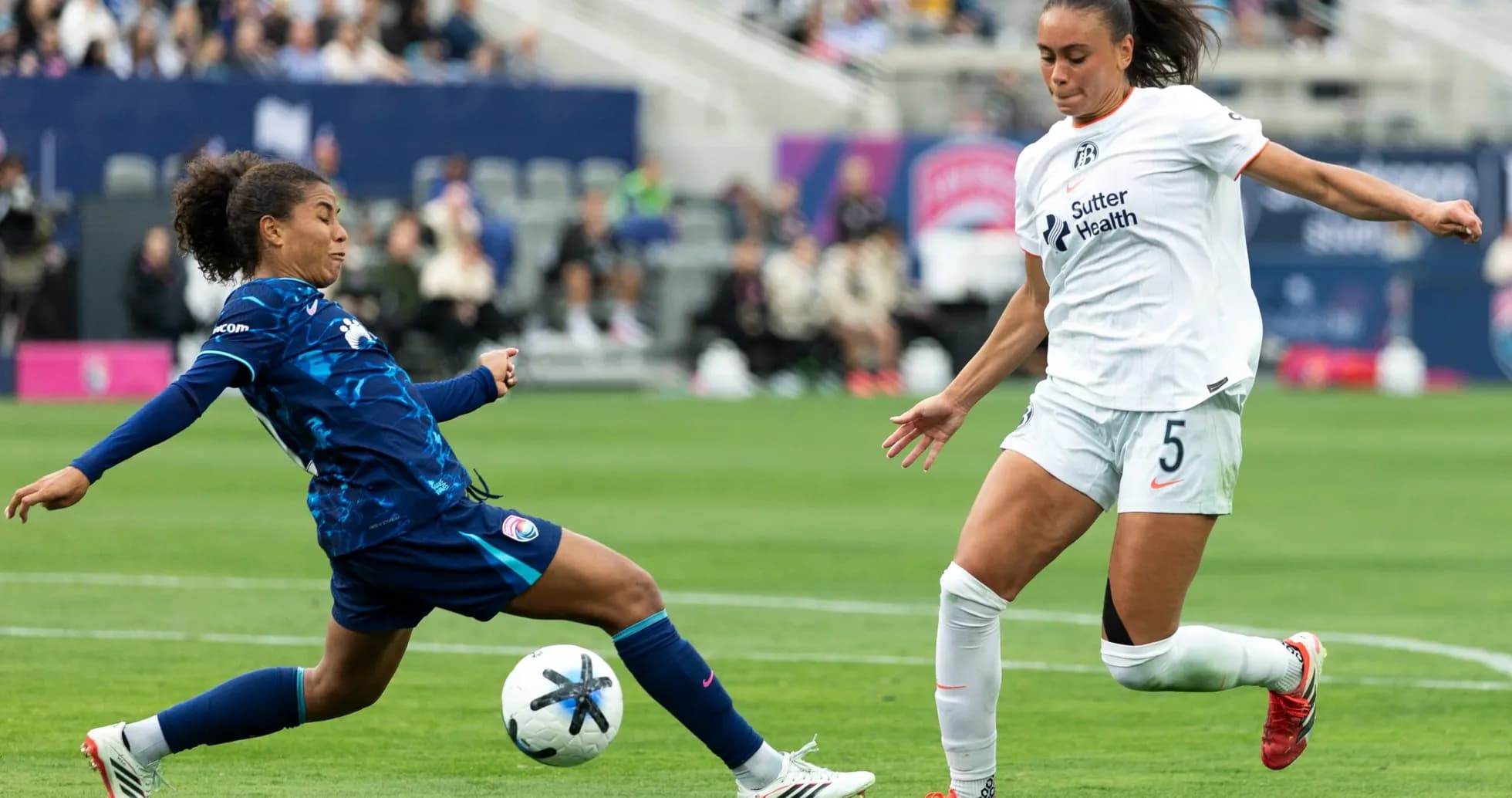
Snapdragon Stadium under the San Diego lights staged a meeting of two very different NWSL identities: San Diego Wave W, a high-variance contender sitting 3rd with 15 points from 8 matches, and a volatile but dangerous Bay FC side in 10th on 9 points from 6. The 1–0 away win to Bay FC, sealed in regular time, was a study in how structure and timing can undercut a more expansive home side.
I. The Big Picture – Systems and Seasonal DNA
San Diego lined up in a 4-3-3, returning to a shape they have used 4 times this season. It is a system that mirrors their overall profile: aggressive, front-foot, and willing to live with risk. Overall this campaign they have scored 11 goals and conceded 8, a goal difference of +3 that matches their standings line precisely. At home they average 1.3 goals for and 0.8 against; on their travels that shifts to 1.5 scored and 1.3 conceded, underscoring a side that does not significantly retreat away from Snapdragon.
Bay FC arrived in their habitual 4-2-3-1, a formation they have used in all 6 league fixtures. Overall they have 7 goals for and 10 against, a goal difference of -3 that reflects a team as capable of being opened up as they are of striking quickly. On their travels they average 1.3 goals for and 1.3 against, a perfectly balanced away profile that hints at tight, often transitional matches.
The contrast was clear from the first whistle: San Diego’s front three of Gabi Portilho, Ludmila and Dudinha stretched the pitch horizontally, while the midfield trio of L. E. Godfrey, K. Dali and L. Fazer tried to dictate tempo and find third‑man runs. Bay FC, with a double pivot of H. Bebar and C. Hutton, built a more compact block, using T. Huff and D. Bailey as hybrid 8/10s to break forward around the lone striker, K. Lema.
II. Tactical Voids and Discipline – Where the Game Tilted
There were no listed absentees, so both coaches had close to full control of their tactical decks. For San Diego, that meant their top scorer and creative hub, Godfrey, could start in the right interior role, while Dudinha – 2 goals and 3 assists overall, with 12 key passes and 27 dribble attempts – spearheaded the left side of the front line.
Yet the Wave’s seasonal defensive minute profile hinted at a fault line that Bay FC would exploit. Overall, San Diego concede heavily at the very start of games: 33.33% of their goals against come between 0–15 minutes, and another 22.22% between 31–45. That vulnerability to early punches met a Bay FC side whose offensive peak is also in the opening half-hour: 22.22% of their goals come in 0–15 and 33.33% in 16–30. The intersection was almost scripted – an away team primed to start fast against a home side that often needs time to settle.
Disciplinary trends reinforced Bay’s tactical approach. San Diego’s yellows cluster late, with 40.00% of their cards between 46–60 and another 20.00% in each of 61–75 and 76–90, suggesting a side that grows increasingly stretched and reactive. Bay FC, by contrast, show a full‑match physical edge: yellow cards distributed from 0–15 all the way into 91–105, with a late spike of 21.43% in 76–90 and 28.57% in added time. They are comfortable living on the disciplinary edge to protect a lead.
III. Key Matchups – Hunter vs Shield, Engine Room vs Enforcer
The “Hunter vs Shield” battle revolved around how Bay FC would cope with San Diego’s central thrust. Overall, the Wave’s goals are concentrated after the break: 30.00% between 46–60 and a combined 40.00% from 61–90. They are a classic second‑half surge team. Bay’s defensive timing, however, is most fragile before the interval, with 37.50% of their goals against coming between 31–45. The question heading into this game was whether San Diego could ride out their own early wobble and then punish Bay’s pre‑half-time softness.
On paper, Godfrey was the primary “hunter”: 4 goals and 1 assist overall, with 10 key passes and an 82% pass accuracy, a midfielder who both finishes and connects. Against her stood Bay’s back four and the screening pair, with Hutton the key “shield”. Hutton’s 212 passes at 74% accuracy, 13 tackles and 13 interceptions overall paint the picture of a young midfielder who reads danger early and steps into passing lanes. In this match, Bay’s 4-2-3-1 often flattened into a 4-5-1 without the ball, with Hutton sliding across to block central combinations and cut off Godfrey’s access to the half-spaces.
The other decisive duel was in the engine room between playmakers and enforcers. For San Diego, Dali and Fazer were tasked with progressing play through Bay’s press, while Dudinha drifted inside to overload zones. Dudinha’s profile – 65 total duels with 31 won, 14 successful dribbles and 13 fouls drawn overall – shows a player who thrives in chaos. Opposite her, Bay deployed Huff and Bailey as aggressive two‑way threats. Huff, in particular, carries an edge: 12 tackles, 49 duels with 27 won, and a disciplinary record that includes both yellow and yellow‑red overall. She is the archetypal enforcer‑creator, capable of breaking lines and breaking rhythm.
IV. Statistical Prognosis – Why Bay’s Plan Prevailed
Following this result, the story of the numbers and the narrative align. San Diego’s overall attacking average of 1.4 goals per game masked a chronic exposure to early blows, and Bay FC were built to exploit precisely that. With 77.77% of their goals overall coming before the 60th minute, Bay are structurally a “front‑loaded” side. Once in front, their away profile – 1.3 goals for and 1.3 against – suggests they can manage tight margins rather than chase multi‑goal wins.
San Diego’s reliance on second‑half surges met a Bay block that, while not watertight, is disciplined enough when given a lead. The Wave’s 2 clean sheets overall and 3 matches failing to score underline their boom‑or‑bust streak: when the combinations around Godfrey and Dudinha are stifled early, their plan B can look like hopeful crossing and individual dribbling rather than structured chance creation.
In xG terms, this played out like a narrow, low‑margin contest where Bay’s early high‑value chance was converted, and San Diego’s later pressure produced volume rather than clear‑cut opportunities. The Wave’s defensive under/over profile – 6 of 8 matches going over 0.5 goals conceded but 6 under 1.5 – points to a team that usually gives up “just enough” for a single goal to decide things.
Tactically, Bay FC’s 4-2-3-1, anchored by Hutton’s interceptions and Huff’s two‑way running, proved the more coherent structure for knockout‑style football, even in a group stage setting. San Diego’s 4-3-3 remains a high‑ceiling system, but unless they address that early‑game fragility and find more varied routes to goal when Godfrey and Dudinha are crowded out, tight games like this will continue to tilt against them.
Related News

Kansas City W vs Denver Summit W: NWSL Women Showdown
Portland Thorns W vs Houston Dash W Prediction: Key Stats and Tips
Washington Spirit W vs Angel City W Prediction: Key Stats and Betting Tips
Racing Louisville W vs San Diego Wave W Predicted Lineups and Team News

Kansas City W vs Denver Summit W Prediction: Key Stats and Betting Tips
Racing Louisville W vs San Diego Wave W: NWSL Clash Preview