
Santi Denia: Czech Republic's New Head Coach After Olympic Gold
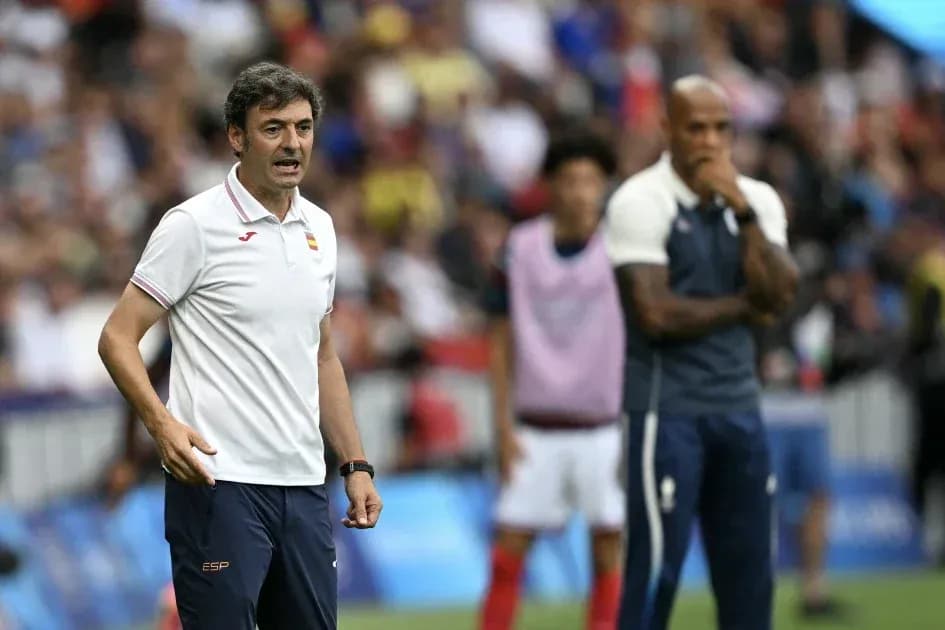
Santi Denia, the coach who led Spain to Olympic gold in Paris this summer, has taken on one of the more intriguing international jobs in Europe: he is the new head coach of the Czech Republic.
The appointment, announced on Friday by the Czech federation (FACR), is historic. At 52, Denia becomes the first foreign coach to take charge of the Czech national team, a bold break with tradition and a clear signal that the federation wants a fresh direction after a bruising World Cup.
A gold-medal coach for a team in transition
Denia arrives with a résumé built on youth development and tournament success. A former centre-back for Albacete and Atletico Madrid, he moved seamlessly into coaching, guiding Spain to European titles at under-17 and under-19 level before stepping up to the Olympic side. In Paris, he completed the set, steering his country to gold.
Now he swaps the red of Spain for the red of the Czechs.
“The 52-year-old Spaniard has agreed a two-year contract with an option to extend,” the FACR confirmed in its statement. The deal underlines both commitment and caution: enough time to reshape a side, with flexibility if the project takes off.
He replaces Miroslav Koubek, who stepped down after a disappointing World Cup campaign in which the Czechs finished bottom of their group. The exit left more questions than answers and exposed a team in need of a new identity, new ideas, and a new voice.
Denia will not be alone on the touchline. Pablo Amo, who, like Denia, coached in Qatar last season, has been appointed assistant coach. The pair know each other, understand tournament football, and arrive as a ready-made bench unit rather than strangers thrown together.
“Glorious history” and a clear message
If there were any doubts about Denia’s appetite for the challenge, his first words to the FACR website cut through them.
“I'm delighted to be here. And I'm extremely motivated, because I see the chance to lead the Czech national team as a great opportunity. Czech football has a glorious history,” he said. “I have just one wish: to get down to work as soon as possible.”
No talk of transition periods. No gentle easing in. Just work.
The reference to history is not accidental. The Czech game carries deep tradition, from the days of Czechoslovakia’s great sides to the modern era shaped by figures like Pavel Nedved. That past still weighs heavily; Denia now has to turn it into fuel rather than a burden.
Nedved, now general manager of the Czech national teams, sounded convinced he has the right man.
“I can sense that he is ready to get stuck in and will help us build a new identity for the national team,” he said, framing the appointment as the start of something, not a short-term fix.
Nations League trial by fire
There will be no gentle introduction. The calendar offers Denia a hard, unforgiving first test.
The Czech Republic’s next competitive matches come in the Nations League, against England, Croatia and Spain in late September and early October. Three heavyweight opponents. Three different styles. And, in Spain, a meeting with the country he has just led to Olympic glory.
For a coach who has spent his career inside the Spanish system, that schedule is both a test and a showcase. His ideas will be measured not in theory but against some of the sharpest national teams in Europe.
The task is clear: take a side that stumbled on the biggest stage and, in a matter of weeks, make it harder, braver, more coherent. Denia has asked only for the chance to start working. The Nations League will reveal, quickly, just how far and how fast he can drag the Czechs back toward the level their history demands.
Related News
Carlos Alcaraz Calls for Change After Laver Cup Court Conditions
Alexander Zverev Secures Laver Cup Victory for Team Europe with Straight-Set Win Over Learner Tien
Novak Djokovic Shares Fitness Update Before China Open Return After US Open Upset
Shubman Gill's Captaincy Record Across All Formats: Tests, ODIs, T20Is, and IPL
Kuldeep Yadav Named Player of the Match Over Virat Kohli Despite Century in IND vs WI 1st ODI
India Advances to Asian Games 2026 Cricket Semi-Finals After Rain Washout Against Afghanistan