
Sevilla's Tactical Shift Secures Crucial Win Against Real Sociedad
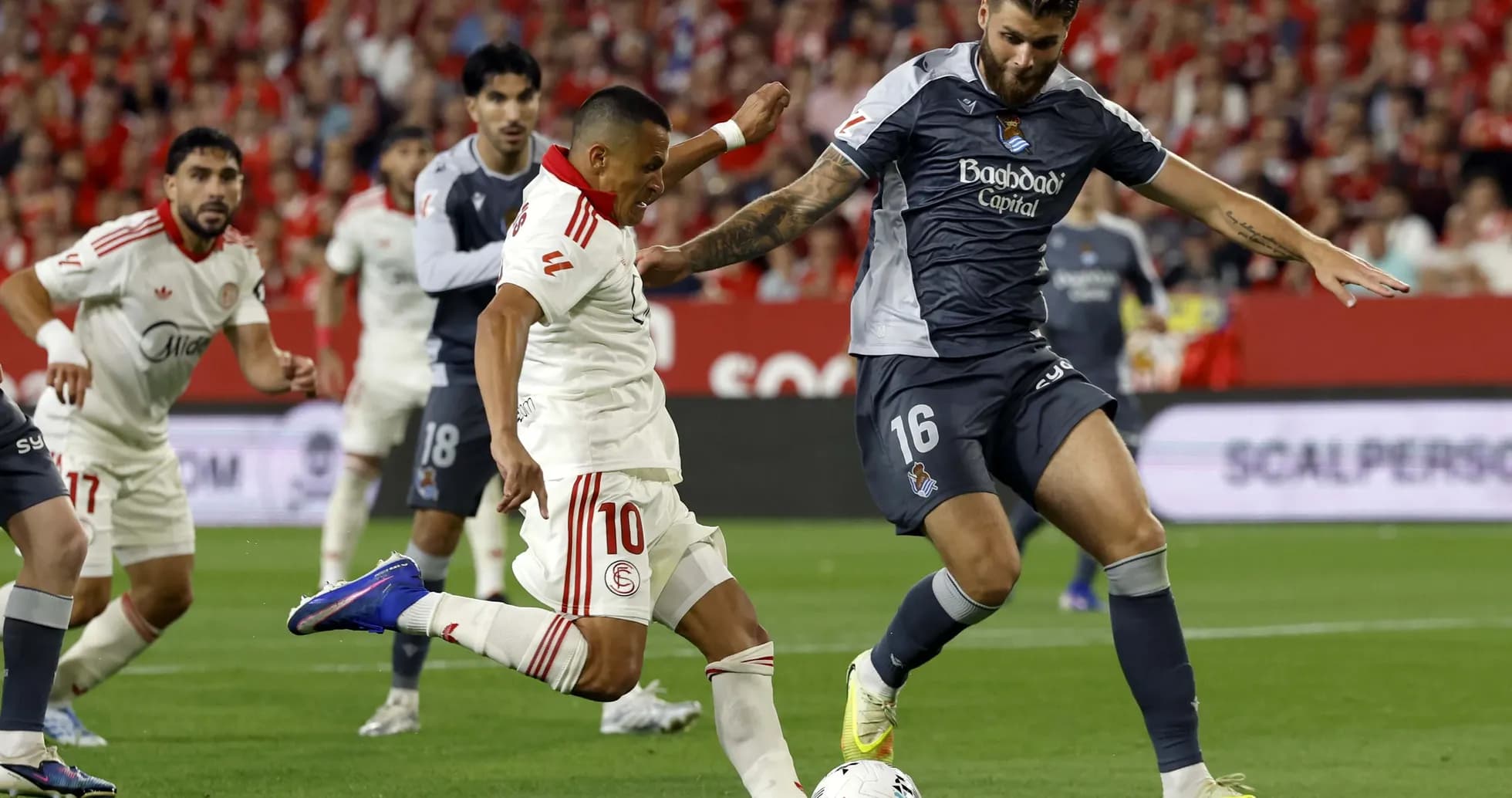
Under the Ramón Sánchez Pizjuán lights, this felt like a crossroads rather than just “Regular Season - 34” in La Liga. Following this result, Sevilla sit 17th on 37 points, still looking nervously over their shoulder despite a 1-0 win over a Real Sociedad side who remain 9th with 43 points and European ambitions intact but dented. The league table tells you Sevilla have a negative goal difference of -14 overall (41 scored, 55 conceded), while Real Sociedad hover at -1 (52 for, 53 against). The ninety minutes in Seville showed exactly why.
Luis Garcia Plaza rolled the dice with a 4-4-2, a shape Sevilla had only used 3 times heading into this game, against a Real Sociedad that has built its season around a flexible 4-2-3-1. It was a choice that spoke of urgency as much as identity. With the club’s form line reading “WLLWL” in the standings and “LLWDWLWWLLLWLLDWLLLDWLDDWDDLLLWLLW” across the broader campaign, this was a team in search of something solid to cling to.
The absences sharpened the tactical edges. Sevilla were without M. Bueno (knee injury), Marcao (wrist injury) and the suspended D. Sow, stripping depth from the spine. Real Sociedad arrived without G. Guedes (toe injury), J. Karrikaburu (ankle injury), A. Odriozola and I. Ruperez (both knee injuries), forcing Pellegrino Matarazzo to trust the core that has carried them through a stop-start season.
I. The Big Picture – Structures and Season DNA
Sevilla’s season-long numbers set the context for their plan. At home they average 1.3 goals for and 1.4 against, a fragile margin that explains their 6 wins, 4 draws and 7 defeats at the Sánchez Pizjuán. The 4-4-2 here was built on clarity rather than flair: O. Vlachodimos behind a back four of J. A. Carmona, Castrin, K. Salas and G. Suazo; a hard-running midfield line of R. Vargas, L. Agoume, N. Gudelj and C. Ejuke; and a front pair of I. Romero and N. Maupay.
Real Sociedad’s 4-2-3-1 had a more recognisable rhythm. A. Remiro in goal; J. Aramburu, J. Martin, D. Caleta-Car and S. Gomez across the back; B. Turrientes and J. Gorrotxategi as the double pivot; A. Barrenetxea and P. Marin wide, C. Soler between the lines, and M. Oyarzabal leading the line. Their season profile is different: on their travels they score 1.2 goals per game and concede 1.6, a team that can hurt you but often leaves the door ajar.
II. Tactical Voids – Where the Missing Pieces Showed
Sevilla’s defensive structure felt lean but committed. Without Marcao and M. Bueno, Castrin and K. Salas had to own the central corridor. The pair benefited from the screening of Gudelj and Agoume, the latter one of the league’s most industrious midfielders: 59 tackles and 43 interceptions overall speak to a player who lives in the traffic. His presence allowed the full-backs, particularly Suazo, to push on without completely exposing the centre-backs.
The disciplinary profile of Sevilla added tension. Carmona, the league’s most-booked player with 11 yellows, is an aggressive front-foot defender. His 59 tackles and 7 blocked shots underline his commitment, but his 45 fouls committed illustrate the risk. In a side that sees 19.79% of its yellow cards between 76-90 minutes and another 18.75% between 91-105, game management late on is always precarious. Here, though, Sevilla held their nerve.
For Real Sociedad, the absences of Guedes and Karrikaburu reduced their variation in the final third. The onus fell more heavily on Oyarzabal and Barrenetxea, with B. Mendez waiting in reserve. Mendez’s profile – 6 goals, 2 assists, 34 tackles and 3 blocked shots – hints at a midfielder who can both create and crash the box, but starting him on the bench meant Real Sociedad initially leaned more on structure than chaos.
III. Key Matchups – Hunter vs Shield, Engine Room vs Enforcer
The “Hunter vs Shield” duel was clear: Mikel Oyarzabal, with 14 goals and 6 penalties scored from 6 attempts, against a Sevilla defence that concedes 1.4 goals per game at home. Sevilla’s overall defensive record (55 conceded in 34, 1.6 per match) suggested vulnerability, but the 4-4-2 compacted the central lanes and forced Oyarzabal away from his preferred zones. His 58 shots and 34 on target this season show how often he finds space; here, Salas and Castrin, backed by Gudelj, worked to deny him clean looks.
On the other side, Sevilla’s “Hunter” was less a single figure and more the partnership of Romero and Maupay. Romero’s season has been streaky – 4 goals, 1 missed penalty among 2 won – but his movement between the lines dovetailed with Maupay’s penalty-box instincts. The plan was simple: use Ejuke and Vargas to stretch Real Sociedad’s full-backs, drag D. Caleta-Car and J. Martin into wider channels, and create gaps for the front two.
The “Engine Room” battle was fierce. L. Agoume, with 1199 passes at 80% accuracy and 26 key passes, was Sevilla’s metronome and enforcer rolled into one. Opposite him, B. Turrientes and J. Gorrotxategi tried to keep Real Sociedad’s 4-2-3-1 balanced. But the visitors’ disciplinary profile hinted at strain: J. Aramburu, with 10 yellows and 63 fouls committed, is as combative as Carmona. Across the season, 22.22% of Real Sociedad’s yellow cards arrive between 46-60 minutes, and 16.67% between 76-90, illustrating how their aggression spikes as games open up and then fray late on. Sevilla’s more controlled central pairing ultimately managed those waves better.
IV. Statistical Prognosis – xG Shadows and Defensive Solidity
Even without explicit xG numbers, the season data sketches the underlying probabilities. Heading into this game, Sevilla’s total scoring average of 1.2 goals per match against Real Sociedad’s 1.6 conceded suggested the hosts were more likely to need efficiency than volume. Conversely, Real Sociedad’s total 1.5 goals for per game against Sevilla’s 1.6 against hinted at a contest where one clear chance could swing it.
Sevilla’s 6 clean sheets overall, split evenly between home and away, paint them as capable but inconsistent. Real Sociedad, with only 3 clean sheets all season and just 1 away, were statistically unlikely to shut out even a struggling attack. The 1-0 scoreline ultimately mirrored that balance: Sevilla found the breakthrough their numbers said they might, and then leaned on a defensive block that, for once, did not crack.
Following this result, the narrative is of a Sevilla side that, under pressure, found a structure that suits their personnel: a disciplined back four, a rugged double pivot led by Agoume, and enough vertical threat from Romero, Maupay and Ejuke to punish a Real Sociedad team whose away defensive numbers (28 conceded in 17, 1.6 per game) remain their Achilles heel. For Matarazzo’s men, the story is one of control without incision; for Garcia Plaza, it is the night a precarious season found a foothold.
Related News

Barcelona Dominates Sevilla in Tactical Showdown
Atletico Madrid vs Real Madrid: A Tactical Derby Analysis

La Liga Officials Admit Refereeing Mistake in Madrid Derby Over Lee Kang-in's Tackle on Federico Valverde

Elche vs Real Madrid: A Clash of Opposites in La Liga

Atletico Madrid Dominates Osasuna 4-0 in La Liga Showdown

Barcelona's Dominance: 7-2 Triumph Over Racing Santander