
South Africa's World Cup Journey: Tears and Triumph
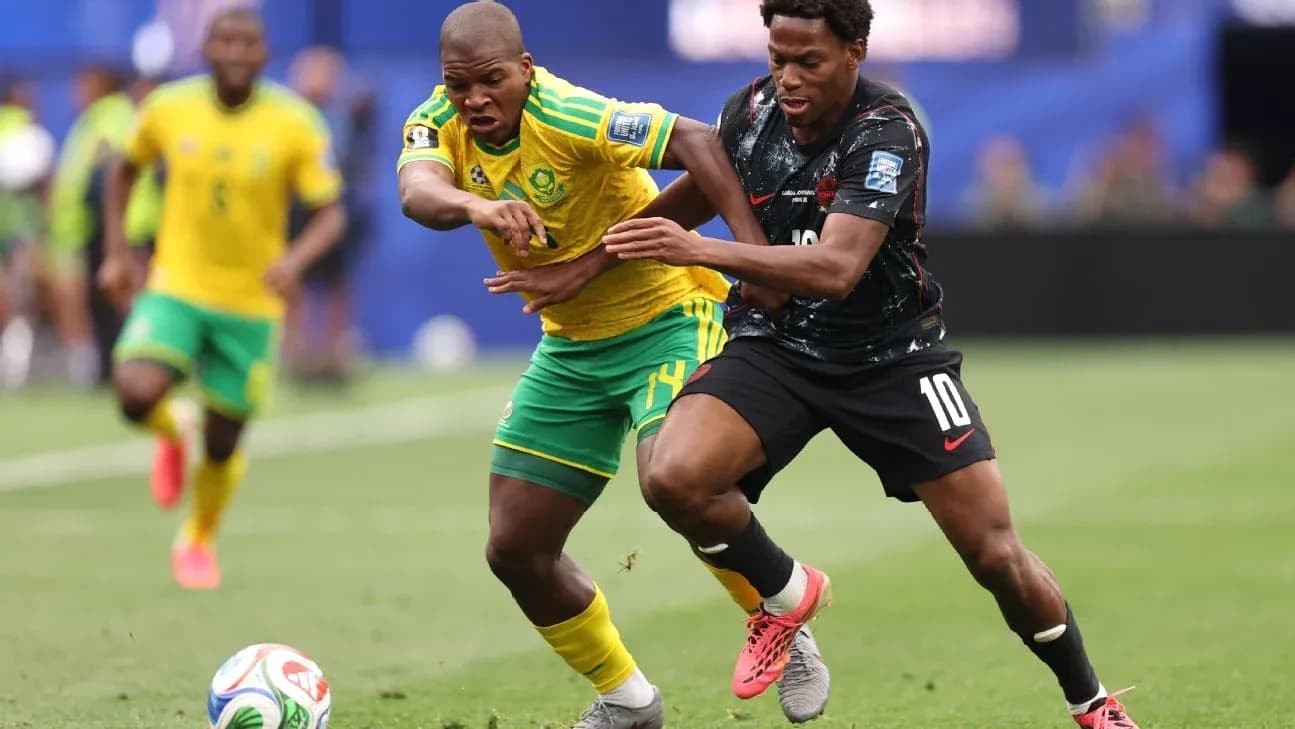
South Africa walked out of the World Cup on the wrong side of a 1-0 scoreline to Canada in the round of 32, but this was no meek exit. It was an ending that hurt precisely because of how much Bafana had finally put on the line.
Sixteen years after their last appearance on this stage, they did more than just show up. They reached the knockout rounds for the first time in their history. They stirred a country. And, crucially, they left behind the outlines of a team that could be far more than a feel‑good story in 2030.
A defence to build an era on
If there is one department South Africa can file under “sorted for years”, it is centre-back.
At this World Cup, Mbokazi and Okon did more than fill shirts. They owned their roles. They started together, took the step up in stride, and quickly looked like they belonged among the game’s elite. Mbokazi, in particular, emerged as one of the standout central defenders of the entire tournament, reading danger early, winning duels, and playing with a composure that belied the occasion.
Behind them, the production line looks healthy. Olwethu Makhanya, Khulumani Ndamane, Tylon Smith, Malibongwe Khoza, Aden McCarthy and others are already pushing from below, ready to step in if injury, form, or transfers ever unsettle the current pairing. The message is clear: whether Hugo Broos remains in charge or a new coach takes the reins, Bafana’s next World Cup cycle begins with a rare luxury – genuine depth in the heart of defence.
For a country that has often scrambled to fill that position, it is a quiet revolution.
Mofokeng, the ace still in the deck
Not everything clicked. One decision jarred with a large section of the fanbase: Relebohile Mofokeng’s limited role.
The Orlando Pirates attacking midfielder arrived in 2026 as one of the most talked‑about young players in South Africa, but Broos did not unleash him with the same abandon that supporters had hoped for. It stung. Supporters wanted their wonderkid front and centre on the biggest stage.
Yet the story is far from over. Mofokeng is only 21. By 2030, he will be entering his prime years, and the glimpses he offered in this tournament hinted at a ceiling that stretches far beyond domestic acclaim. His performance in the 1-0 win over South Korea was a jolt of electricity – confident on the ball, brave in tight spaces, unfazed by the occasion. For 90 minutes, he looked entirely comfortable trading blows with global stars.
He is widely reported to be on the brink of a move to Royale Union Saint-Gilloise in Belgium. If that transfer is completed, it will be more than a line on his CV. It will give him the weekly intensity and tactical schooling that can turn promise into a complete, European‑hardened attacking threat.
By the time the next World Cup comes around, Mofokeng could be the player every coach in the draw spends the week planning for.
Homegrown, and good enough for the world
South Africa’s World Cup also delivered a pointed reminder: you do not have to leave home to become a global‑level footballer.
Look at the spine of this team. Teboho Mokoena, the metronome from Mamelodi Sundowns, dictating games with his passing range and control. Thalente Mbatha, the Orlando Pirates midfielder, snapping into tackles and carrying the ball through pressure. Sundowns fullbacks Khuliso Mudau and Aubrey Modiba, raiding down the flanks with the kind of energy and intelligence that translate in any league.
Then there is Ronwen Williams. The captain, the last line, the calm voice behind it all. He produced big saves in big moments, exactly when South Africa needed them, and did it as a man who has spent his entire club career in the South African Premiership – first at SuperSport United, now at Sundowns. His rise to global recognition, without ever moving abroad, is a powerful advert for the level of football at home.
Of course, some of the country’s brightest young talents will need to test themselves overseas to sharpen their edges and broaden their horizons. But this World Cup performance hammered home an important point for every kid watching in a township or small town: staying in the Premiership does not mean you are dreaming too small. The pathway to a serious career, and a serious reputation, runs through South Africa as much as it runs through Europe.
Maseko, the comeback that lit a nation
No story captured the human side of this campaign quite like Thapelo Maseko’s.
At 20, he had already made his mark, scoring his first goal for Bafana at the delayed 2023 Africa Cup of Nations in early 2024. Hugo Broos liked him. The country saw a winger with pace, directness, and fearlessness.
Then came the stall. After moving from SuperSport United to Mamelodi Sundowns, Maseko slipped down the pecking order. New head coach Miguel Cardoso, appointed in December 2024, rarely found room for him. Matchdays came and went with Maseko in the reserves. Minutes dried up. Confidence followed.
By January 2026, the situation had turned bleak enough that he took to social media, admitting he was losing his love for football. Five months later, he was on loan at AEL Limassol in Cyprus, seemingly far from the limelight and even further from the dreams that had propelled him.
That is where the script flipped. Regular football in Limassol reignited him. By March, he had forced his way back into the Bafana setup. And then, in this World Cup, came the moment that may define a generation: his goal against South Korea, the strike that dragged South Africa into the knockout rounds for the first time ever.
It was more than a goal. It was a lifeline to a country that needed a reason to believe in comebacks – on and off the pitch.
SAFA’s lifeline – and its test
While the team battled on the field, the South African Football Association (SAFA) arrived at the tournament carrying heavy baggage.
Finances had become a public concern. Players had been paid late after the previous year’s African Nations Championship (CHAN). Operating expenses had been outstripping revenue. The word “crisis” hovered over every discussion about the game’s long‑term health.
The World Cup changed the numbers. Qualification alone secured SAFA at least $9 million in performance-based payouts for reaching the group stage, excluding preparation fees. By reaching the round of 32, Bafana added another $2 million, lifting the total to $11 million.
That is not a windfall big enough to erase years of missteps, but it is a crucial safety net. It keeps the lights on. It buys time. It allows breathing space for development programmes, grassroots projects, and a more stable environment for the national teams.
It also shifts perception. A team that qualifies, competes, and reaches the knockouts is a far more attractive proposition for sponsors than one watching from home. SAFA’s task of securing new commercial partners suddenly looks far more realistic than it did when the books were bleeding and the national side was absent from the global stage.
The real challenge starts now. This money can no longer simply plug holes. It has to be the base for a plan that moves South African football out of survival mode and into a deliberate, ambitious future.
Because that is the real legacy of this World Cup for South Africa: not just the first knockout appearance, not just the tears after Canada, but the sense that the ceiling has shifted. The question now is whether the people in charge will match the courage their players showed on the pitch.
Related News
Anthony Joshua Names Murat Gassiev as Next Opponent if He Defeats Tyson Fury
UFC 332: Start Time and Fight Highlights for Natalia Silva vs. Wang Cong
Court McGee Opens Up About Choosing UFC 332 as His Final MMA Fight
WBC Orders Lightweight Title Unification: William Zepeda vs Jadier Herrera
BCCI Pension List: Monthly Payments to Retired Indian Cricketers in 2025
Why Fury vs Joshua Is Set for Cardiff, and Dua Lipa’s Unexpected Role