
South Africa's World Cup Resilience Against Czechia
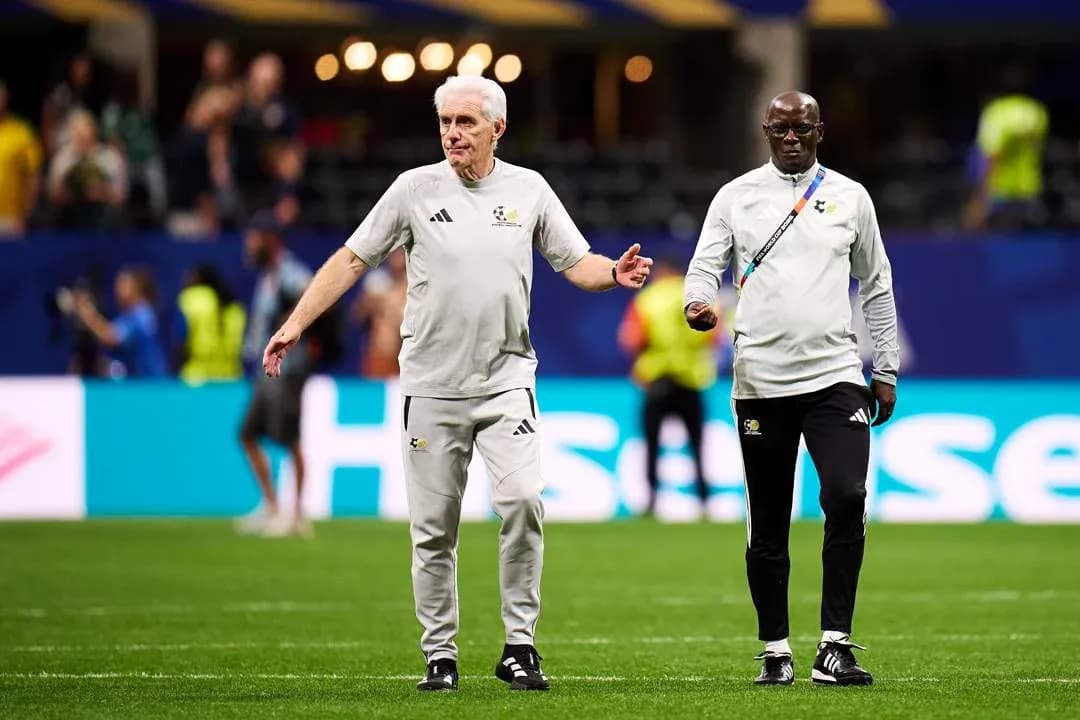
Hugo Broos walked out of Atlanta Stadium with a point, a pulse in South Africa’s World Cup campaign – and a simmering irritation at the arena that staged it.
His team had just dragged themselves back from the brink against Czechia, fighting to a 1-1 draw that kept Bafana Bafana alive in Group A. The performance pleased him. The venue did not.
A point won under a closed roof
Under the gleaming, closed roof of Atlanta Stadium – home to the Atlanta Falcons and Atlanta United – South Africa’s night began badly.
Czechia struck first. In the sixth minute, Michal Sadilek pounced, his early goal tilting the contest sharply in favour of the Europeans and threatening to nudge Bafana towards another bruising World Cup setback.
South Africa wobbled, but they did not fold.
Broos’ side pushed higher up the pitch, hunted in packs and kept asking questions. The equaliser felt late, but it came. Seven minutes from time, the pressure finally told when Pavel Sulc handled inside the box. Teboho Mokoena stepped up, took a breath, and rolled his penalty home with icy calm.
The roar that followed was less a celebration than a release. A point rescued. A campaign still breathing.
That draw means South Africa enter their final Group A fixture against South Korea with their fate in their own hands. Win, and a place in the Round of 32 comes sharply into focus – either via the top two or as one of the best third-placed teams. For a nation that has never escaped the group stage in four World Cup appearances, the stakes could hardly be clearer.
“Only the grass is football”
Yet Broos, 74, reserved some of his strongest words not for his players or the opposition, but for the stage itself.
“If I can be very honest, this is not a football stadium. It’s a nice stadium, fantastic stadium, everything you want. But only the grass is football. All the rest is not,” he said in his post-match press conference.
He has seen enough arenas in a long career to know what he likes. The Belgian drew a sharp line between Atlanta’s NFL-style dome and the open, heaving cauldron that hosted Bafana’s opening 2-0 defeat to co-hosts Mexico.
“It’s a covered stadium. I like to play in an open stadium. I don’t feel really the atmosphere in such a stadium. When you compare it with Azteca, for example, that is a football stadium!”
For Broos, the spectacle in Atlanta might work for the paying public, but not for the essence of the sport.
“These stadiums are fantastic stadiums for the crowd. I think they see everything in that stadium. There are no places that are covered or whatever. But, again, I rather like a real football stadium.”
His gripe went beyond concrete and steel. The match, played in climate-controlled comfort, still featured hydration breaks – and that grated.
Rhythm broken, belief restored
Broos felt those cooling pauses cut across South Africa’s momentum at key moments.
“I think it’s very, very useful when it’s hot,” he said. “But in other cases, the rhythm of the game is lost.
“When at that moment you are the best team and you dominate, suddenly your domination is blocked for five minutes or I don’t know how long... in that stadium, we don’t need to drink after 20 minutes.”
The complaint spoke to a coach who had watched his side finally seize control, only to be forced into a halt. Yet, despite the interruptions, Bafana found a way back.
They had already been stung once in this tournament, outplayed by Mexico at Estadio Azteca. Against Czechia, they showed a different face: organised, stubborn, willing to chase the game rather than drift through it.
Broos saw something he has been demanding since he took the job.
“If we can make another performance like today, I think we have a chance to go in the second round,” he said. “I’m very proud of my team, and this is the real Bafana Bafana.”
Monterrey and a shot at history
Now comes the real examination.
South Korea await in Monterrey on Thursday, 25 June, at Estadio Monterrey, with kick-off at 03:00 (SA time). The Taegeuk Warriors arrive wounded after a narrow 1-0 defeat to Mexico, which turns the fixture into a knife-edge contest for both sides.
For Bafana, it is more than just a group game. It is a chance to rewrite a stubborn line in their World Cup history, to turn resilience into something tangible: progression, and a rare away victory on football’s grandest stage.
They leave the closed roof and artificial chill of Atlanta behind and head back to an open-air arena in Mexico, the kind of setting Broos believes football deserves.
His team have shown their fight. The question now is whether that spirit, under a different sky and in a true football stadium, can finally carry South Africa where they have never been before.
Related News

UFC 332: Start Time and Fight Highlights for Natalia Silva vs. Wang Cong
Court McGee Opens Up About Choosing UFC 332 as His Final MMA Fight
WBC Orders Lightweight Title Unification: William Zepeda vs Jadier Herrera
BCCI Pension List: Monthly Payments to Retired Indian Cricketers in 2025
Why Fury vs Joshua Is Set for Cardiff, and Dua Lipa’s Unexpected Role
Kei Nishikori Reflects on His Japan Open Debut Nearly Two Decades Before Retirement