
Spain's Tactical Mastery in World Cup Final Victory Over Argentina
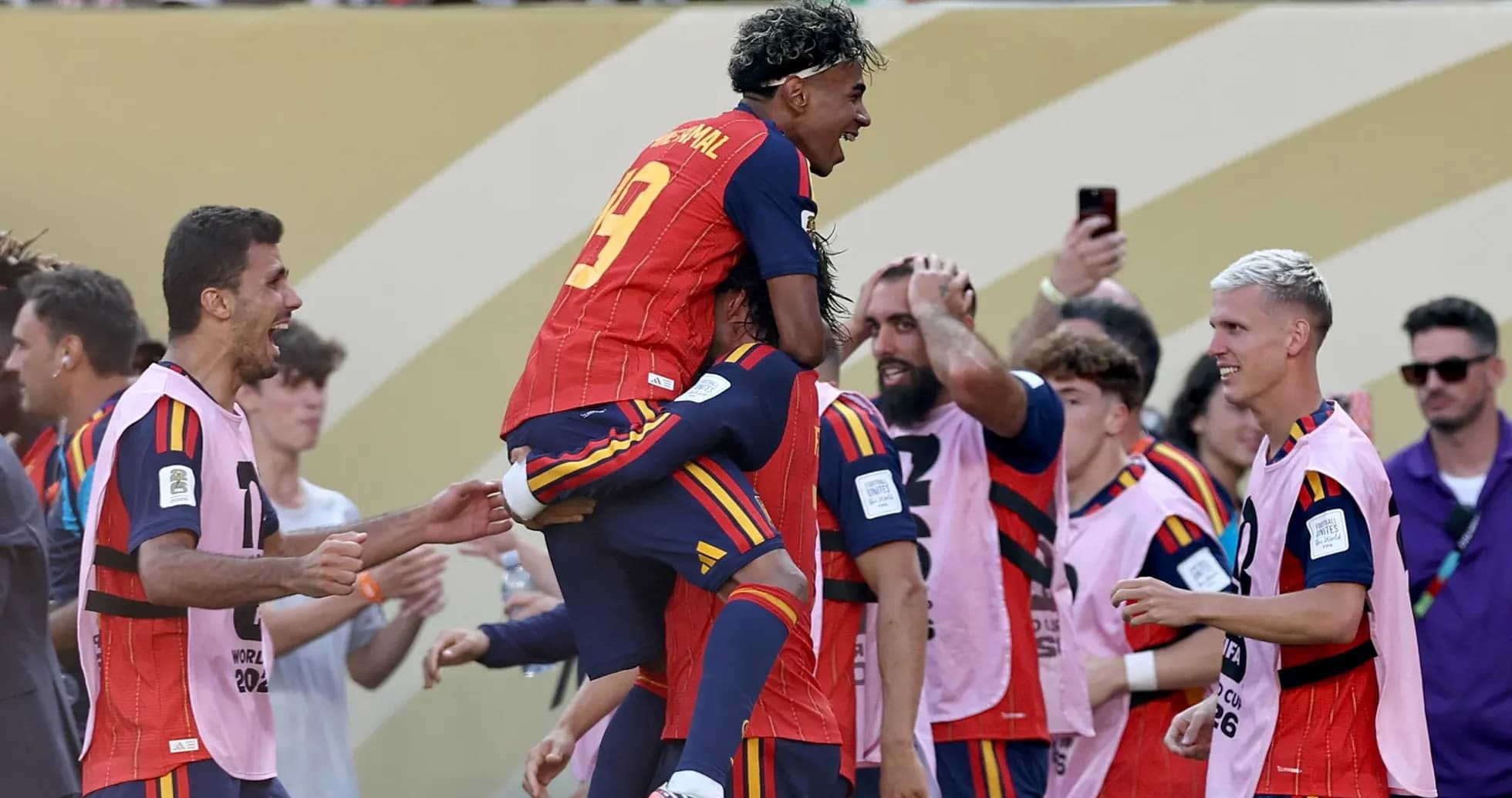
Spain’s 1-0 extra-time win over Argentina at MetLife Stadium was a tactical strangulation built on structural dominance and risk management. Over 120 minutes of the World Cup Final, Spain’s 4-2-3-1 under Luis de la Fuente imposed a near-total control of territory and tempo, reflected in 65% possession, 20 total shots and 852 passes at 89% accuracy. Argentina’s 4-4-2 under Lionel Scaloni, by contrast, was pushed into a reactive low block, finishing with just 2 shots (none on target) and 463 passes at 77%. The match became a duel between Spain’s positional play and Argentina’s deep defensive suffering, ultimately decided by a single extra-time incision.
Executive Summary
Spain built the game around a classic 4-2-3-1 structure: Unai Simón behind a back four of Pedro Porro, Pau Cubarsí, Aymeric Laporte and Marc Cucurella; Rodri and Fabián Ruiz as the double pivot; Lamine Yamal, Dani Olmo and Alex Baena supporting Mikel Oyarzabal as the nominal striker. The shape morphed into a 2-3-5 in settled attack, with full-backs high and the pivots orchestrating circulation.
Argentina’s 4-4-2 – Emiliano Martínez in goal, a back line of Gonzalo Montiel, Cristian Romero, Lisandro Martínez and Nicolás Tagliafico, with Rodrigo De Paul, Enzo Fernández, Alexis Mac Allister and Nicolás González behind Lionel Messi and Julián Alvarez – was designed for compactness and counter-attacks. In practice, it became a 4-5-1 and often a 4-6-0 out of possession, with Messi dropping so deep that Argentina rarely threatened Spain’s last line.
Scoring Sequence & Disciplinary Log
The decisive moment arrived in extra time. At 106', Ferran Torres (Spain) finished from a Nico Williams assist to make it 1-0, the only goal of a final Spain had controlled for long stretches. That strike turned territorial dominance into a deserved scoreboard advantage and held as the final score after 120 minutes.
Discipline tilted heavily towards Argentina. Chronologically:
- -5' Cristian Romero (Argentina) — Argument
- 41' Lisandro Martínez (Argentina) — Foul
- 52' Leandro Paredes (Argentina) — Unsporting behaviour
- 83' Enzo Fernández (Argentina) — Argument
- 90+3' Enzo Fernández (Argentina) — Foul (second yellow)
- 90+3' Enzo Fernández (Argentina) — Foul (Red Card)
- 111' Alexis Mac Allister (Argentina) — Foul
Spain finished without a single card. Argentina ended with 6 yellow cards and 1 red, all stemming from defensive strain and emotional overload as they chased a game they could never truly bend to their rhythm.
Tactical Breakdown & Personnel
Spain’s control was systemic. With 65% possession and 852 passes, they turned the match into a positional puzzle Argentina could not solve. Rodri and Fabián Ruiz anchored the structure: Rodri acting as the metronome in front of the centre-backs, Fabián stepping higher into half-spaces to connect with Dani Olmo and Alex Baena. This double pivot ensured Spain always had at least two safe outlets under pressure, preventing transitions and pinning Argentina deep.
The back four was crucial to this dominance. Pedro Porro and Marc Cucurella pushed high and wide, effectively creating a front five with Lamine Yamal and Baena tucking inside and Oyarzabal occupying the central channel. Pau Cubarsí and Aymeric Laporte were left in a two-versus-two or two-versus-one against Messi and Julián Alvarez, but Spain’s counter-press and rest defence were so well calibrated that Argentina never generated clean breakaways. The statistical outcome is stark: Argentina managed only 2 total shots, 1 from inside the box and 1 from outside, and did not register a single shot on goal.
Spain’s attacking volume – 20 total shots, 12 on goal, 9 from inside the box – reflected both territorial control and structured chance creation. The 3 blocked shots show Argentina’s last-ditch defending, but the underlying pattern was Spain repeatedly accessing the half-spaces and wide overloads. Lamine Yamal’s presence on the right and Cucurella’s high positioning on the left stretched Argentina’s 4-4-2 horizontally, opening central pockets for Olmo and later substitutes like Pedri and Nico Williams to receive between the lines.
The substitutions sharpened Spain’s edge. At 62', Pedri (IN) came on for Fabián Ruiz (OUT), and Ferran Torres (IN) replaced Mikel Oyarzabal (OUT), adding more vertical threat and late box entries. At 75', Nico Williams (IN) for Alex Baena (OUT) and Mikel Merino (IN) for Dani Olmo (OUT) re-energised the wide and central lanes. By extra time, Spain had a fresher, more direct front line, and the 106' winner – Ferran Torres (IN) finishing a move from Nico Williams (IN) – was the logical product of that recalibration.
Defensively, Spain’s discipline was immaculate: 21 fouls but no cards, reflecting tactical fouling at controlled moments without tipping into recklessness. Their xG of 1.94 underscores that the 1-0 scoreline actually flatters Argentina.
Argentina’s approach was almost entirely reactive. With only 35% possession and 463 passes, they settled into a low-to-mid block, trying to compress central spaces and rely on Messi’s creativity in transition. However, the front two were starved of service, and the midfield four were constantly forced backward. The foul count – 25 – and card avalanche reveal a side under permanent stress. Enzo Fernández’s late dismissal at 90+3' (two quick bookings for Argument and Foul) symbolised the psychological and tactical breaking point: reduced to 10 men, Argentina had even less capacity to contest Spain’s circulation in extra time.
Emiliano Martínez (Argentina) was central to keeping the scoreline respectable. With 11 goalkeeper saves and 1.81 goals prevented, he produced a high-level shot-stopping performance under siege. Spain’s goalkeeper, Unai Simón (Spain), did not register a single save, a direct consequence of Spain’s control of shot locations and Argentina’s inability to generate attempts.
The Statistical Verdict
The numbers confirm the eye test. Spain’s 1.94 xG against Argentina’s 0.22 illustrates a gulf in chance quality that goes beyond the narrow 1-0 score. Spain produced 12 shots on goal to Argentina’s 0, and 9 efforts inside the box to Argentina’s 1, highlighting superior occupation of dangerous zones. Their 852 passes, 762 accurate (89%), against Argentina’s 463 passes, 357 accurate (77%), quantify the structural dominance in possession.
Defensively, Spain conceded just 2 shots and required no saves from Unai Simón (Spain), indicating that their defensive index on the night was built more on territorial control and pressing structure than last-ditch heroics. Argentina’s defensive story was the opposite: 11 saves from Emiliano Martínez (Argentina) and 1.81 goals prevented speak to an overworked goalkeeper behind a block that was constantly being bent but only broken once.
Discipline tilted decisively: Spain 0 cards, Argentina 6 yellow cards and 1 red, total 7. The pattern – Argument, Unsporting behaviour and repeated Fouls – underlines how Argentina’s game plan devolved into survival rather than controlled resistance. In a World Cup Final decided after extra time, Spain’s blend of possession structure, pressing organisation and bench impact fully justified their 1-0 victory over Argentina.
Related News
Estevao Opens Up on World Cup Heartbreak and His Unexpected Return to Brazil Under Ancelotti

Thomas Tuchel Shares Unusual Regret After England's 10-Man World Cup Victory Over Mexico

South Korea Names Robert Moreno as Interim Coach After World Cup Exit

Jude Bellingham Returns to Form at Real Madrid Following World Cup Success

Chloe Kelly, Beth Mead and 13 Lionesses Target Big WSL Seasons Ahead of England's 2027 World Cup Campaign
Barcelona Cancels World Cup Tribute for Spain Stars Amid Political Tensions