
Spain's Tactical Superiority in 1-0 Victory Over Portugal
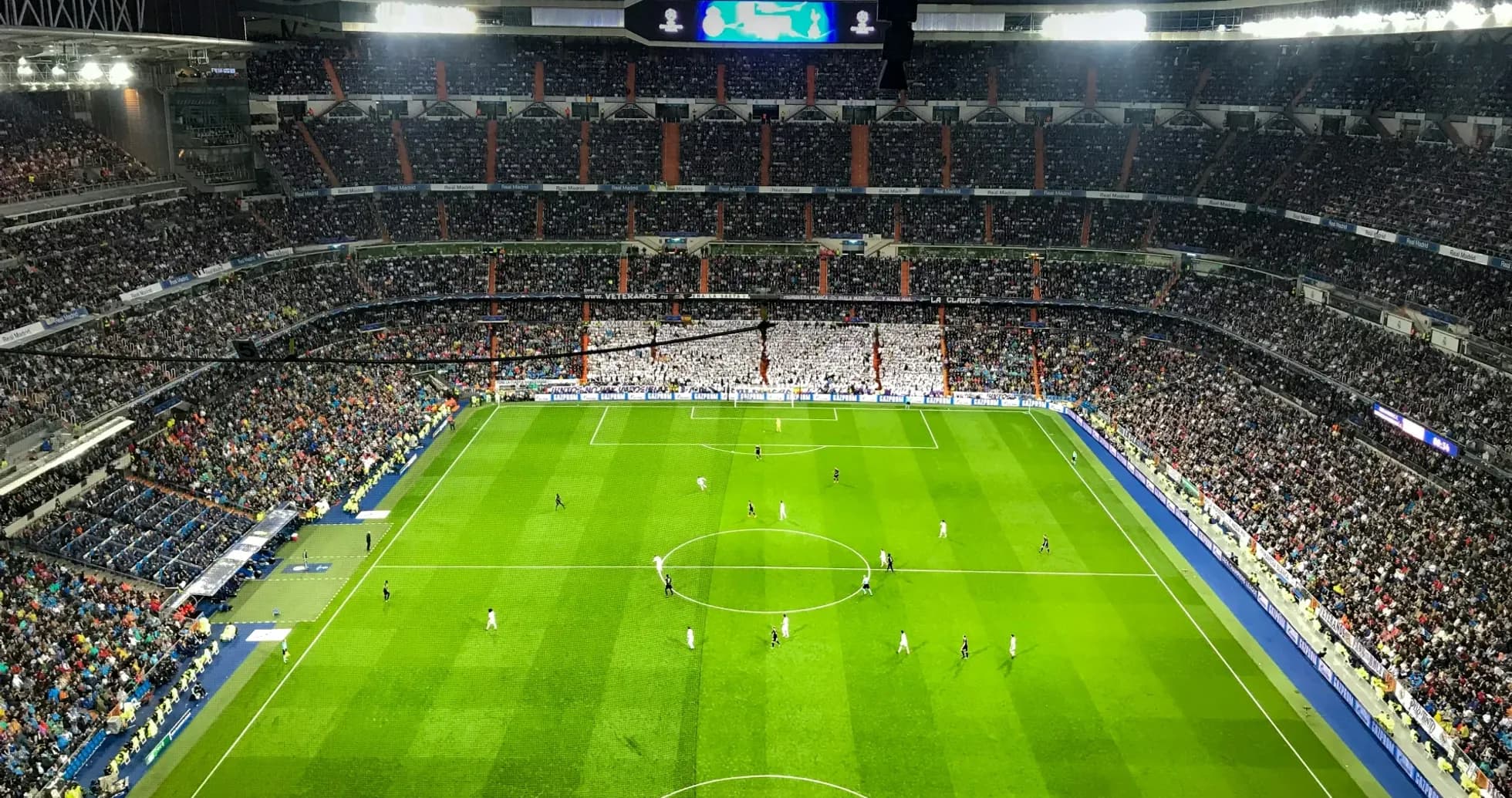
Portugal’s Round of 16 defeat to Spain at AT&T Stadium was defined by control in the middle third, Spain’s superior shot quality, and one decisive late action. Across 90 minutes, Luis de la Fuente’s side imposed their possession game and gradually tilted the contest toward Portugal’s box, turning structural superiority into a 1-0 win and a place in the quarter-finals.
Final Score: Spain 1 - 0 Portugal
Spain’s 55% possession was not sterile circulation; it was the platform for a clear territorial edge and better chances. They produced 15 total shots to Portugal’s 10, with a 6–2 advantage in shots on goal and a clear xG gap (1.77 to 0.58). The pattern was of Spain patiently working through Rodri, Pedri and Dani Olmo between the lines, then using Lamine Yamal and overlapping full-backs to pin Portugal’s back four deep. Portugal’s block, anchored by Rúben Dias and Renato Veiga, absorbed a lot, but the volume and quality of Spanish entries into the box (8 shots inside the area to Portugal’s 7) steadily increased the pressure.
Roberto Martinez’s Portugal were more transitional by design. With Bruno Fernandes and João Félix starting behind Cristiano Ronaldo, the plan leaned on quick vertical attacks once Vitinha or João Neves could spring the first pass. However, Spain’s counterpress – orchestrated by Rodri – repeatedly killed Portuguese breaks at source, forcing Portugal into longer phases without the ball and limiting their ability to connect midfield to the front line. The shot profile reflects that: 10 attempts, but only 2 on target and an xG of 0.58, suggesting mostly low-probability efforts from imperfect situations.
In possession, Portugal’s 426 passes at 84% accuracy show they were technically secure but not structurally dominant. Much of their ball circulation came in deeper zones, with João Cancelo and Nuno Mendes tasked with advancing from full-back. Spain’s 531 passes at 88% accuracy underline a more stable platform: Rodri consistently offered the free man angle, while Pau Cubarsí and Aymeric Laporte were comfortable holding a high line and compressing the pitch, keeping Portugal away from Unai Simón’s box for long stretches.
Second Half Substitutions
The substitutions tell the tactical story of the second half. At 56', Nélson Semedo (IN) came on for Nuno Mendes (OUT), a switch that suggested a desire for more defensive stability and perhaps more direct running on the right, with Cancelo flipping or adjusting his role. On 71', Diogo Dalot (IN) replaced João Cancelo (OUT) and Rafael Leão (IN) came on for João Félix (OUT). Those twin changes pushed Portugal into a more aggressive, wing-driven 4-3-3/4-2-3-1 hybrid: Dalot and Semedo as more conservative full-backs, Leão offering direct depth and 1v1 threat from the left, while Bruno Fernandes and Pedro Neto tried to link with Ronaldo.
Spain’s first response came at 75', with Ferran Torres (IN) replacing Alex Baena (OUT), adding more vertical running and a clearer reference on the last line. At 83', Bernardo Silva (IN) for Vitinha (OUT) and Francisco Conceição (IN) for Pedro Neto (OUT) gave Portugal fresh technical quality and dribbling on the right, underlining a final push for control and incision in the half-spaces. Spain matched that with a double change at 85': Mikel Merino (IN) for Dani Olmo (OUT) and Fabián Ruiz (IN) for Pedri (OUT), moves that subtly shifted them toward game management and late-box arrival rather than constant creative playmaking.
Decisive Moment
The decisive moment came in added time. With Spain still able to sustain attacks and Portugal stretched from chasing a winner, Ferran Torres found space to deliver and Mikel Merino arrived from midfield to score at 90+1', reflecting Spain’s superior late-game structure and fresh legs in the middle. Even after going behind, Portugal’s attacking framework did not generate a high-volume siege; Spain’s defensive line and compact midfield shield protected Unai Simón effectively, limiting Portugal to those 2 shots on target all game.
Out of possession, both sides showed their identities. Spain fouled more often (13 to Portugal’s 9), a byproduct of their aggressive counterpress and willingness to stop transitions early. Portugal’s fouls tended to occur deeper as they tried to disrupt Spain’s combinations near the edge of the box. The card profile reinforces this: Portugal collected two late yellow cards, both for “Foul”, as fatigue and desperation set in. Bernardo Silva was booked at 89', and Renato Veiga followed at 90+4', emblematic of Portugal’s increasingly reactive defending. Spain’s only yellow went to Ferran Torres at 90+9', also for “Foul”, in a phase where Spain were disrupting any final Portuguese push and managing the clock.
Between the posts, Diogo Costa (Portugal) had a demanding evening. Spain’s 6 shots on goal forced him into 5 saves, and with a goals prevented figure of 0.87, he effectively kept Portugal in the tie until the final minutes; the data suggests he outperformed the average expectation on the chances faced. On the other side, Unai Simón (Spain) made 2 saves, supported by a structure that limited Portugal’s shot quality more than their shot count. Spain’s own goals prevented value of 0.87 at team level points to a combination of solid goalkeeping and effective last-line defending.
Statistically and tactically, Spain’s win aligns with the underlying numbers. They generated more and better chances (1.77 xG vs 0.58), controlled possession and passing volume, and maintained a higher territorial line without losing compactness. Portugal’s plan, oriented around transitions and the individual quality of Ronaldo, Bruno Fernandes, João Félix and later Leão and Bernardo Silva, never consistently broke Spain’s central control or pressed them into sustained defensive chaos. In a tight knockout game at AT&T Stadium, Spain’s superior midfield structure, pressing coordination and bench management were the decisive tactical edges behind a narrow but deserved 1-0 victory.
Related News
Brazil's First Post-World Cup Friendly: What Should the Lineup Be?
Estevao Opens Up on World Cup Heartbreak and His Unexpected Return to Brazil Under Ancelotti
Thomas Tuchel Shares Unusual Regret After England's 10-Man World Cup Victory Over Mexico
South Korea Names Robert Moreno as Interim Coach After World Cup Exit

Jude Bellingham Returns to Form at Real Madrid Following World Cup Success

Chloe Kelly, Beth Mead and 13 Lionesses Target Big WSL Seasons Ahead of England's 2027 World Cup Campaign