
Spain Triumphs Over Argentina in World Cup Final
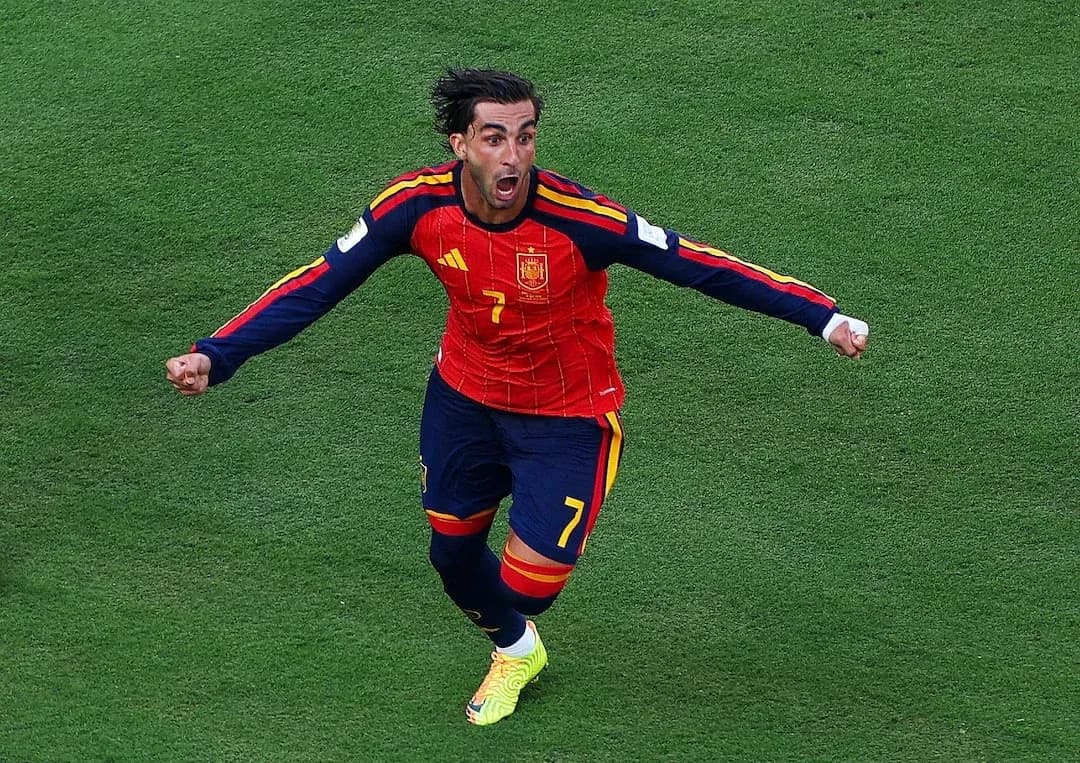
MetLife Stadium under New Jersey lights, a World Cup Final that refused to blink. Spain 1–0 Argentina after extra time, a contest that stretched to 120 minutes and felt longer still, not because of its pace, but because of the tactical tension that bound every pass, press, and duel.
I. The Big Picture – Two Ideologies, One Thin Margin
Heading into this game, both sides arrived as group winners with perfect or near‑perfect records. Spain had topped Group H with 7 points, a goal difference of 5, and no goals conceded in 3 matches. Overall this campaign, Spain had played 8 games, winning 7 and drawing 1, with 14 goals scored in total and only 1 conceded. Their defensive record was almost ascetic: total average goals against sat at 0.1, with 7 clean sheets in total and no defeats.
Argentina’s route was more flamboyant and more volatile. Group J was theirs with 9 points, a total goal difference of 7, 8 goals scored and 1 conceded in the group stage. Across the entire tournament they had also played 8 matches, winning 7 and losing 1, scoring 19 goals in total and conceding 8. Their total average goals for was 2.4, but they also allowed 1.0 per game in total – a champion’s attack married to a defence that was occasionally generous.
The final scoreline – 0–0 in regular time, 1–0 after extra time – mirrored Spain’s season‑long identity. Where Argentina lived on surges of attacking brilliance, Spain trusted structure and suffocation. The World Cup was decided on whose identity held firmer when the air got thin.
II. Tactical Voids and Discipline – A War of Attrition
There were no confirmed absences listed, so both coaches could lean on their core. Luis de la Fuente doubled down on Spain’s most used shape of the tournament, the 4‑2‑3‑1 that had been deployed 6 times overall. Lionel Scaloni stayed loyal to Argentina’s 4‑4‑2, their primary structure across 5 matches.
Spain’s disciplinary profile hinted at when their composure might wobble. Across the tournament, their yellow cards clustered late: 33.33% between 31–45 minutes and a striking 50.00% between 91–105 minutes. They tended to stay clean early, then strain as matches stretched beyond the hour. Red cards had not troubled them at all.
Argentina’s card map painted a more combustible picture. Yellow cards were spread across 31–45, 46–60, and 76–90 minutes (each 13.33%), but the real storm came in extra time: 33.33% of their yellows arrived between 91–105 minutes and 20.00% between 106–120. They also carried a red in that 91–105 window. This was a side that walked the edge in long games, especially once fatigue and emotion kicked in.
In a final that reached 120 minutes, those patterns mattered. Spain’s ability to stay red‑free and largely controlled in extended time contrasted with Argentina’s tendency to pick up cards when the match entered its most fragile phase. It was not just about fouls; it was about emotional control in a game where one misjudged lunge could tilt history.
III. Key Matchups – Hunter vs Shield, Engine vs Enforcer
The headline duel was always going to be Lionel Messi against Spain’s defensive machine. Messi arrived as the tournament’s most complete attacking force: 8 goals and 4 assists in total, 28 shots with 18 on target, 26 key passes and 27 successful dribbles from 38 attempts. His rating of 8.85 across 8 appearances underlined a player still capable of bending tournaments around his left foot.
Yet Spain’s shield had been almost impenetrable. In total this campaign, they had conceded just 1 goal in 8 matches, with 7 clean sheets. At home they had allowed only 1 goal in 5 fixtures, an average of 0.2, and on their travels they had not conceded at all. Behind the numbers sat a back four that was both young and seasoned: P. Cubarsi’s composure alongside A. Laporte’s experience, with M. Cucurella and P. Porro providing aggressive but disciplined width. In front of them, Rodri and F. Ruiz formed a double pivot built for control, not chaos.
The “Hunter vs Shield” confrontation played out in Messi’s zones. Positioned alongside J. Alvarez in the 4‑4‑2, he floated between Spain’s lines, trying to drag Rodri out and isolate centre‑backs. Spain’s answer was collective: Rodri rarely over‑committed, Cubarsi and Laporte held a compact line, and the full‑backs squeezed in when Messi drifted centrally. The result was a final where Messi’s usual statistical dominance was blunted by positioning rather than last‑ditch heroics.
Further ahead, Mikel Oyarzabal carried Spain’s cutting edge. With 5 goals and 1 assist in total from 8 appearances, he was Spain’s most reliable finisher, taking 21 shots with 12 on target. In this final, operating as the lone forward in the 4‑2‑3‑1, his movement between C. Romero and Lisandro Martínez was crucial. Both Argentine centre‑backs arrived as high‑volume, high‑impact defenders: Romero with 15 tackles, 3 blocks, 10 interceptions and 2 yellow cards; Lisandro Martínez with 12 tackles, 1 block, 6 interceptions and 2 yellows. Spain’s plan was not to overpower them physically, but to pull them into uncomfortable channels with Oyarzabal’s drifting runs and the rotations of D. Olmo, Lamine Yamal, and A. Baena behind him.
In midfield, the engine‑room battle was a study in contrasts. Rodri’s quiet authority, supported by F. Ruiz’s passing range, faced a more combative Argentine trio of E. Fernández, R. de Paul, and A. Mac Allister. Fernández, who had already produced 2 goals and 512 completed passes at 93% accuracy, also carried a disciplinary edge: 12 fouls committed and a yellow‑plus‑yellow‑red sequence in his card record. He embodied Argentina’s willingness to step into the dark arts to break rhythm. Spain’s response was to lengthen possessions, drag Argentina from side to side, and reduce the number of transitional duels where Fernández and de Paul thrive.
IV. Statistical Prognosis and How It Played Out
On paper, Argentina’s attack looked more explosive: 19 goals in total, a biggest away win of 1–3, and a total average of 2.4 goals per match. Spain, by contrast, were more modest going forward with 14 total goals and a total average of 1.8, but their defensive solidity – 7 clean sheets and only 1 goal conceded overall – suggested that any final would be played on their terms if they could slow the game.
Penalties added another layer of risk. Spain’s record from the spot was perfect in this campaign: 1 taken, 1 scored, 0 missed. Argentina’s was fraught. Across the tournament they had 3 penalties, scoring only 1 and missing 2, a total success rate of 33.33%. Even Messi’s personal ledger in this World Cup reflected that fragility, with 2 penalties missed in total. In a final where margins shrink to a single kick, Spain’s calm from the spot contrasted sharply with Argentina’s uncertainty.
The match itself followed the statistical script more than the reputations. Spain’s structure throttled Argentina’s attacking rhythm, turning a side that averaged 2.4 goals per game in total into a team that could not find a way past U. Simon across 120 minutes. Spain, who had failed to score in only 1 match all tournament, eventually found the one decisive strike in extra time, aligning with their pattern of grinding opponents down rather than blowing them away.
The yellow‑card surges that had defined both teams in extra time also re‑emerged, with Argentina again pushed to their emotional limits as the clock ticked past 90 and then 105 minutes. Spain, more accustomed to late‑game control, managed the chaos better, keeping their shape while Argentina chased.
In the end, this World Cup Final became a referendum on sustainability. Argentina’s attacking fireworks and star‑driven surges had carried them to MetLife Stadium, but Spain’s season‑long habits – control, defensive parsimony, emotional stability, and a quietly efficient spearhead in Oyarzabal – were better built for a match that demanded patience more than brilliance. Over 120 minutes, the numbers that had defined their campaigns crystallised into a single truth: in a game this long and this tight, the team that concedes almost nothing usually needs only one moment to become champion.
Related News
Estevao Opens Up on World Cup Heartbreak and His Unexpected Return to Brazil Under Ancelotti

Thomas Tuchel Shares Unusual Regret After England's 10-Man World Cup Victory Over Mexico
South Korea Names Robert Moreno as Interim Coach After World Cup Exit

Jude Bellingham Returns to Form at Real Madrid Following World Cup Success

Chloe Kelly, Beth Mead and 13 Lionesses Target Big WSL Seasons Ahead of England's 2027 World Cup Campaign
Barcelona Cancels World Cup Tribute for Spain Stars Amid Political Tensions