
Spain vs Belgium: World Cup Quarter-Final Showdown
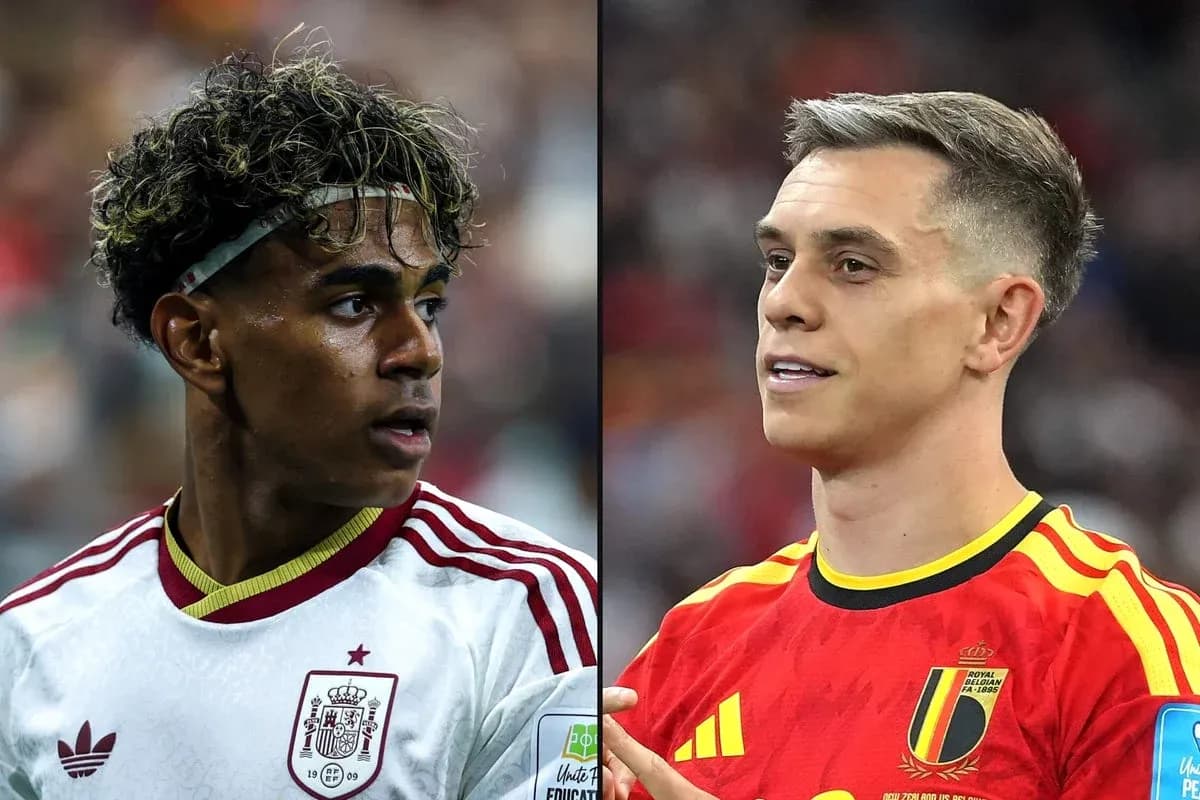
Spain arrive in Inglewood as the only side at this World Cup yet to concede a goal. Belgium arrive as the team that ripped up their own hierarchy and knocked out the co-hosts. The prize at SoFi Stadium on Friday? A semi-final with France and a place in the tournament’s inner circle.
On paper it’s No 3 in the FIFA rankings against No 8. In reality, it’s something sharper: the European champions still cruising in third gear, and a Belgian side reborn the moment Rudi Garcia dared to bench his biggest names.
Spain: perfection without fireworks
Luis de la Fuente’s team have moved through this World Cup like a side rehearsing for a bigger night.
Top of Group H with seven points, they opened with a flat, goalless draw against Cape Verde, then brushed aside Saudi Arabia 4-0 and edged Uruguay 1-0. Austria were swept away 3-0 in the round of 32. Portugal were suffocated in the last 16 until Mikel Merino arrived in stoppage time to nod in the latest chapter of Spain’s new identity: ruthless control, late punishment, 1-0.
The story starts at the back. Unai Simon has five clean sheets from five, anchoring an all-time tournament record of 609 minutes without conceding, a run stretching back to 2022. In front of him, Aymeric Laporte and Pau Cubarsi have been immaculate, but Spain’s real armour is their grip on the ball and the pitch. They press high, swarm quickly when they lose it, and spend long stretches dictating where the game is played.
They have not, though, looked like the most fluid attacking side here.
Mikel Oyarzabal has carried the scoring burden, with doubles against Saudi Arabia and Austria, yet Spain’s edge dulled for long spells versus Uruguay and Portugal. The talent is obvious. The rhythm has not always followed.
The intrigue lies in the final third. Lamine Yamal, Barcelona’s teenage phenomenon who turns 19 on Monday, has flickered rather than burned. Nuno Mendes kept him quiet for most of the Portugal tie, and even after the full-back went off, Nelson Semedo contained him well. Spain know there is another level in him. This, against a Belgium defence that has creaked, feels like the night he is expected to find it.
De la Fuente’s main headache is the No 10 role. Dani Olmo has been tidy and was one of the few bright attacking starters against Portugal, but Merino’s 91st-minute winner has forced the question: control from the start with Olmo, or late-game impact with the Real Sociedad midfielder again?
There is also the Pedri problem. The Barcelona playmaker has not hit his usual standards. Fabian Ruiz offers a different profile from Paris Saint-Germain, more drive and physical presence, and could come in. On the left, Alex Baena has done enough to keep his place, dovetailing well with Marc Cucurella to overload flanks and create those runs in behind that shredded Austria.
Spain’s numbers without the ball are as impressive as their passing maps. No team has drawn more offsides (18), no side has won more possessions in the final third (36). It is a side built on territory, traps and timing, not just pretty patterns.
Belgium: a new identity without De Bruyne
Belgium’s journey has been far messier, and far more dramatic.
They topped Group G with five points, stumbling through 1-1 against Egypt and 0-0 against Iran before exploding in a 5-1 win over New Zealand. It looked like the same old story: nice pieces, no clear picture.
Then came Senegal.
Two goals down with five minutes of normal time left in the round of 32, Belgium were heading out. Garcia made the call that has redefined their tournament. He hauled off Jeremy Doku and Kevin De Bruyne, the poster boys of the “golden generation”, and sent on Dodi Lukebakio and Nicolas Raskin.
On the surface, it felt conservative. Raskin is a ball-winner, not a playmaker. But the change gave Belgium legs, structure and bite. Romelu Lukaku and Youri Tielemans dragged them level, Tielemans then buried a late extra-time penalty for a 3-2 win. The team that walked off the pitch was not the same one that had started the World Cup.
Garcia kept faith with that new core against the United States in the last 16. Belgium, stripped of ego, looked balanced. Tielemans and Raskin knitted midfield together, Amadou Onana brought presence until an anterior cruciate ligament injury ended his first start in the 21st minute. Hans Vanaken came on and Belgium didn’t lose their grip. They went on to beat the co-hosts 4-1, a scoreline that underlined how far they had come in a matter of days.
The consequences are brutal for reputations. De Bruyne and Doku both started on the bench against the U.S. and may do so again against Spain. De Bruyne didn’t even get on the pitch in that game. Garcia has found a base he trusts and is willing to use his stars as late-game chaos agents rather than automatic starters.
Up front, the debate continues. Lukaku remains the reference point, but there are calls for Charles De Ketelaere to lead the line, with some observers convinced he offers more mobility and link play. What is clear is that Belgium will want fresh legs high up the pitch to press and then unleash pace, such as Doku and Lukaku, when the spaces open.
Leandro Trossard has quietly become the creative hub. No player at this World Cup has fashioned more chances than his 17. Tielemans, meanwhile, has been the late-arriving threat, timing his surges into the box and providing composure on the ball when Belgium break.
The numbers show a team that shoots often but rarely cleanly. Belgium have had 107 efforts, 32 of them blocked — more than any other side. Only 14 of those attempts have been “clear” shots, with zero or one defender in the way, but they have scored 13 of them. When the sightline opens, they are ruthless, more efficient in that specific metric than France, England or Spain.
The battle on the flanks
This quarter-final will likely be decided in the wide areas.
Spain lean heavily on their full-backs and wingers. On the right, Yamal and Pedro Porro have hinted at a devastating partnership, combining for overloads and one-on-ones that have left defenders exposed, even if the final product has not always matched the build-up. On the left, Cucurella and Baena have repeatedly stretched back lines, creating lanes for runs in behind that few defences have read in time.
Belgium, under Garcia, have their own wide blueprint. Their full-backs make aggressive off-the-ball runs to support wingers, dragging markers away and opening lanes for low crosses and cut-backs. It was a key feature of that 5-1 dismantling of New Zealand and has remained part of their attacking grammar.
Both sides love the low ball across the area. Each has created three chances from low crosses, joint-most at the tournament alongside the Netherlands and Switzerland. Belgium top the charts for first-time shots with 58; Spain sit third with 46. When the ball is flashed across the box, neither side hesitates.
The other side of that equation is what happens when the move breaks down. Spain counter-press ferociously. Lose it, win it back within seconds — that’s the plan. Belgium have struggled more without the ball. Opponents have found it too easy at times to slice through their midfield, and they have already made six errors leading to shots, a total bettered only by the United States and Brazil (seven each). They have faced 53 shots in total, almost double Spain’s 29.
If Spain’s press bites early, Belgium’s midfield will be under siege. If Belgium can bypass that first wave, there will be grass to run into behind Spain’s high line. No team has sprung an offside trap more often than Spain, but living that high always carries risk.
History, context and a familiar script
Spain and Belgium know each other well. This will be their 24th meeting, the rivalry stretching back to a 3-1 Belgian win at the 1920 Olympics in Antwerp.
The most famous clash came in the 1986 World Cup quarter-final in Mexico. Jan Ceulemans’ diving header put Belgium ahead; Juan Senor’s 30-yard rocket dragged Spain level late on. The shootout that followed turned on Jean-Marie Pfaff’s save from Eloy Olaya and began a long, painful Spanish record of just one win in five World Cup shootouts.
Spain took some revenge at Italia 1990, winning 2-1 in the group stage to top the group, with Belgium following them through in second. Since then, the balance has tipped decisively. Spain have won all five meetings in the 21st century, including two qualifiers on their way to the 2010 World Cup triumph. A 5-0 demolition in La Coruna felt like an early warning of what that generation would do in South Africa.
The last time they met, in Brussels in 2016, Spain won 2-0. Thibaut Courtois, Lukaku, Thomas Meunier and De Bruyne all played for Belgium that night. Only one of those names is guaranteed to start here.
The star turns and the stakes
This quarter-final is heavy on talent, light on guarantees.
Yamal is the obvious headline act for Spain, even if the tournament has not yet caught fire for him. There have been flashes — a dribble here, a sharp combination with Porro there — but he has been largely contained. Against a Belgian back line that has wobbled, this could be his stage.
Olmo has emerged as one of Spain’s more reliable attacking starters, knitting play together and adding thrust from midfield. Rodri, sitting at the base, has quietly played his way towards full sharpness, dictating tempo and snuffing out counters.
Belgium’s “star” might be their system rather than an individual. Lukaku and De Bruyne may not start. Doku could again be held back as a late weapon. The improvement has been collective: Trossard’s creativity, Tielemans’ timing, Raskin’s graft, Vanaken’s calm.
Predictions from analysts lean heavily one way. Multiple observers see Spain winning 2-0, pointing to their defensive wall, their control of midfield and the sense that Yamal is overdue a decisive performance. One forecast goes 3-1, imagining Belgium landing an early punch before Spain settle into their familiar rhythm and pull away.
What is not in doubt is the scale of the opportunity. Win, and France await at AT&T Stadium in Arlington on Tuesday. Lose, and the narratives harden: Spain, again, a team that promised more than it showed; Belgium, again, a nation wondering how long this window of talent can stay open.
Spain have glided into the quarter-finals “without a great deal of fuss”, as one observer put it. Belgium have lurched, panicked, reinvented themselves and come out stronger. Now one of them has to blink.
At SoFi Stadium, under the California sun and the weight of their own histories, we find out which version of themselves they really are.
Related News
Anthony Joshua Names Murat Gassiev as Next Opponent if He Defeats Tyson Fury

UFC 332: Start Time and Fight Highlights for Natalia Silva vs. Wang Cong
Court McGee Opens Up About Choosing UFC 332 as His Final MMA Fight
WBC Orders Lightweight Title Unification: William Zepeda vs Jadier Herrera
BCCI Pension List: Monthly Payments to Retired Indian Cricketers in 2025
Why Fury vs Joshua Is Set for Cardiff, and Dua Lipa’s Unexpected Role