
Switzerland's Tactical Mastery Secures 2-0 Victory Over Algeria
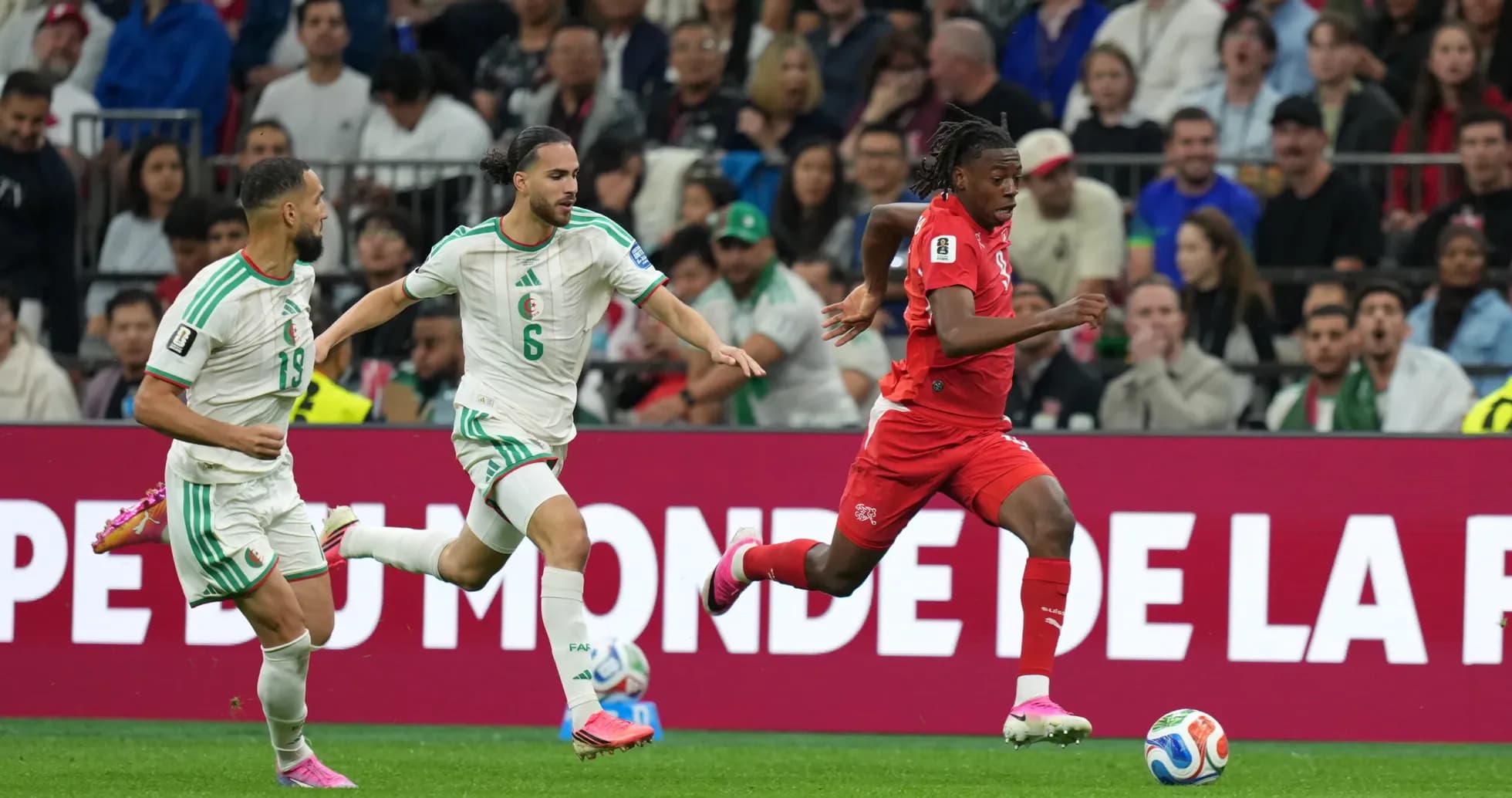
Under the closed roof of BC Place, Switzerland’s 2–0 win over Algeria in the Round of 32 felt less like an upset and more like the logical extension of their group-stage identity. This was the meeting of two contrasting World Cup stories: Switzerland, top of Group B with 7 points and a goal difference of 4 (7 scored, 3 conceded), arriving as a side that knows exactly what it is; Algeria, third in Group J with 4 points and a goal difference of -2 (5 scored, 7 conceded), still searching for balance between their attacking flair and defensive frailty.
The tactical shapes told the tale before a ball was kicked. Murat Yakin doubled down on Switzerland’s tournament blueprint, returning to the 4‑2‑3‑1 that has been his most-used structure this campaign. Across the tournament, Switzerland had leaned on that shape in 2 of their 4 matches, scoring a total of 9 goals with a total average of 2.3 per game. Here, it was expressed with precision: Gregor Kobel behind a back four of Denis Zakaria, Nico Elvedi, Manuel Akanji and Ricardo Rodriguez; a double pivot of Remo Freuler and Granit Xhaka; a three of Dan Ndoye, Johan Manzambi and Ruben Vargas supporting Breel Embolo as the lone striker.
Opposite them, Vladimir Petkovic matched reputation with ambition. Algeria’s 4‑3‑3, a formation they had already used twice in this World Cup, was a declaration that they would not die wondering. Rayan Ait‑Nouri and Ramy Bensebaini flanked Aissa Mandi and Rayan Belghali in defence, with Ramiz Zerrouki, Nabil Bentaleb and Farès Chaibi forming a technical midfield. Ahead of them, Riyad Mahrez, I. Maza and Houssem Aouar promised incision and invention.
Yet, the deeper numbers hinted at why this tie always leaned red and white. Heading into this game, Switzerland’s attack had been ruthlessly efficient at home venues in this World Cup context: 8 goals at home across 3 such fixtures, at a home average of 2.7 goals per game, against only 2 conceded (0.7 on average). They had never failed to score in any of their 4 matches in total. Algeria, by contrast, arrived with structural leaks. On their travels they had scored only 2 goals in 3 away fixtures, an away average of 0.7, while conceding 6 away, at 2.0 per match. Overall, Algeria’s total record of 5 goals for and 9 against across 4 games painted a side that could hurt you, but struggled to keep the door closed.
The absence lists added another layer. Switzerland were without L. Jaquez, ruled out with a muscle bruise, but Yakin’s back line was otherwise intact. Algeria missed A. Benbouali through a wound, trimming their forward options on a night when they would need every spark they could find.
From the first whistle, Switzerland’s structure suffocated Algerian rhythm. The double pivot was the hinge: Xhaka dictating tempo, Freuler sweeping behind him. With the ball, the 4‑2‑3‑1 often morphed into a 2‑3‑5, Zakaria tucking in to form a back three while Rodriguez advanced, Vargas holding width on the left and Ndoye attacking the right half-space. Embolo occupied the centre-backs, freeing Manzambi between the lines.
Manzambi arrived at this knockout tie as one of the quiet revelations of the tournament: 3 goals and 2 assists in total, from just 200 minutes across 4 appearances, with a rating of 7.7. He had taken 4 shots in total, 3 on target, and created 3 key passes. Here, his role as the “10” was pivotal. Drifting off Bentaleb’s shoulder, he repeatedly forced Mandi and Zerrouki into uncomfortable decisions: step out and leave Embolo 1v1, or hold the line and let him turn.
Behind them, Switzerland’s defensive numbers underpinned their bravery. Across the campaign they had conceded only 3 goals in total in 4 matches, at a total average of 0.8 per game, and they had already produced 1 clean sheet. The centre-back pairing of Akanji and Elvedi justified that trust again, stepping into Mahrez’s half-space runs and compressing the field so that Algeria’s front three were often receiving with their backs to goal.
For Algeria, the “hunter vs shield” duel was Mahrez against that Swiss defensive wall. Mahrez, nominally wide right, sought pockets inside Rodriguez, trying to combine with Chaibi and Aouar. But every time he drifted centrally, he ran into the layered resistance of Xhaka and Freuler screening in front of Akanji and Elvedi. Petkovic’s 4‑3‑3 never quite found the vertical acceleration it needed: Zerrouki and Bentaleb circulated, but rarely broke Swiss lines.
In the engine room, Xhaka versus Bentaleb was the defining midfield confrontation. Xhaka, with 55 passes already in the bank this tournament and an accuracy of 78% for Manzambi ahead of him, orchestrated Swiss possession with a calm that Bentaleb and Zerrouki could not disrupt often enough. When Algeria did push higher, Switzerland’s out-ball into Embolo’s feet or into the channels for Ndoye and Vargas repeatedly turned defence into attack.
Discipline, too, followed established patterns. Both sides had shown a tendency to collect yellow cards between 31' and 45' in this World Cup, with 66.67% of their cautions in that window, and a secondary spike for Switzerland between 61' and 75' at 33.33%. The match’s combative middle phases reflected that underlying edge, even if no red cards materialised; both squads walked the line without crossing it.
If there was a statistical subplot, it was in the penalty area. Switzerland came into the tie having earned and converted 2 penalties in total, with a perfect 100.00% record from the spot and no misses. Embolo himself had scored 1 of those penalties. Algeria, by contrast, had yet to take a penalty in this World Cup, their total from the spot standing at 0. In a knockout match where fine margins matter, the knowledge that Switzerland could lean on a flawless penalty record if required added a quiet layer of psychological weight.
Following this result, the numbers and the narrative align. Switzerland, unbeaten in total across 4 fixtures (3 wins, 1 draw, 0 losses), with 9 goals for and 3 against, look every inch a tournament side: tactically coherent, physically robust, and with star turns in Embolo and Manzambi to tilt tight games. Algeria exit with their identity still in flux: 1 win, 1 draw and 2 losses in total, 5 goals scored but 9 conceded, and no clean sheets. The promise of Mahrez, Aouar and Chaibi was real, but never fully synchronised with a back line that remained too exposed.
In the end, this Round of 32 tie was less about one-off heroics and more about systems. Switzerland’s 4‑2‑3‑1, underpinned by defensive solidity and efficient finishing, simply imposed itself on Algeria’s more fragile 4‑3‑3. The scoreline, 2–0, felt like the distilled expression of everything these two squads had been in this World Cup so far.
Related News
Brazil's First Post-World Cup Friendly: What Should the Lineup Be?
Harry Kane Calls England’s World Cup Exit to Argentina His Deepest International Pain
Estevao Opens Up on World Cup Heartbreak and His Unexpected Return to Brazil Under Ancelotti
Thomas Tuchel Shares Unusual Regret After England's 10-Man World Cup Victory Over Mexico
South Korea Names Robert Moreno as Interim Coach After World Cup Exit

Jude Bellingham Returns to Form at Real Madrid Following World Cup Success