
Thomas Tuchel's England: The Third Chapter of the World Cup
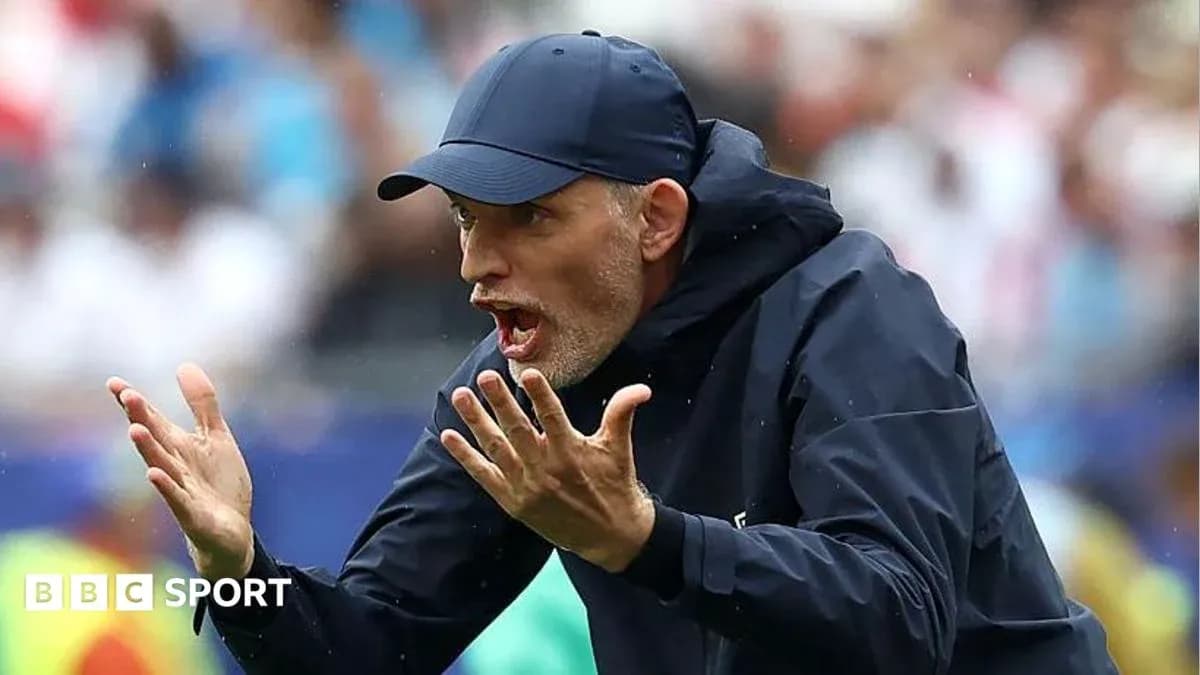
Thomas Tuchel has always liked a storyline. Now his England side are stepping into the part of the script where one wrong move kills the hero.
The head coach calls it “the third chapter” of his World Cup tale: the knockout rounds, where reputations, careers and carefully crafted plans can be shredded in 90 frantic minutes. The training camp in Miami was chapter one. Topping Group L to reach the last 32 was chapter two. Functional, occasionally flat, but effective enough.
Now comes the dangerous bit.
On Wednesday in Atlanta, under the closed roof and cool air of the $1.6bn Atlanta Stadium, England face DR Congo with everything on the line. No more safety net, no more gentle talk of “building into the tournament”. One bad day and Tuchel’s grand design ends in silence.
A flawed contender
So far, England have done what was required. Wins over Croatia and Panama wrapped around a goalless grind against Ghana were enough to cruise through with a game to spare. Job done, but without the authority of a side that truly scares the rest of the draw.
The cracks are obvious. They are in defence.
“The area of the pitch you want stability in is your goalkeeper and back four,” former captain Wayne Rooney told BBC Sport. “With the back four we haven't had that.”
He is right. Injuries, risk-taking selections and a preference for versatility over specialists have left England’s back line looking improvised just as the stakes spike.
Tino Livramento never made it to the tournament. Reece James arrived with a medical file that read like a warning label. When his hamstring went against Croatia, few were shocked. Tuchel said he was surprised; the rest of the game was not.
Then came another blow. Jarell Quansah, James’ deputy at right-back, limped out against Panama. One position, two casualties, and suddenly the head coach’s fondness for multi-purpose defenders looks like a gamble that has turned on him.
James and Quansah will both miss the DR Congo tie. Tuchel insists they are “getting closer and closer”, with Quansah “a bit ahead of Reece”, but that is of little use on Wednesday evening. For now, Djed Spence is the last specialist right-back standing.
The alternative is a reshuffle. Ezri Konsa can slide across to the flank, which would likely drag John Stones back into the starting XI. That, though, opens another question: how much can England really lean on a 32-year-old who started only five Premier League games before leaving Manchester City at the end of last season?
Tuchel has already rotated his central pairing. Stones with Konsa in the 4-2 win over Croatia. Konsa with Marc Guehi next time, Stones sacrificed. It has the feel of a coach searching for the right combination while the clock ticks down.
This is not the foundation a World Cup winner usually rests on. And if the bracket falls as expected, a quarter-final in Miami against Brazil and Vinicius Jr looms. That is a duel that demands a specialist, not a patchwork solution and a hopeful glance at the fitness reports.
Rice and the fragile balance
At the other end of the pitch, England bristle with options. The real problem sits between attack and defence, where one man is trying to hold it all together.
Declan Rice is not just important to Tuchel. He is non-negotiable.
The coach rested him for the Panama match, a sensible decision with qualification secured and the Arsenal midfielder on a yellow card. Rice has also been nursing a hamstring issue and took a kick to the calf against Ghana. Even so, the 90 minutes without him told their own story.
Panama, a team England should have smothered, took 13 shots. They broke with ease. They found space between the lines and ran through the middle. Elliot Anderson was left firefighting alone in central midfield, not because he played badly, but because the balance around him was wrong.
Tuchel’s choice to field the attack-minded pair of Jude Bellingham and Morgan Rogers brought creativity and thrust, but it also left England open. A more ruthless side than Panama would have cashed in.
Rice changes all of that. He screens a vulnerable defence, reads danger, plugs gaps, and still finds the time and quality to start attacks and deliver from set pieces. He is the platform and the insurance policy rolled into one.
Harry Kane is the captain and goalscorer. Bellingham is the superstar driving force. Yet Rice now stands alongside them as the player England simply cannot replace.
Saka, scars and the shocks around them
Tuchel’s selection dilemmas are not confined to the back line and the holding role. Bukayo Saka, finally handed his first World Cup start against Panama, lasted 63 minutes as England continue to manage his Achilles problem. The temptation will be to unleash him again against DR Congo. The risk is obvious: lose Saka, and another pillar of England’s attacking structure disappears.
Tuchel knows the margins. He has watched them shred others.
Germany, under Julian Nagelsmann, fell to Paraguay on penalties, a defeat so seismic that it has already triggered a fierce debate over the coach’s future and fuelled the lobby for Jurgen Klopp. The Netherlands, loaded with Premier League talent, went out to Morocco and Ronald Koeman was gone within 24 hours.
Those two results have sent a chill through the bigger nations. This World Cup is not following the old script. Carlo Ancelotti’s Brazil only survived Japan thanks to Gabriel Martinelli’s stoppage-time winner. No one is cruising.
Tuchel has no intention of allowing complacency to creep in.
“There is no percentage of over-confidence in our approach,” he said in Atlanta. “The games in the round of 32 speak a very clear language. It is very narrow margins. It actually makes me more calm than nervous.”
He sees the chaos, and rather than fear it, he is trying to use it.
“This is the nature of knockout football,” he added. “Netherlands and Morocco could have been a quarter-final or semi-final, and Japan and Brazil could have been a quarter-final. It just shows these are games of narrow margins. It can help us not to over-expect. Teams are well prepared. It is difficult for any team to break another down.”
Favourites with flaws
England will walk out in Atlanta as favourites. Tuchel does not run from that tag.
“We are the favourites,” he said. “We play against our own expectations. We expect to go further than the round of 32, so why should the public not expect that?”
This is the tension at the heart of England’s campaign. A squad talented enough to dream of lifting the trophy for the first time since 1966. A coach obsessive enough to plot every detail. Yet a defence that looks one injury away from crisis and a midfield that cannot function without Rice.
Tuchel has spent the group stage tinkering, protecting, and planning. Resting key legs like Rice. Managing the minutes of Saka. Juggling Stones’ lack of recent football. Watching James and Quansah limp away from the position that already worried him most.
Now there is no room left to manoeuvre. Every call – Spence or Konsa at right-back, Stones or Guehi in the middle, Saka from the start or from the bench, how hard to push Rice – carries a consequence.
He wanted a story. On Wednesday, against DR Congo in the cool of a futuristic stadium, Thomas Tuchel finds out whether his third chapter leads towards history – or slams the book shut on England’s World Cup.
Related News

Anthony Joshua Names Murat Gassiev as Next Opponent if He Defeats Tyson Fury

UFC 332: Start Time and Fight Highlights for Natalia Silva vs. Wang Cong

Court McGee Opens Up About Choosing UFC 332 as His Final MMA Fight
WBC Orders Lightweight Title Unification: William Zepeda vs Jadier Herrera
BCCI Pension List: Monthly Payments to Retired Indian Cricketers in 2025

Why Fury vs Joshua Is Set for Cardiff, and Dua Lipa’s Unexpected Role