Toluca Triumphs in Penalty Shootout Against Tigres UANL

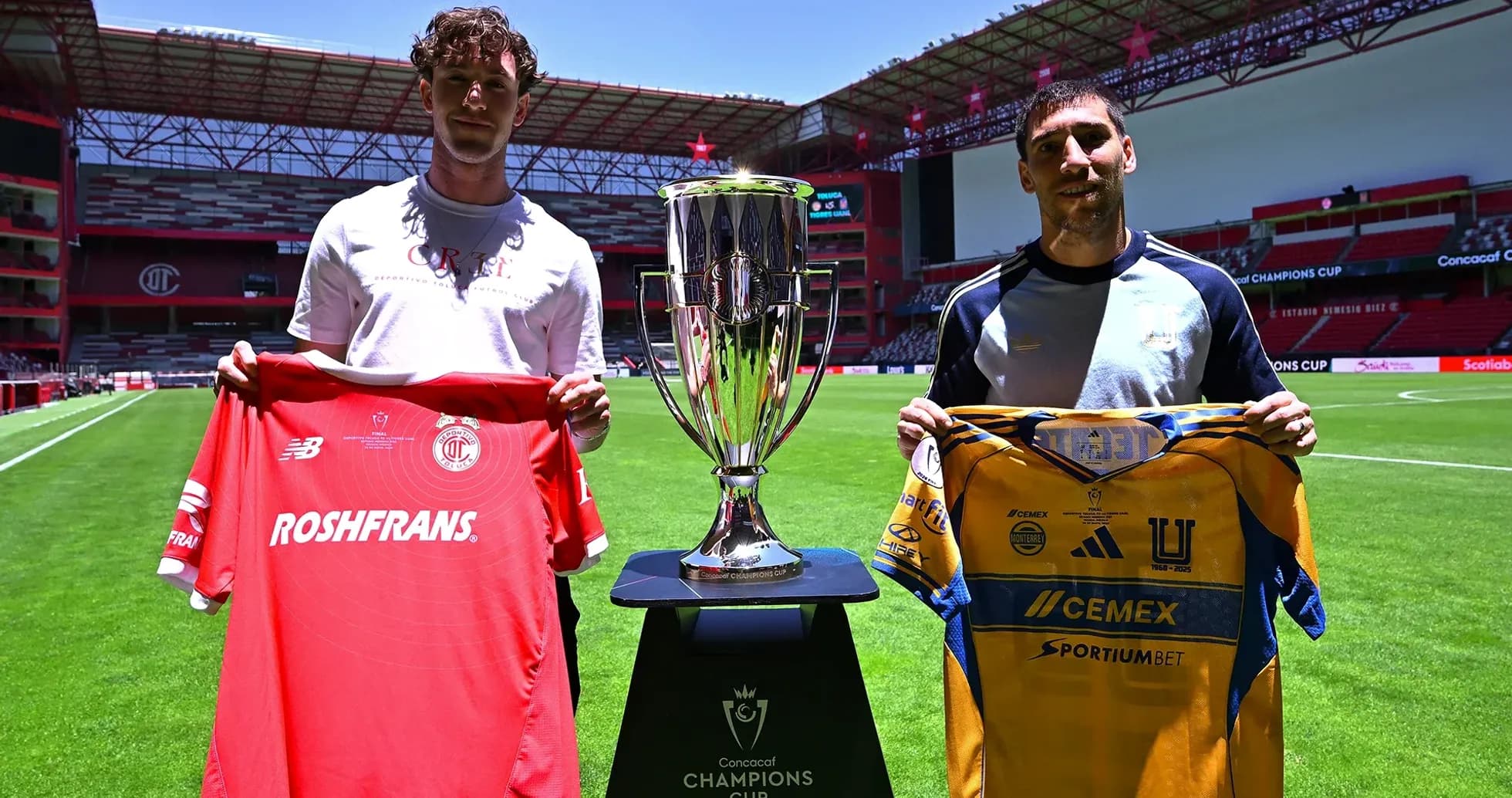
Toluca’s penalty shootout triumph over Tigres UANL at Estadio Nemesio Diez was built on structural discipline without the ball and calculated risk with it. Across 120 minutes the hosts accepted a 45% share of possession, preferring a compact 4-1-4-1 that narrowed the central lane and forced Tigres’ 4-2-3-1 to circulate in front of them. The statistical profile — fewer shots (13 vs 15), fewer efforts on goal (4 vs 8), but more blocked attempts (3 vs 1) — underlines a Toluca side more concerned with controlling spaces than dominating phases.
Out of possession, Ricardo Mohamed Matijevich Antonio’s 4-1-4-1 hinged on Franco Romero as the screening midfielder in front of a back four of Santiago Simón, Bruno Méndez, Federico Pereira and Everardo López. Romero’s position allowed the two interior midfielders, Marcel Ruíz and Nicolás Castro, to step toward Tigres’ double pivot of César Araújo and Fernando Gorriarán without leaving the centre-backs exposed. The wide midfielders, Helinho and Jesús Ricardo Angulo, dropped to form a flat four when needed, pinching in to deny Ángel Correa and Diego Lainez interior pockets. Tigres’ 10 shots inside the box show they eventually broke that shell, but the volume of Toluca fouls (24 vs 14) reflects a deliberate use of tactical infringements to disrupt rhythm whenever Tigres penetrated the second line.
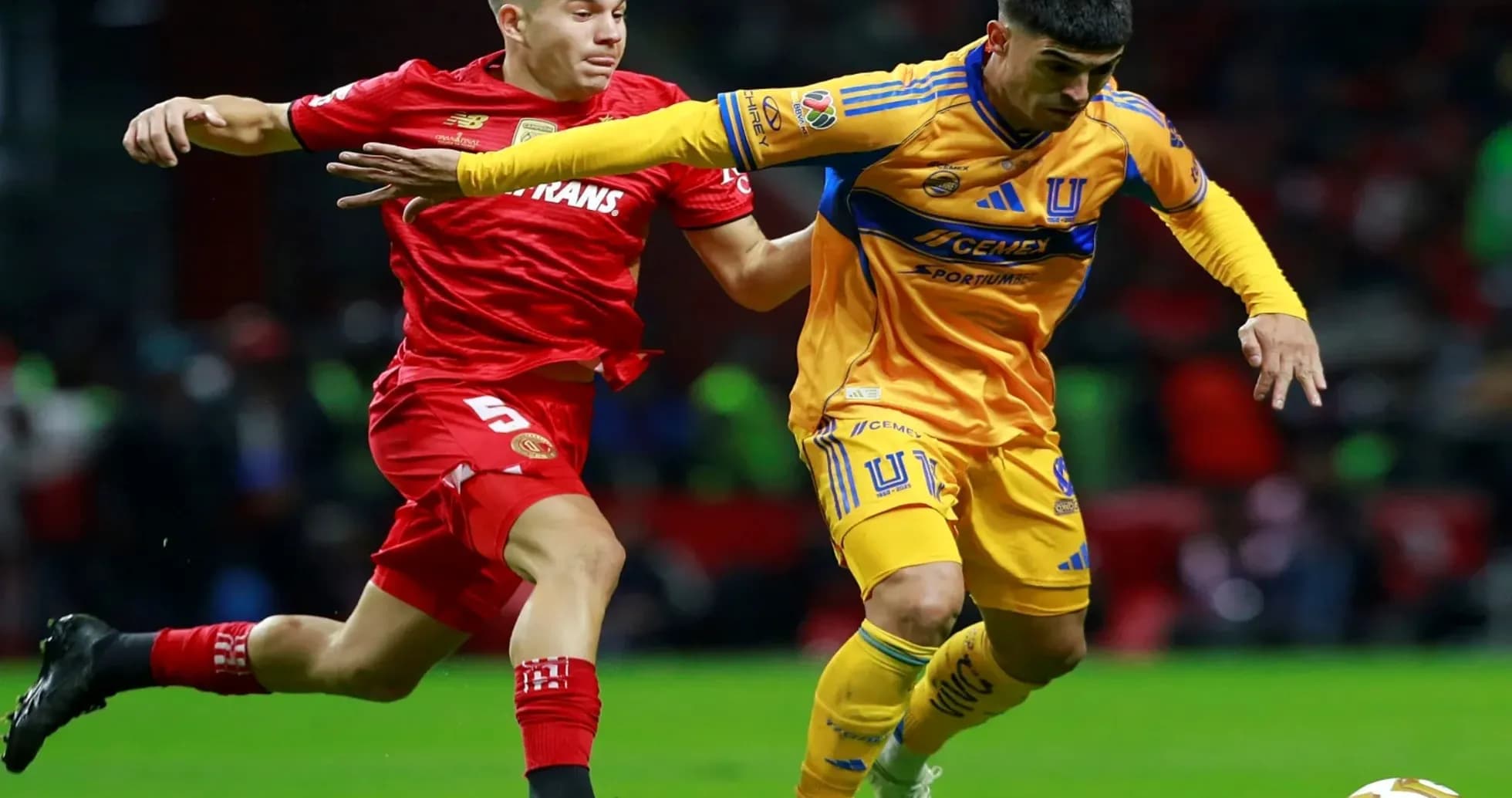
In contrast, Tigres’ 4-2-3-1 was ball-dominant but structurally vulnerable in transitions. With 55% possession, 509 total passes and 83% accuracy (420 accurate), Guido Pizarro’s side controlled tempo through Araújo and Gorriarán, while the line of three — Ozziel Herrera, Correa and Lainez — rotated aggressively between half-spaces. The problem lay in rest defence: both full-backs, Vladimir Loroña and Jesus Garza, advanced simultaneously, leaving Rômulo Zwarg and Joaquim exposed to direct counters, particularly once Toluca introduced fresh legs.
The substitution pattern was central to the tactical evolution. At 52', Fernando Arce Juárez (IN) came on for Marcel Ruíz (OUT), subtly shifting Toluca’s midfield from a possession-oriented interior to a more vertical runner. Arce later became decisive both as assister and penalty taker, but tactically his arrival increased Toluca’s capacity to break Tigres’ press on the first touch and attack the space behind Araújo and Gorriarán.
Tigres’ triple change phase between 63' and 78' recalibrated their attacking structure. At 63', Marcelo Flores (IN) came on for Ozziel Herrera (OUT), adding more between-the-lines creativity. At 68', Juan Brunetta (IN) replaced Rodrigo Aguirre (OUT), turning the nominal striker slot into more of a false nine profile, while Marco Farfan (IN) came on for Vladimir Loroña (OUT), adjusting the left flank’s balance. At 78', André-Pierre Gignac (IN) replaced Marcelo Flores (OUT), restoring a fixed reference in the box, and Diego A. Sánchez Guevara (IN) came on for César Araújo (OUT), slightly loosening the double pivot’s defensive stability to chase a goal.
Toluca’s response at 70' and 89' was to refresh the wide and central lanes: Pavel Pérez (IN) for Jesús Ricardo Angulo (OUT) at 70' added energy between lines, then Jorge Díaz (IN) for Helinho (OUT) and Diego Barbosa (IN) for Nicolás Castro (OUT) at 89' retooled both flank and interior roles ahead of extra time. Mauricio Isais (IN) for Everardo López (OUT) at 91' and Sebastián Córdova (IN) for Paulinho (OUT) at 101' completed a shift toward a more aggressive extra-time posture, with Córdova offering late-arriving runs from midfield.
The extra-time goals captured these tactical swings. At 104', Díaz’s strike for Toluca, assisted by Arce, came from precisely the dynamic the hosts had been building toward: a midfield runner (Arce) exploiting Tigres’ stretched double pivot and finding a late-arriving wide player in an advanced zone. Tigres’ equaliser at 114', scored by Joaquim and assisted by Brunetta, underlined the visitors’ aerial and set-piece threat once Gignac and Brunetta were both on the pitch, with centre-backs pushed high and the full-backs locked deep to protect against counters.
Discipline also shaped the match’s rhythm. Toluca picked up two yellow cards to Tigres’ one, all in the closing stages of regulation and early extra time, reflecting rising fatigue and desperation in duels. The sequence ran as follows:
- 87' Everardo del Villar (Toluca) — Tripping
- 90+3' Diego Lainez (Tigres UANL) — Foul
- 96' Mauricio Isais (Toluca) — Tripping
These cautions, especially the two for Tripping on Toluca’s left side, highlight where Tigres were finding late joy: driving at full-backs and forcing recovery tackles in wide channels.
In goal, both keepers were decisive in shaping the narrative. Luis García (Toluca) faced sustained pressure, with Tigres producing 8 shots on goal from 15 total attempts. Toluca’s statistics block credits their goalkeeper with 8 saves, indicating he dealt with every on-target effort in open play and extra time bar Joaquim’s equaliser. His interventions, particularly against a Tigres side loading the box with Gignac, Brunetta and Correa, underpinned Toluca’s ability to reach the shootout.
At the other end, Nahuel Guzmán (Tigres UANL) recorded 3 saves against 4 Toluca shots on goal. With Toluca generating 7 efforts inside the box, Guzmán’s workload was more about command of area and positioning than sheer volume, but the single open-play concession in extra time tilted the pressure onto Tigres’ attack. The disparity in saves (8 vs 3) mirrors the shot-on-goal counts and reinforces the picture of Tigres as the more territorially dominant side, but less efficient in converting that into decisive chances.
In terms of passing structure, Tigres’ 509 passes, 420 accurate (83%), reflect a possession team comfortable circulating across the back four and double pivot, then using Lainez and Correa as interior outlets. Toluca’s 418 passes, 329 accurate (79%), show a slightly less precise but still competent build-up, consistent with a side that alternated between short combinations and more direct outlets toward Paulinho before his substitution.
Set plays and territorial pressure are also visible in the numbers: Tigres’ 7 corner kicks to Toluca’s 4 indicate a higher volume of final-third occupation, while Toluca’s 3 blocked shots to Tigres’ 1 suggest a back line consistently throwing bodies in front of efforts rather than relying solely on García.
With expected goals and goals prevented values absent, the clearest quantitative verdict comes from the shot and possession profiles: Tigres controlled the ball and generated more volume, but Toluca’s defensive structure, higher foul count, and superior shot blocking pointed to a game plan built on containment, selective pressing and efficiency in key moments. That approach, combined with García’s shot-stopping and a well-executed penalty routine, ultimately delivered Toluca a 1-1 draw after extra time and a 6-5 edge in the shootout, a tactical victory rooted as much in defensive detail as attacking flair.