
Tottenham’s Financial Transformation: The Stadium That Changed Everything
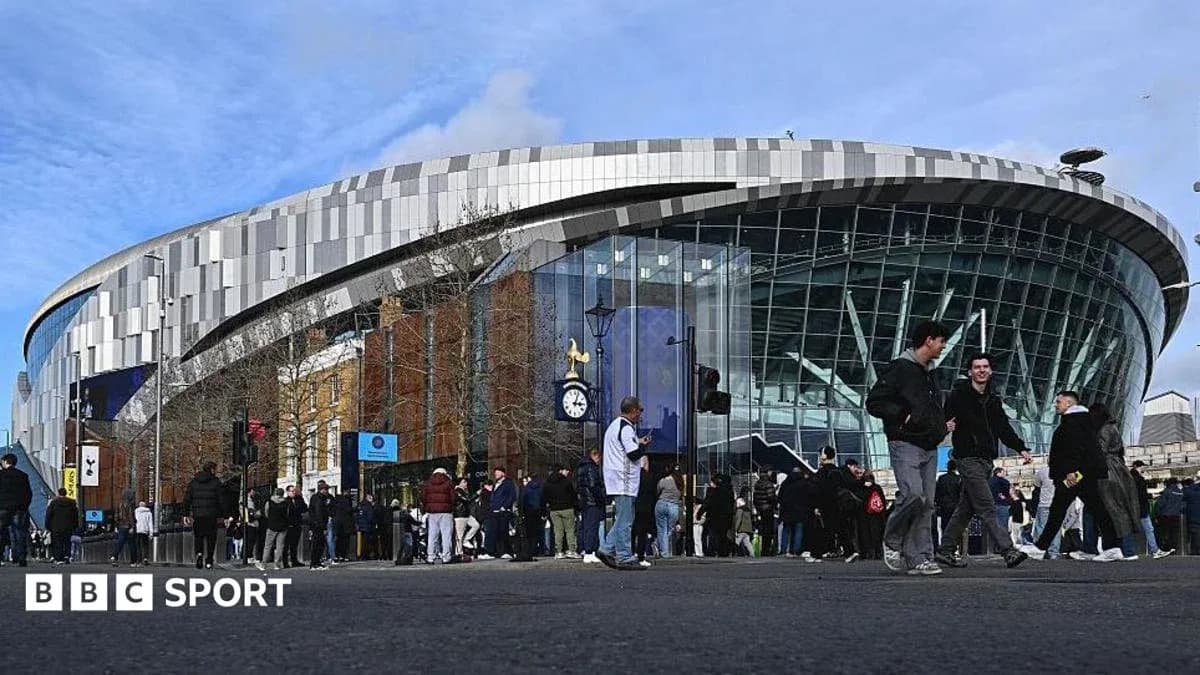
Tottenham’s season on the pitch was a slog. Another manager gone, key players dropping with injuries, and a final day spent glancing nervously at the table as one of the richest clubs in the world flirted with disaster. Seventeenth place, again. For a club of their financial weight, it was a brutal reality check.
Off the pitch, it’s a different sport entirely.
While the team stumbled, the balance sheet soared. Tottenham have turned their stadium into a machine, one that prints money while the football side struggles to justify its status.
The stadium that changed everything
When Spurs left White Hart Lane in 2017, their matchday income stood at £45m. By 2024-25, that figure had rocketed to £126m. The capacity hasn’t even doubled, yet the matchday revenue has climbed to two and a half times what it was.
Football finance expert Kieran Maguire sums it up neatly. Spurs haven’t just built a bigger ground; they’ve built a place people want to spend time in.
They’ve created a stadium that pulls fans in earlier and keeps them there longer. An extra 40 to 50 minutes inside the ground isn’t just about soaking up the atmosphere. It’s about spending — food, drink, merchandise. Every extra pint and every extra shirt feeds into that £126m.
And that’s only the football.
Tottenham’s ground can host up to 30 non-football events a year at full capacity. That calendar has become a showcase: major concerts, NFL games, boxing world title fights. Anthony Joshua’s heavyweight clash with Oleksandr Usyk in 2021 turned the stadium into a global stage. Since 2023, Saracens have been using it for their London derby against Harlequins in rugby union.
Those nights matter. They push commercial revenue from £73m in 2016-17 to a remarkable £277m in 2024-25. That kind of growth changes what a club can do.
It’s why Spurs can now go out and sign a player like Sandro Tonali for a club-record fee that could hit £100m. The stadium isn’t just a home; it’s a financial engine that funds ambition.
The new rules of the game
All of this drops into a Premier League landscape that is about to be reshaped by new financial regulations.
The old profitability and sustainability rules are being phased out. In their place comes a fresh framework built around two ideas: squad-cost ratio (SCR) and sustainability and systemic resilience (SSR).
Strip away the jargon and SCR is simple enough. It limits what a club can spend on its playing squad as a percentage of its overall revenue. Wages, transfer amortisation, agent fees — they all sit inside that cap.
One thing doesn’t: stadium infrastructure costs.
For Spurs, that’s crucial. Maguire points out that Tottenham’s infrastructure costs sit at around £70m a year, but those figures are excluded from the SCR calculation. Money poured into bricks, steel and concrete doesn’t eat into what they can spend on players.
That doesn’t mean stadiums are cheap. They aren’t. But Tottenham borrowed at what Maguire calls “spectacularly cheap” interest rates, and the upside has dwarfed the pain.
The lesson is stark. To be competitive at the very top, you need to grow matchday income. There are only two levers: hike prices, which risks a fan revolt, or increase capacity and shift more tickets, especially to non-season-ticket supporters who will spend heavily on the day.
Tottenham chose the second route. Others are now wrestling with the same question.
The cost of leaving home
Everton and West Ham have already made the leap to new stadiums. The numbers, long term, look attractive. The emotions often don’t.
Supporters don’t just lose an old stand or a familiar walk to the ground. They lose a piece of identity. That tension runs through every club currently weighing up whether to stay or go.
Renovation offers a cheaper option on paper, but it throws up a practical headache: where do you play while the builders move in? A ground share? Reduced capacity? A season or more in limbo?
The sheer cost of a new build sits front and centre, yet fans also fear something more intangible — that the soul of the club gets left behind with the old turnstiles.
At Manchester United, Sir Jim Ratcliffe has made his intentions clear. He wants a new stadium to act as the physical symbol of his era at the club. The vision is bold: a 100,000-capacity arena with a heavy focus on corporate space. The numbers suggest it would dwarf United’s current matchday take and feed directly into revenues and, by extension, the quality of the senior squad.
But ambition comes with a bill.
The initial plans unveiled in March 2025 included a vast canopy. Architecturally striking, certainly. Expensive, definitely. That overhang, and everything beneath it, would sit within United’s footprint and under their responsibility. The question lingers: is the visual statement worth the ongoing cost?
Club officials talk about off-site construction, sections built elsewhere and dropped into place to keep expenses down. That approach would almost certainly be cheaper than a full rebuild on the Old Trafford site itself.
Crucially, the proposed location — just down the road from the existing ground — neatly sidesteps the stadium-share problem. United could, in theory, move from one home straight into another without a nomadic spell.
The alternatives are awkward. Manchester City, Liverpool and Everton all have grounds that fall short on security grounds and capacity, and hiring any of them would be costly even if it were politically and logistically acceptable.
United’s plan is to avoid that conversation entirely.
Newcastle’s dilemma
If Tottenham’s stadium is a model and United’s project a statement, Newcastle’s situation is a warning.
This summer, Newcastle have effectively been forced to sell some of their best players just to stay within the financial rules. On Tyneside, the argument for a new purpose-built stadium isn’t romantic. It’s financial survival at the top end.
The numbers are stark. In 2024-25, Newcastle’s matchday income was £52m. Manchester United’s was £160m. Arsenal’s £154m. Spurs’ £126m.
That’s a gap of around £100m to the clubs they want to compete with season after season.
You can try to bridge that by being smarter in the market, by recruiting better, by coaching better. But at some point, the raw financial muscle matters. To close the gap, Newcastle either have to charge more per fan or find a way to offer something different.
And that’s where St James’ Park becomes a problem.
The famous old ground was not built with a corporate audience in mind. It can host concerts, as Newcastle supporter Charlotte Robson points out, but not on the same scale as Tottenham’s stadium or West Ham’s London Stadium.
Robson captures the emotional fault line. Moving might make sense on paper, but for many Newcastle fans, St James’ Park is not just a venue. It’s the club’s heartbeat. Uprooting that would “break a lot of hearts” if the move was significant or permanent.
So the club stands at a crossroads: cling to the old identity and accept financial limits, or chase a new future in a new home and risk tearing at the fabric of what Newcastle United means to its supporters.
Who really benefits?
Every club studying Tottenham’s rise in off-pitch income wants a slice of that success. Bigger matchday revenues. Bigger commercial deals. More flexibility under the new financial rules.
But not every club is Tottenham.
Maguire sounds a note of caution. Spurs benefit from London — a global city, a tourist magnet. They also draw on a worldwide fanbase that fills the stadium not just for league games but for those lucrative extra events.
Replicating that model in a city with a more localised support, and where any attempt to hike ticket prices meets fierce resistance, is far more complicated. The appetite for gleaming new arenas remains, yet the costs of building them have surged.
Clubs still push ahead. The lure of extra revenue, of competing with the game’s superpowers, is hard to resist.
Tottenham have shown what a modern stadium can do to a club’s finances. The question for everyone else is blunt: can they follow that path without losing too much of themselves along the way?
Related News

Carlos Alcaraz Calls for Change After Laver Cup Court Conditions

Alexander Zverev Secures Laver Cup Victory for Team Europe with Straight-Set Win Over Learner Tien

Novak Djokovic Shares Fitness Update Before China Open Return After US Open Upset

Shubman Gill's Captaincy Record Across All Formats: Tests, ODIs, T20Is, and IPL
Kuldeep Yadav Named Player of the Match Over Virat Kohli Despite Century in IND vs WI 1st ODI
India Advances to Asian Games 2026 Cricket Semi-Finals After Rain Washout Against Afghanistan