
Unai Emery's Europa League Triumph with Aston Villa

Where would you like your statue, Unai Emery?
Long before the fireworks cracked over Istanbul, Aston Villa’s supporters had already elevated their manager to near-mythical status. But this night, this Europa League final, changed the conversation. Emery did not just guide Villa to a European trophy; he claimed this competition for a record fifth time and finally placed silver beside the sweeping transformation he has engineered in Birmingham.
For those too young to remember Rotterdam in 1982, Istanbul in 2026 will be the story they tell.
Thomas Tuchel joked once that Uefa might as well rename the Europa League the Unai Emery trophy. It sounded like a quip. It now reads like a proposal.
Emery’s empire, crowned in Istanbul
The images will live a long time in Villa folklore. Emiliano Martínez, gloves still on, hauling Emery on his back for a piggyback as the celebrations began. The entire Villa squad forming a guard of honour for Freiburg – brave, organised, but ultimately outgunned – before turning their focus on their coach, bouncing him in the air as he stepped towards the podium planted in the middle of the pitch.
John McGinn, the heartbeat and voice of this side, waited until last to collect his medal from Uefa president Aleksander Ceferin. Then came the handle-less trophy, hoisted high under the Istanbul lights. Within seconds McGinn was off, sprinting towards the bank of delirious claret and blue behind the goal, We Are the Champions booming out as he thrust the freshly engraved silverware towards them.
One by one, the players took their turn with the prize. Then the owners. Nassef Sawiris, claret and blue scarf draped proudly, and Wes Edens both raised the trophy, knowing exactly what this meant to a club that has waited 30 years for any kind of silverware.
High in the VIP section, the Prince of Wales, Villa fan and self-confessed lurker on club forums, did what every supporter in the stadium wanted to do. He pulled out his phone and filmed the moment. Later, he posted his congratulations to players, staff and everyone connected with the club. On this night, royalty blended in with the rest of the Villa end.
Echoes of 1982, new heroes in white
Once again Villa wore white, once again the opposition were Germans in red. The symmetry with that famous European Cup win was impossible to ignore. But this was no nostalgia act. This was a modern, aggressive Emery team, with Youri Tielemans, Emiliano Buendía and Morgan Rogers writing their own chapter.
All three goals were clean, sharp and ruthless. Tielemans and Buendía struck within seven minutes of each other at the end of the first half to seize control. Rogers added a third near the hour to turn a final into a procession.
The moment Buendía curled a left-foot shot into the top corner with the final kick of the first half, Villa’s night took on a different hue. Freiburg had competed, had nibbled and probed, but that strike felt like a door slamming shut. When Rogers’s clever movement at the near post was rewarded with the third, the contest was gone. Try telling that to the Villa fans who refused to stop singing.
Villa’s official allocation stood at 10,758. At least twice that number found their way to Istanbul. Taksim Square became a temporary outpost of Birmingham, claret and blue shirts spilling out of bars and cafés, supporters determined to savour their first European final in 44 years.
For Freiburg, this was the biggest night in a 121-year history, a landmark in a season they will celebrate back in southwest Germany regardless of the scoreline. They arrived without a single major trophy. Villa arrived with the Champions League already secured for next season and the weight of expectation on their shoulders. They wore it lightly.
Nerves, déjà vu and the breakthrough
Nine members of the 1982 European Cup-winning side were in attendance, a living link between eras. Nigel Spink, the goalkeeper who famously came on after nine minutes in Rotterdam when Jimmy Rimmer was injured, might have felt a flicker of déjà vu.
Martínez needed treatment in the warm-up, goalkeeper coach Javi García strapping one of his fingers. Any anxiety in the Villa end was short-lived. The Argentina No 1 charged out for kick-off, punching the air towards the Villa fans behind his goal, and the tension melted.
Still, the first half was not without its alarms. Before Tielemans’s opener, Villa were the better side but not fully settled. Matty Cash’s high challenge on Vincenzo Grifo brought a booking and a sharp intake of breath when replays showed studs raking the midfielder’s shin after he won the ball. Johan Manzambi buzzed with intent, while Nicolas Höfler dragged wide from the edge of the box after Pau Torres’s headed clearance from a free-kick fell his way.
The pressure eventually snapped in Villa’s favour on 41 minutes. A short-corner routine worked space on the left, Rogers drifting free to receive and hang a beautifully weighted cross towards the edge of the area. The ball dropped out of the Istanbul sky almost in slow motion. Tielemans never took his eyes off it, set himself and lashed a pure volley past the Freiburg goalkeeper. One swing of his laces, one eruption behind the goal.
Villa smelled blood. Just before the interval, McGinn slipped a pass into Buendía on the edge of the box. The Argentine took one touch with his right to bring it under control, then, with his next, whipped a vicious left-foot shot into the top corner. Final kick of the half. Psychological dagger. Freiburg trudged off staring at a two-goal deficit against a team that rarely loosens its grip.
Rogers seals it, the party explodes
Any hope of a German response after the break flickered only briefly. Villa’s structure held, their intensity never dipped. And when the third came, it was straight from Emery’s playbook.
Lucas Digne spotted Buendía free down the left and slid him in. The midfielder squared up Lukas Kübler, feinted, then whipped a teasing cross towards the near post. Rogers and Ollie Watkins crossed paths in a blur of movement; Rogers darted into the space Watkins vacated and stabbed the ball home. Smart, simple, devastating. 3-0, and the claret and blue end knew. This was their night.
Amadou Onana, thrown on midway through the second half, nearly added a fourth, his header thudding against the post. Buendía, chasing a brace, smashed into the side netting when another goal felt almost inevitable. On the touchline, Emery bounced and barked, the architect still adjusting the blueprint even as the building stood complete.
For Freiburg, the dream stopped here. For Villa, a long wait ended. No trophy since the League Cup in 1996, no European silver since 1982. Now a Europa League title, Champions League football to come, and a manager who has turned a sleeping giant into a snarling, European force again.
The final whistle sounded and Istanbul belonged to Villa. The songs of 1982 rolled into new anthems for 2026. Emery stood in the middle of it all, drenched in champagne, serenaded by thousands who had crossed continents for this.
The statue question can wait. The Emery era, though, is already carved into Aston Villa’s history. The only real issue now is how far this story can go.
Related News
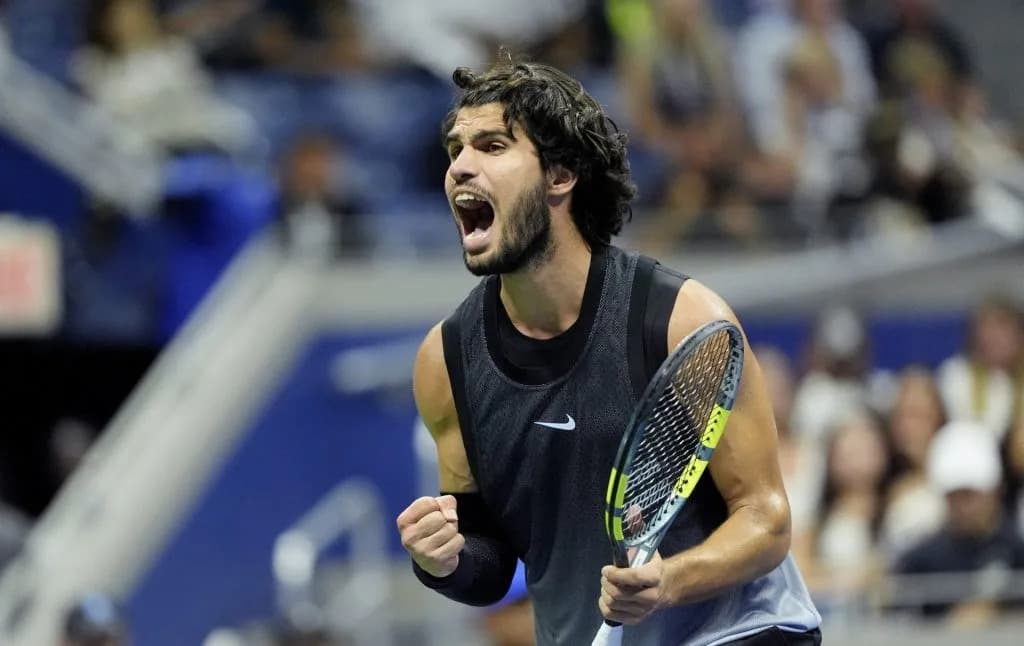
Carlos Alcaraz Urges an End to Matches Ending in the Early Hours
Carlos Alcaraz Criticizes Late US Open Finish After 3:30 a.m. Match
Jannik Sinner Set for ATP 500 Return in Beijing with Novak Djokovic Also Competing
Meet Iva Jovic: The American Tennis Prospect Making Waves
Flavio Cobolli Shares Insights on Practice Session with Jannik Sinner Ahead of Comeback

Till vs Romero: Fight Details, Undercard, and Viewing Info for This Weekend