
Aston Villa Crowned Europa League Champions Again
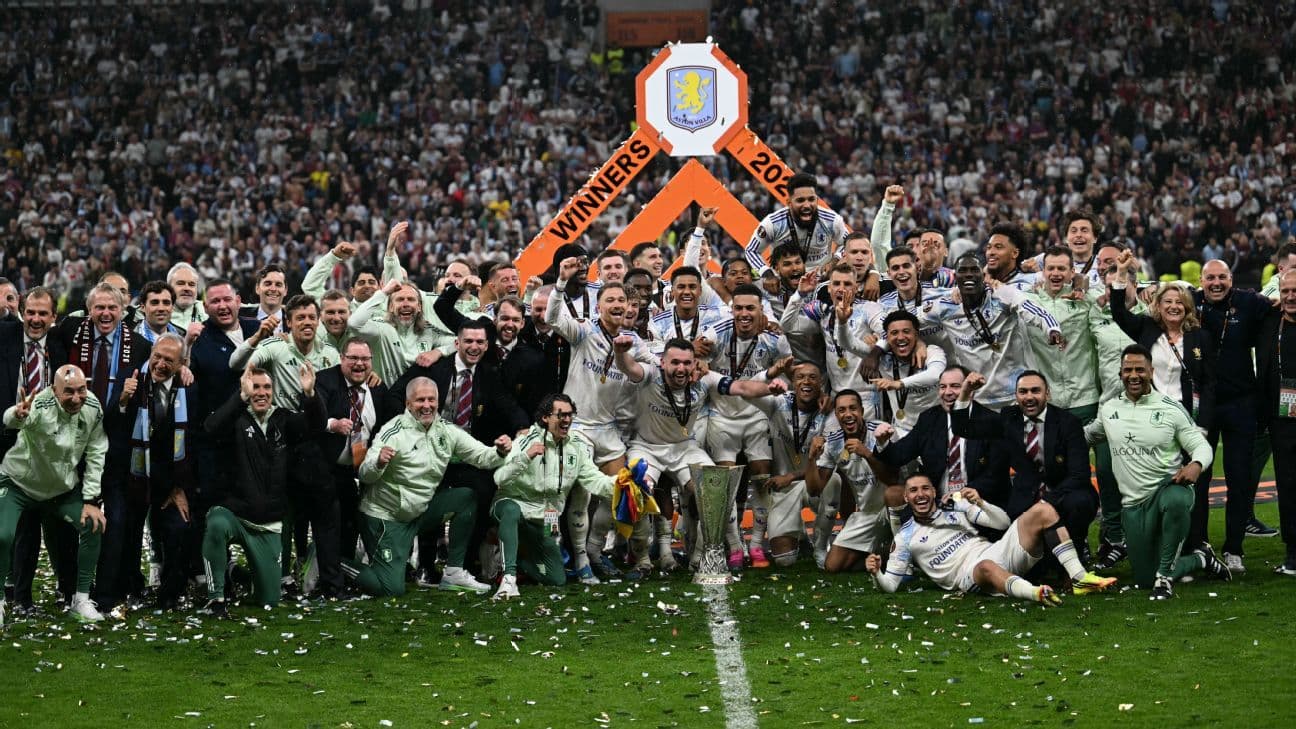
Aston Villa’s long road back to the summit of Europe ended in Istanbul, 44 years after Bayern Munich and Rotterdam. Different era, different competition, same feeling: Aston Villa, champions of a continent again, with Unai Emery standing calmly at the centre of it all.
The 54-year-old has turned the Europa League into his personal playground. Five titles now, four different clubs. Sevilla, Villarreal, Sevilla again, and now a Villa side that once stared down relegation and chaos. He does not call himself the king of this tournament. He does not need to. Nights like this do the talking.
From Preston to the Bosphorus
When John McGinn hoisted the trophy into the Istanbul sky, it was more than a captain’s ritual. It was the full stop on a journey that has run from midweek slogs at Preston to a European final on the banks of the Bosphorus.
McGinn, the first Scotsman to captain a team in a major European final since Barry Ferguson in 2008, has been there for almost every step of Villa’s resurrection. He helped drag the club out of the Championship in 2019 with that playoff win over Derby County. Seven years on, he stood in claret and blue, the Europa League in his hands, the image that will live on every time Villa’s modern story is told.
Around him, the core of that revival. Tyrone Mings. Those who came in the year after promotion: Ezri Konsa, Emi Martínez, Ollie Watkins, Matty Cash. Players who helped Villa flirt with something bigger but never quite land it — Conference League semifinalists in 2024, Champions League quarterfinalists last season, halted by eventual winners Paris Saint-Germain.
In Istanbul, there was no hesitation, no stage fright. Just a team that had learned from every near-miss and finally delivered the statement performance the club has craved.
Emery’s night, Emery’s competition
Thomas Tuchel once joked that UEFA might as well rename this trophy after Unai Emery. It no longer feels like much of a joke.
With this win, Emery has matched Carlo Ancelotti’s tally of five titles in a major European competition, though in Emery’s case every one of them has come in the Europa League. No one else has lifted a major UEFA trophy with three different clubs. Sevilla three times, Villarreal once, and now Aston Villa. It is a body of work that moves him beyond the old caricatures and into the realm of modern greats.
He played it down in the buildup. His past finals, he said, would have no bearing on this one. On the pitch, his fingerprints were everywhere. Villa arrived in Istanbul having failed to win any of their first four matches this season, having waited until the end of September for their first goal. From that disjointed start, Emery has driven them into the Champions League places and now to a major European crown.
The plan against Freiburg was brutal in its clarity. Skip the German press, hit Watkins early, drag the game into areas Villa could dominate physically and technically. It was not pretty at first. It was not meant to be.
Tielemans lights the fuse
For 40 minutes, the final refused to settle. Fouls broke up any rhythm. Freiburg ran, harried, and covered more ground — 102.9km to Villa’s 100.4km — but never quite found a way to hurt Emery’s side. Villa looked disjointed, almost subdued.
Then Austin MacPhee’s work came to life.
Lucas Digne rolled a short corner into a pocket of space, catching Freiburg asleep. Morgan Rogers had the time to lift his head, weigh his options, and float a pass back towards the edge of the area. There, Youri Tielemans arrived with perfect timing and a thudding volley that exploded past Noah Atubolu.
One swing of the Belgian’s right foot, and the final changed shape. The pressure that had simmered suddenly boiled over. Freiburg, already struggling to create, now had to chase a game Emery had set up for exactly this scenario.
Villa have lived off the spectacular all season, outscoring their underlying numbers with goals that live longer in the memory than on the chalkboard. Tielemans’ strike fit the pattern. The next one underlined it.
Buendía’s masterpiece, Letexier’s whistle
Just as Freiburg tried to steady themselves, Emi Buendía cut them apart.
From the edge of the box, on his weaker left foot, he wrapped a vicious shot around Atubolu’s desperate reach and into the top corner. The ball bent away, kissed the side netting, and for a moment time seemed to stop as the claret and blue end erupted.
François Letexier took one look, pointed to the centre circle, and almost immediately blew for half-time. There was no better note on which to close the opening 45 minutes. Villa walked off two goals up, Freiburg stunned, the final already slipping away.
History offered little hope for the Germans. The last three Europa League finals in which a team led by two at the break have all ended 3-0: Atlético Madrid against Athletic Club in 2012, Atalanta over Bayer Leverkusen in 2024, and now this.
Rogers finishes the job
If Tielemans and Buendía supplied the artistry, Morgan Rogers delivered the inevitable.
His goal lacked the wild beauty of the first two, but it carried its own weight. At 23 years and 298 days, he became the youngest Englishman to score in a major UEFA final since Steven Gerrard in 2001. Another line in the record books, another sign that this Villa side is not simply a one-off story of redemption but a platform for what might come next.
Rogers’ finish was sharp, clinical, and it ended any faint hope of a Freiburg comeback. The German side had run further, chased harder, but they could not live with Villa’s quality when it mattered.
On the touchline, Emery barely flinched. He has seen too many finals to be swept away by the moment. Inside, he will have known: this was his competition, his script, his trophy again.
Villa back among Europe’s winners
By the final whistle, the scale of what Villa had done began to settle in. A 30-year wait for a major trophy ended in emphatic style. A 44-year gap between European finals, the third-longest of any club after Manchester City and West Ham United, bridged in one ruthless night.
Jadon Sancho added his own slice of history, becoming the first player to appear in the final of three different major European competitions in three consecutive seasons — Champions League, Conference League, now Europa League. Around him, the claret and blue end sang themselves hoarse, 11,000 strong, with one notable supporter among them: Prince William, a future king watching a club that has just crowned its own.
English clubs now have back-to-back Europa League titles for the first time since the early 1970s, when Spurs and Liverpool took the first two editions of the UEFA Cup. The game moves in cycles. Power shifts, money flows, fashions change. Some nights, though, feel like markers.
This was one of them.
A club that fell into the Championship in 2016, that flirted with disaster, now stands with a European trophy in its hands and a coach who owns this competition like no other. The old names of Villa folklore — Paul McGrath, Peter Withe and the heroes of ’82 — have new company.
The question now is not whether this was a one-off. It is what this team, and this manager, do next with a door to Europe finally kicked wide open.
Related News
Carlos Alcaraz Urges an End to Matches Ending in the Early Hours
Carlos Alcaraz Criticizes Late US Open Finish After 3:30 a.m. Match
Jannik Sinner Set for ATP 500 Return in Beijing with Novak Djokovic Also Competing
Meet Iva Jovic: The American Tennis Prospect Making Waves
Flavio Cobolli Shares Insights on Practice Session with Jannik Sinner Ahead of Comeback

Till vs Romero: Fight Details, Undercard, and Viewing Info for This Weekend