
USA vs Belgium: Tactical Analysis of the Round of 16 Defeat
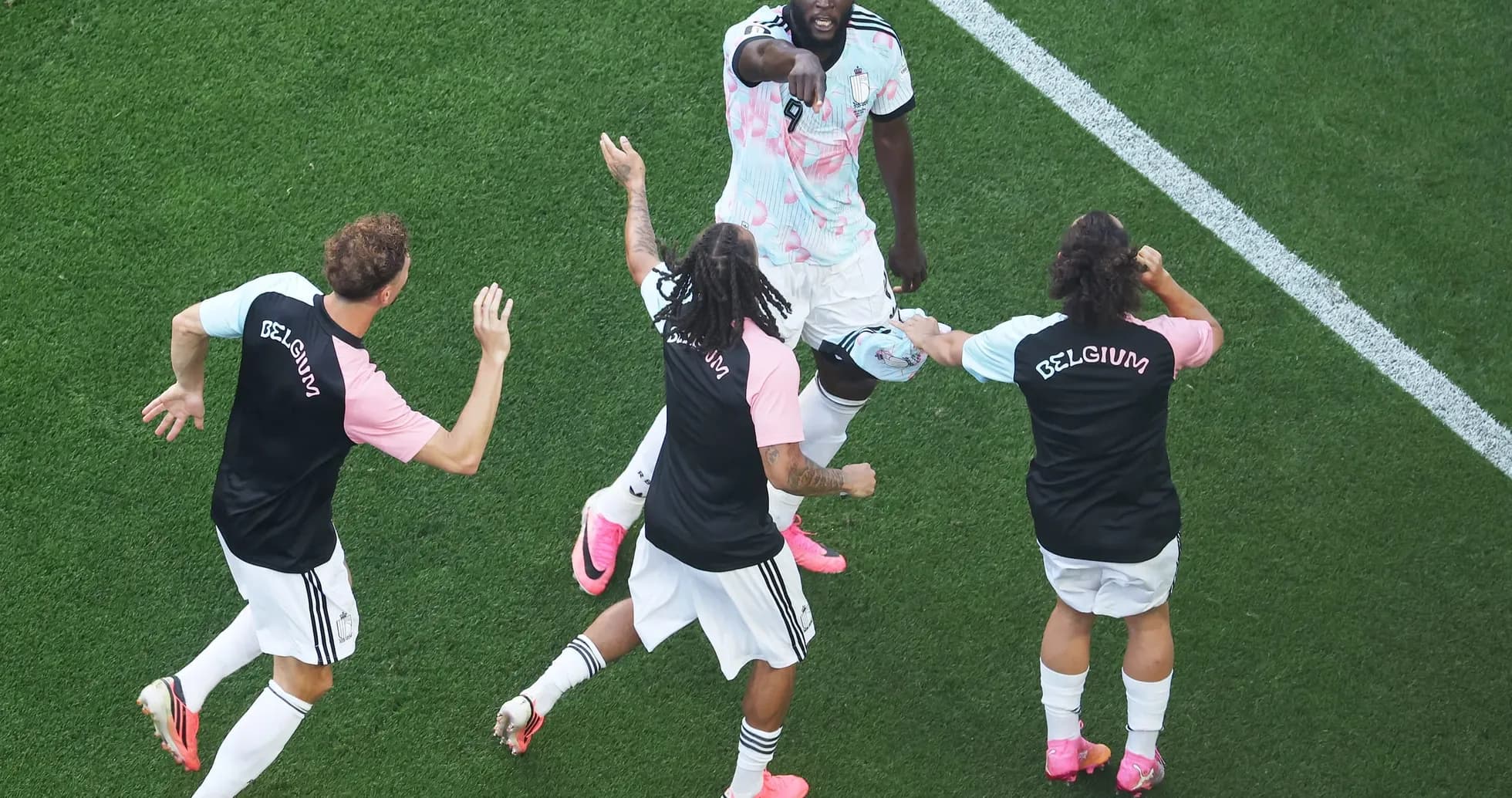
USA’s Round of 16 defeat to Belgium at Lumen Field was decided less by possession than by clarity of structure and penalty-box quality. Mauricio Pochettino’s 4-3-3 had the ball (56% possession, 527 passes at 87% accuracy) but Rudi Garcia’s 4-2-3-1 controlled the key spaces and transitions, turning 44% possession and 410 passes (81% accuracy) into a 4-1 scoreline and a dominant 2.15 xG to 0.67 advantage.
Structurally, USA’s 4-3-3 was built on a high technical base but lacked vertical threat and penalty-box presence. Tyler Adams anchored as the single pivot, with Weston McKennie and Malik Tillman as advanced interiors ahead of a back four of Alexander Freeman, Chris Richards, Tim Ream and Antonee Robinson. Christian Pulišić and Sergiño Dest operated as wide forwards either side of Folarin Balogun, but the shot profile tells the story: only 7 total shots, just 2 on goal, despite 5 efforts from inside the box. The U.S. moved the ball reliably through midfield, yet Belgium’s compact 4-2-3-1 funneled attacks into crowded central channels, forcing late or blocked final actions and denying clean looks.
Belgium’s 4-2-3-1 was tailored to exploit USA’s structural weaknesses. Nicolas Raskin and Amadou Onana started as a double pivot, screening the back four and giving the front four of Dodi Lukebakio, Youri Tielemans, Leandro Trossard and Charles De Ketelaere license to attack the half-spaces. Belgium produced 15 total shots, 10 from inside the box and 7 on target, a far more aggressive and penalty-area-centric profile. The repeated pattern was clear: win the ball in mid-block, find the advanced midfielder between USA’s lines, then quickly access De Ketelaere or the wide playmaker running beyond the American back line.
Substitution Patterns
The substitution pattern further underlined the tactical direction of both sides. At 21', Rudi Garcia reshaped his midfield by bringing on Hans Vanaken (IN) for Amadou Onana (OUT). This shifted Belgium from a more destructive double pivot to a creative controller alongside Raskin. Vanaken’s arrival sharpened Belgium’s passing between the lines and later proved decisive with his goal and assist involvement, aligning with the team’s 2.15 xG output.
USA’s first major adjustment came at 46', when Giovanni Reyna (IN) replaced Sergiño Dest (OUT). This moved the U.S. from a more direct, dribble-oriented right side to a playmaking profile, seeking better combination play around Belgium’s box. However, while it increased technical quality in the right half-space, it did not materially change the shot volume or danger: the U.S. still finished with only 2 shots on target, and Belgium’s defensive block, anchored by Nathan Ngoy and Brandon Mechele, remained largely unbroken.
At 59', Sebastian Berhalter (IN) came on for Christian Pulisic (OUT), a change that traded one of USA’s few individual difference-makers for an extra midfielder. This hinted at a desire for more control and stability rather than all-out attacking risk, but with Belgium already ahead and so efficient in transition, it reduced USA’s capacity to threaten in behind. Later, Ricardo Pepi (IN) for Tyler Adams (OUT) at 72' was a more aggressive move, pushing an extra forward into the front line, yet by then Belgium’s structure and scoreline advantage allowed them to sit deeper and manage space, limiting the impact of the added striker.
Belgium’s own attacking reinforcements were ruthless. At 67', Jérémy Doku (IN) replaced Dodi Lukebakio (OUT), and Romelu Lukaku (IN) came on for Charles De Ketelaere (OUT). This double change injected fresh pace and a pure penalty-box reference point into an attack that was already generating high-quality chances. Later, Alexis Saelemaekers (IN) for Leandro Trossard (OUT) and Axel Witsel (IN) for Nicolas Raskin (OUT) at 89' consolidated the structure: Saelemaekers added defensive work rate on the flank, while Witsel provided late-game control and positional discipline in midfield.
Goalkeeping Performance
In goal, Matthew Freese (USA) and Thibaut Courtois (Belgium) experienced very different workloads relative to outcome. Freese (USA) made 3 saves, but with USA conceding 7 shots on goal and 4 actual goals, Belgium’s finishing and chance quality overwhelmed him. The goals prevented metric of -0.69 for USA underlines that the American goalkeeper underperformed slightly relative to the xG of the shots faced, amplifying the scoreboard damage. Courtois (Belgium), by contrast, was asked to make just 1 save all match, a testament to how effectively Belgium’s block limited USA’s final-third threat. Belgium also registered 4 blocked shots, further evidence of their compactness and willingness to protect the box.
Discipline and Duels
Discipline and duels subtly favored Belgium’s game plan. USA committed 11 fouls to Belgium’s 9 and collected both yellow cards of the match, with Weston McKennie and Malik Tillman booked for “Tripping”. This reflects USA’s need to halt Belgian counters and late-arriving runners, especially once Vanaken and later Lukaku and Doku were on the pitch. Belgium, by contrast, maintained control of their defensive actions without crossing disciplinary lines, enabling them to keep full numerical strength behind the ball and sustain their transition threat throughout.
Statistically, the contrast between volume of possession and quality of possession is stark. USA’s 56% ball share and 527 passes, with 458 accurate (87%), point to a side comfortable in structured build-up but lacking incision. Belgium’s 410 passes, 333 accurate (81%), were fewer but more vertical and purposeful, reflected in the 15–7 shot advantage and the heavy skew in shots inside the box (10–5). With xG at 2.15 to 0.67 in Belgium’s favor and both teams posting identical -0.69 goals prevented values, the 4-1 final score aligns with the underlying chance distribution and finishing efficiency.
Ultimately, this Round of 16 tie was a tactical lesson in how a well-drilled mid-block, direct verticality, and targeted substitutions can outweigh superior possession. Belgium’s 4-2-3-1, reshaped in-game into a more creative and then more conservative variant, consistently manipulated USA’s 4-3-3 structure, turned turnovers into high-value chances, and protected its own box with discipline and compactness. USA’s technical control never translated into sustained penalty-box pressure, and against opposition this efficient, that strategic imbalance proved decisive.
Related News
Brazil's First Post-World Cup Friendly: What Should the Lineup Be?
Estevao Opens Up on World Cup Heartbreak and His Unexpected Return to Brazil Under Ancelotti

Thomas Tuchel Shares Unusual Regret After England's 10-Man World Cup Victory Over Mexico

South Korea Names Robert Moreno as Interim Coach After World Cup Exit

Jude Bellingham Returns to Form at Real Madrid Following World Cup Success

Chloe Kelly, Beth Mead and 13 Lionesses Target Big WSL Seasons Ahead of England's 2027 World Cup Campaign