
USA Dominates Bosnia & Herzegovina 2–0 in World Cup Round of 32
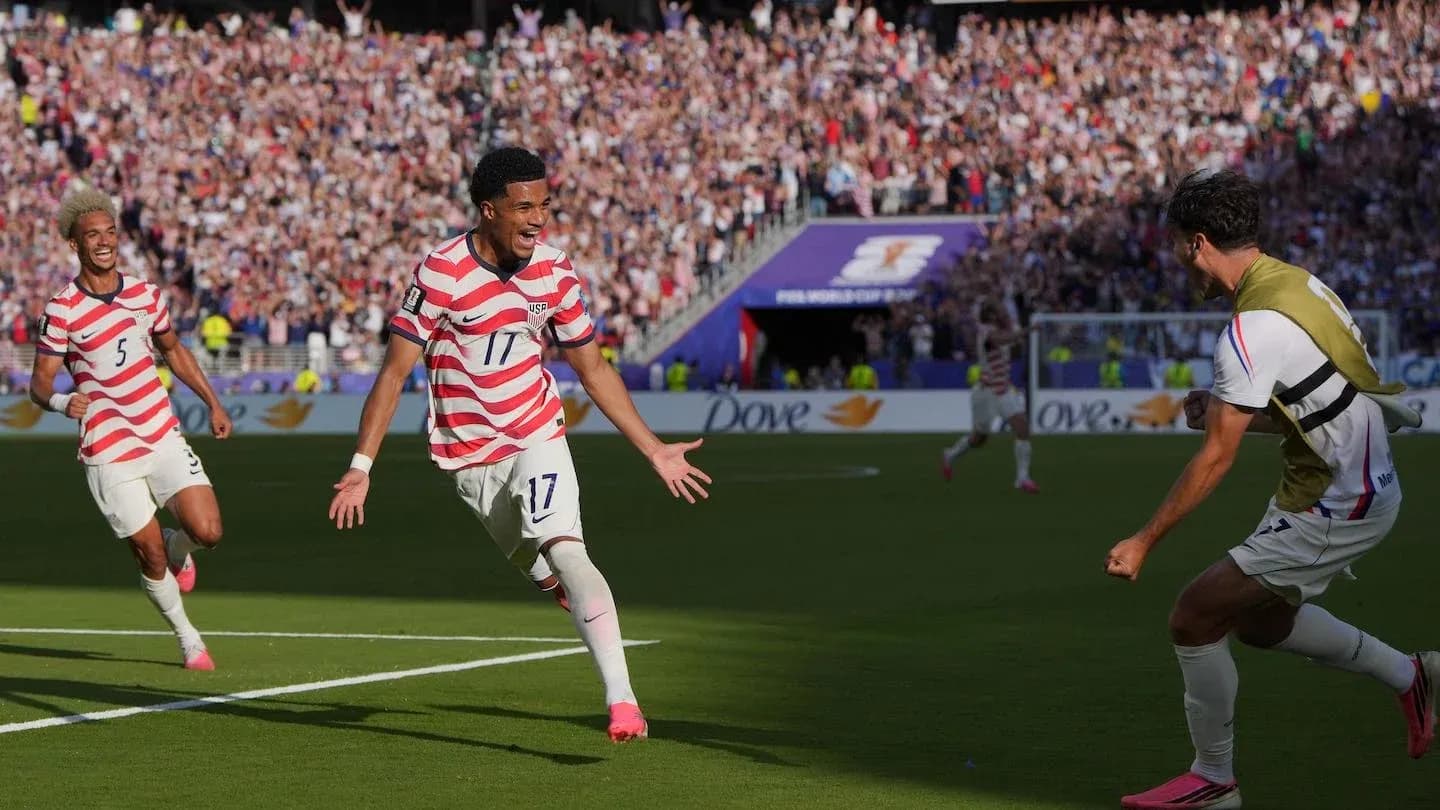
Levi’s Stadium felt less like neutral ground and more like a sprawling home base for USA as they marched into this World Cup Round of 32 tie and walked out with a controlled 2–0 win over Bosnia & Herzegovina. The scoreline reflected the broader arc of their tournament so far: direct, front-foot football layered on top of a quietly improving defensive structure.
I. The Big Picture – DNA of Two Campaigns
Heading into this game, USA arrived as group winners from Group D, sitting 1st with 6 points and a goal difference of 4, built on 8 goals scored and 4 conceded across 3 matches. Overall this campaign they had played 4 fixtures, winning 3 and losing just 1. The pattern was clear: at home venues they had been ruthless, with 3 home matches, 3 wins, and 8 home goals for against only 1 conceded. On their travels they had been more fragile, losing their single away match 3–2. That split was underlined by the numbers: at home they averaged 2.7 goals scored and 0.3 conceded; away, 2.0 scored but 3.0 conceded.
Bosnia & Herzegovina came in with a more volatile profile. In Group B they finished 3rd with 4 points and a goal difference of -1, scoring 5 and conceding 6 across 3 matches. Overall they had played 4 fixtures: 1 win, 1 draw, 2 defeats. At home they had been explosive but exposed, scoring 3 and conceding 1 in a single home match, an average of 3.0 for and 1.0 against. Away, though, they struggled: 3 away fixtures yielded just 2 goals for and 7 against, an away average of 0.7 scored and 2.3 conceded. That away fragility was always going to be tested by USA’s high-tempo, front-foot style.
On the tactical board, Mauricio Pochettino doubled down on USA’s identity, naming a 4-3-3 that looked designed to pin Bosnia back. M. Freese started in goal behind a back four of S. Dest, C. Richards, T. Ream and A. Robinson. In midfield, W. McKennie, T. Adams and M. Tillman formed a dynamic trio, with F. Balogun flanked by C. Pulisic and Dest pushed high on the opposite flank.
Sergej Barbarez responded with a 5-3-2, clearly conscious of his team’s away numbers. N. Vasilj was protected by a line of five: A. Dedic, N. Katic, T. Muharemovic, S. Radeljic and S. Kolasinac. In front of them, A. Gigovic, I. Sunjic and K. Alajbegovic tried to compress central zones, leaving E. Dzeko and E. Demirovic as outlets to relieve pressure and threaten in transition.
II. Tactical Voids – Absences, Discipline, and Fault Lines
USA’s squad sheet carried two quiet but meaningful absences: M. McKenzie (bruised foot) and C. Roldan (muscle bruise) were both ruled out. Neither is a nailed-on starter, but their absence narrowed Pochettino’s flexibility, particularly in rotating defensive profiles and adding late-game control in midfield.
In terms of season-long discipline, USA’s card pattern hinted at where their emotional edge tends to fray. Across the campaign, 40.00% of their yellow cards had come between 46–60 minutes, with another 20.00% in the 76–90 window and 20.00% in added time between 91–105. They had also seen a red card in the 61–75 range. Bosnia & Herzegovina, by contrast, loaded their bookings late: 37.50% of their yellow cards arrived between 76–90 minutes, and their single red card this season had also come in that same late window.
Those numbers mattered because USA’s attacking rhythm often intensifies after half-time, while Bosnia’s defensive focus tends to erode in the final quarter of the match. The late-game surge in Bosnian yellow cards (37.50% between 76–90) aligned ominously with the period when chasing a result becomes unavoidable.
III. Key Matchups – Hunter vs Shield, Engine Room vs Enforcer
The headline duel was always going to be F. Balogun against Bosnia’s back three, and especially T. Muharemovic. Balogun came into the Round of 32 as USA’s cutting edge: 3 goals in 3 appearances, 8 shots with 4 on target, and a rating of 7.23. He is not just a finisher but a persistent irritant, drawing 7 fouls and engaging in 27 duels, winning 10. His card record is a double-edged sword: 1 yellow and 1 red this tournament underline how aggressively he plays on the margin.
Muharemovic, meanwhile, is one of Bosnia’s defensive anchors and a key figure in their red-card ledger. He had played 260 minutes across 3 appearances, winning 16 of 24 duels and blocking 1 shot, with 8 interceptions and an 84% passing accuracy. But he also carried 5 fouls committed and 1 red card this campaign. The matchup was clear: Balogun’s constant movement and willingness to run at the last line against a defender who mixes anticipation with risk.
Behind them, the engine-room clash was just as decisive. T. Adams and W. McKennie formed USA’s control center, tasked with screening transitions and recycling possession quickly into the front three. Bosnia leaned on I. Sunjic and A. Gigovic to disrupt that flow, compressing the middle third and trying to force USA wide into less dangerous crossing zones where their back five could dominate aerially.
Yet the structural realities of the season tilted this battle toward USA. Overall, USA had failed to score in 0 matches, while Bosnia had yet to keep a clean sheet in any fixture, home or away. Bosnia’s away defensive record – 7 goals conceded on their travels – suggested that once USA established territory, the dam would eventually crack.
IV. Statistical Prognosis – Why 2–0 Felt Inevitable
Even without explicit xG numbers, the season data pointed toward a USA win by multiple goals. Overall they averaged 2.5 goals scored per match and just 1.0 conceded. Bosnia, by contrast, averaged 1.3 scored and 2.0 conceded overall, with their away defensive average of 2.3 goals against standing out as a glaring vulnerability.
Layer onto that the structural choices: a Bosnia side in a 5-3-2 that had only used that shape once before this match, against a USA team comfortable in a 4-3-3 they had already deployed twice this campaign. USA’s biggest home win, a 4–1, and Bosnia’s heaviest away defeat, 4–1, told the same story from opposite ends.
The disciplinary trends added a final twist. With Bosnia’s late-game card spike and USA’s habit of pushing the tempo after the break, the likelihood of USA finding space and composure in the final third grew as legs tired and concentration waned. In that context, a 2–0 full-time scoreline – building on a 1–0 half-time lead – matched the underlying balance of power: USA’s attacking ceiling and defensive tightening against a Bosnia & Herzegovina side still searching for an away identity at this level.
Related News
Brazil's First Post-World Cup Friendly: What Should the Lineup Be?
Harry Kane Calls England’s World Cup Exit to Argentina His Deepest International Pain
Estevao Opens Up on World Cup Heartbreak and His Unexpected Return to Brazil Under Ancelotti
Thomas Tuchel Shares Unusual Regret After England's 10-Man World Cup Victory Over Mexico

South Korea Names Robert Moreno as Interim Coach After World Cup Exit

Jude Bellingham Returns to Form at Real Madrid Following World Cup Success