
West Ham's Relegation and Spurs' Narrow Survival
Tottenham breathe again. West Ham drop with a thud that’s been echoing for years.
On the final day, Spurs did what everyone expected them to do against Everton, clinging to their Premier League status with something closer to relief than celebration. West Ham, already circling the trapdoor in all but mathematics, won their match but lost their place in the division – the culmination of years of missteps, muddled thinking and missed opportunities.
This wasn’t a single-season collapse. It was a slow, messy unravelling.
West Ham: Relegation by a thousand cuts
For many West Ham supporters, the post-mortem starts at the very top. David Sullivan’s ownership has never lacked for noise or spending, but it has lacked something more important: a coherent plan. Money has gone out the door in large quantities; value has rarely walked in the other way. Recruitment has felt scattergun, short-term, and at odds with any serious football strategy.
If relegation finally forces Sullivan to follow Karren Brady out of the club, a sizeable section of the fanbase will see that as a brutal but acceptable trade-off.
On the pitch, the season began in chaos. Under Graham Potter, West Ham were fragile, disorganised and repeatedly punished from set pieces. Corners felt like penalties. Selection calls – Max Kilman’s continued inclusion among them – grated with a support that watched their side concede from almost every dead ball that came their way. The rot set in early, and it ran deep.
Nuno Espírito Santo arrived in September and, for months, nothing really changed. West Ham drifted. Defeats to Wolves and Nottingham Forest left them looking doomed, seven points adrift and running out of road. Only from mid-January did the picture brighten, the football improve and the form resemble that of a mid-table team. By then, the damage was close to irreparable. The revival came, but it came late.
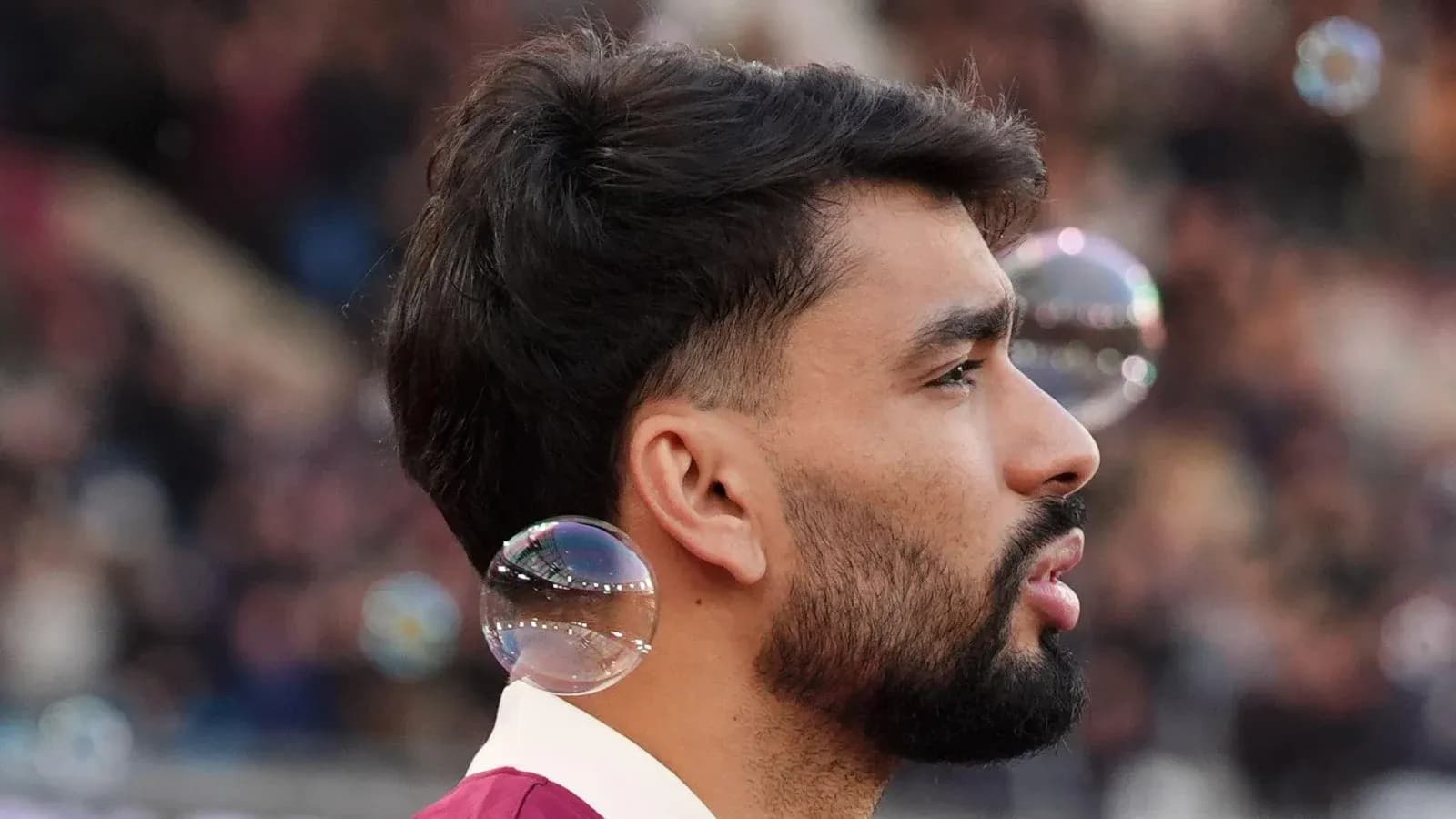
Lucas Paquetá’s departure marked another turning point. With the Brazilian gone and his FA investigation no longer hanging over the dressing room, performances sharpened and morale lifted. The contrast was stark enough for some to question his commitment and work rate during the darkest weeks. Whatever the full truth, West Ham looked lighter without him.
Around it all loomed the London Stadium. Financially, the move from Upton Park made sense on a spreadsheet. Emotionally and atmospherically, it has never fully worked. The sheer scale, the gaps between tiers, the sense of distance – all of it has too often swallowed noise and killed momentum. The old ground has been romanticised to the point of myth, but the new one still doesn’t feel like a fortress. It feels, at times, like a reminder of what’s been lost.
Even the wider league conspired to expose West Ham’s complacency. Leeds and Sunderland, newly promoted and fearless, tore up the script that mid-table clubs like West Ham had quietly written for themselves. Coasting in 12th to 17th is harder when the new arrivals are not just surviving but thriving.
The supporters haven’t escaped self-critique either. When West Ham play well, the fanbase can be thunderously supportive. When they don’t, the mood curdles fast. Booing the team off at half-time on the final day, even in the circumstances, summed up a toxicity that has seeped into every corner of the club. Everyone feels it. Everyone contributes to it.
Aston Villa’s limp display against Spurs earlier in the run-in still rankles in East London, another brick in the wall of grievance, while VAR inevitably takes its place on the charge sheet. It didn’t relegate West Ham, but it sits there, a symbol of a sport that feels more remote and more infuriating by the week.
So West Ham fall. And yet, among the anger and resignation, there’s a strange flicker of anticipation. Trips to Lincoln. Millwall at home. Forty-four other Championship fixtures that promise jeopardy, variety and, perhaps, a chance to reset. Relegation is never ideal. But if it clears out a broken hierarchy and offers a route back with a cleaner conscience, many will take that trade.
Spurs: survival, scars and a black plaque
Across north London, Tottenham’s mood is very different but no less complicated. This is not a club dancing in the streets. This is a club exhaling.
The fixture computer did them a favour, handing Everton at home on the final day, and Spurs took the escape route. The sense around the club is not triumph, but survival. Barely. A season that flirted with catastrophe has ended with a pulse and a warning.
One Spurs fan reached for Andrea Pirlo’s memory of AC Milan’s collapse in Istanbul in 2005, when he argued that the club should install a black plaque in the trophy room as a permanent reminder of that night. Tottenham, he suggested, should do the same: a sombre marker in a largely empty room, commemorating a campaign that nearly dragged them into the Championship.
This was the year when the jokes about “Spursy” stopped being banter and started to feel like an obituary draft. Injuries shredded the squad. Negativity swirled. VAR calls went against them. Penalties never seemed to arrive. Rivals openly longed for their demise, some even hoping their own teams would lose if it meant dragging Spurs down with West Ham.
And yet they stayed up.
Roberto De Zerbi, parachuted into a fractured dressing room and a club in freefall, stitched together a rescue act that owed more to grit than glamour. He inherited a bleak mood and a broken squad and still found a way to haul them clear. Since his arrival, he has built something resembling a foundation – not a finished product, but a platform to build on if the club has the nerve and clarity to back him.
Back in mid-April, after defeat to Sunderland and the loss of Cristian Romero for the season, it felt over. The schadenfreude was loud and gleeful. Pundits, rival fans, voices across the game queued up to write Spurs’ relegation story in advance. One supporter warned them all: Tottenham, he said, would disappoint their haters just as they have so often disappointed their own. One win could change everything. De Zerbi would coax improvement from Xavi Simons, Lucas Bergvall, Micky van de Ven, Pedro Porro, Mathys Tel. James Maddison might return. Spurs would survive.
He was right. By the barest margin, but right.
There is no disguising how much work lies ahead. The squad needs surgery, both in personnel and mentality. Some players will go, others will be promoted, and De Zerbi’s blueprint must be sharpened and properly resourced. The “Great Escape” buys time, not guarantees.
It also invites mockery. Suggestions that Spurs should partner with a certain pharmaceutical brand, riffing on “staying up” and being “hard to put down”, reflect a club that remains an easy punchline. Two wins from their final 12 points to grab fifth would once have been held up as an achievement; now it feels like a reminder of how far standards have slipped.
And yet, amid the barbs, there’s a grudging respect. De Zerbi has done something awkward for his loudest critics: he has made Spurs resilient enough to deny them the spectacle they craved. He has turned a death spiral into a narrow escape.
Next season, Tottenham will walk back into a Premier League that has just spat out West Ham and Wolves and welcomed Ipswich, Coventry and Hull. The long-running quirk that ensured at least one “W” in the top flight every year since the Football League’s birth is gone. Alphabetical comfort blankets are no more.
Spurs, though, are still here. Bruised, chastened, clinging to their status by their fingernails – but here.
The question now is simple and unforgiving: was this the warning they finally heed, or just another escape they’ll waste?
Related News
Carlos Alcaraz Calls for Change After Laver Cup Court Conditions
Alexander Zverev Secures Laver Cup Victory for Team Europe with Straight-Set Win Over Learner Tien
Novak Djokovic Shares Fitness Update Before China Open Return After US Open Upset

Shubman Gill's Captaincy Record Across All Formats: Tests, ODIs, T20Is, and IPL
Kuldeep Yadav Named Player of the Match Over Virat Kohli Despite Century in IND vs WI 1st ODI
India Advances to Asian Games 2026 Cricket Semi-Finals After Rain Washout Against Afghanistan